





 Portuguese
  English
  Spanish
  3 min of reading
  0 comments


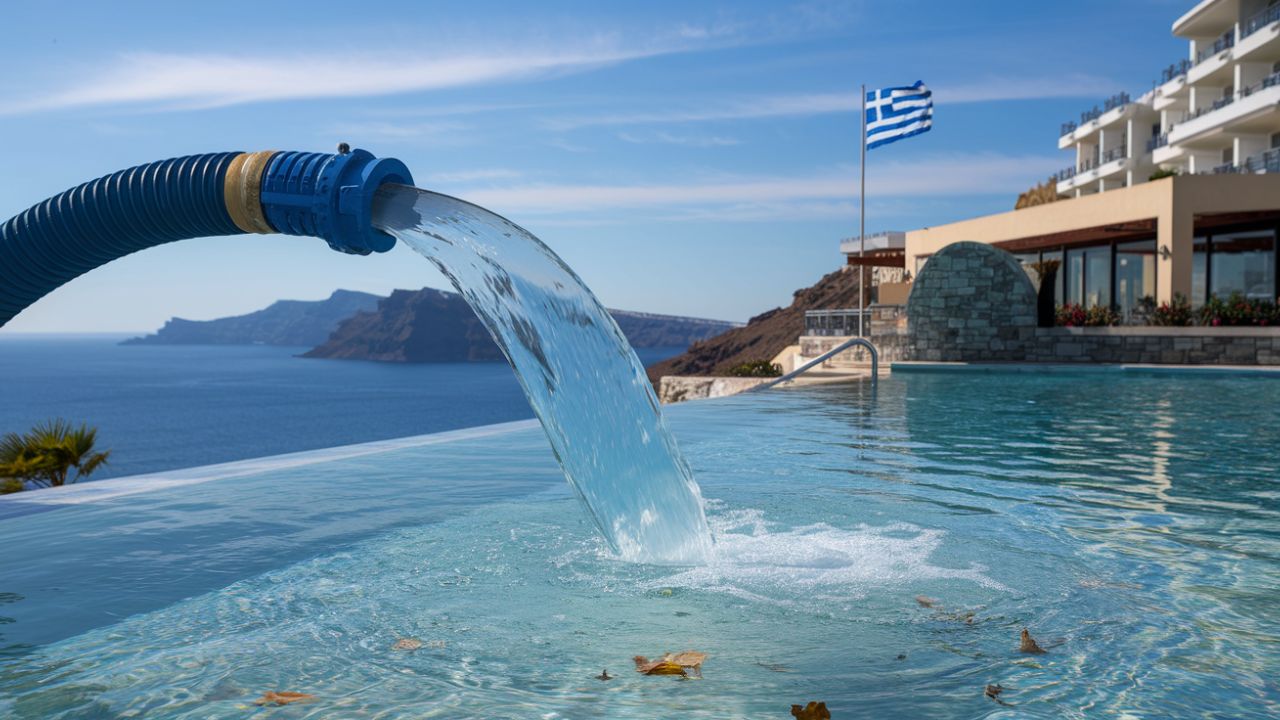
With Rainfall 12% Below Average in Recent Decades and Regions Like Crete and the Aegean Islands in Water Collapse, Hotels in Greece May Adopt Sea Water in Pools to Face the Worst Drought in Recent Years.
Greece, known for its stunning islands and turquoise sea, is facing a new challenge that could change the tourist experience in the country. With a worsening water crisis, a bill suggests that hotels fill their pools with seawater. The measure, although controversial, reflects the seriousness of the situation.
But is this idea feasible? Or would it just be a stopgap solution that may bring even bigger problems?
Drought in Greece: A Growing Problem

In the last two years, Greece has recorded critical levels of drought. Precipitation has been on a constant decline, with a 12% drop in annual averages between 1971 and 2020, according to the National Observatory of Athens. The most affected regions include the famous Aegean Islands and Crete, which have lost about 20% of their average precipitation.
-
India announces a plan of $3.06 billion to bring aviation to forgotten regions: 100 new airports, $1.07 billion in subsidies, and regional routes guaranteed for 10 years, from 2026 to 2036, away from the centers.

-
Brazil blocked a proposal from the United States at the WTO that would make the exemption from tariffs on digital products like streaming and ebooks permanent, favoring American tech giants at the expense of developing countries.

-
IPTU exemption for seniors in 2026: see how to secure the benefit.

-
The institute that trained the greatest aerospace engineers in Brazil has just opened its first campus outside São Paulo after 75 years: ITA Ceará will have R$ 445 million, new courses in energy and systems, and classes are expected to start in 2027.


This scenario has already impacted tourist areas, such as Lake Picrolimni, which has completely dried up. This crisis threatens not only the environment but also the sector that is the heart of the Greek economy: tourism.
Pools with Sea Water: Solution or Problem?
The new bill proposes to install pipelines to pump seawater into hotel pools, alleviating pressure on water resources. The idea is to redirect drinking water for other more essential urban uses.
However, not everyone is convinced. Critics point to the lack of clear standards for disposing of water treated with chemicals. The impact on the marine ecosystem and the aesthetics of the beaches are also raised concerns.
Environmental Impacts in Focus
Saltwater, when disinfected with chlorine, can become a risk to marine life. Fish and other organisms may be affected by the release of chlorine into the sea. Experts suggest that the project should include measures such as mandatory dechlorination before disposal.
Furthermore, there are concerns about the possibility of sewage being discharged along with pool water, which has occurred in previous cases. “It is necessary to balance the benefit for tourists with environmental protection,” comments Elias Nokas, director of Water Resources.
The Opinion of Experts and the Public
While the government defends the proposal as a way to preserve drinking water, critics argue that the impact of pools is overstated. In islands like Mykonos and Paros, pools consume only 6% of available water resources, according to studies.
Local residents and environmentalists are calling for more sustainable solutions, such as the use of desalination technology, which is already applied in some islands but still faces high costs and implementation challenges.
Challenges and the Future of Sustainability in Greece
Tourism is a double-edged sword for Greece. It is essential for the economy but also places enormous pressure on natural resources. It is time to rethink the tourism model and adopt more sustainable practices.
Measures such as raising awareness among tourists, increased investment in water infrastructure, and the use of renewable energies may be key to ensuring that Greece remains a sustainable paradise for both visitors and residents.








-

-

5 pessoas reagiram a isso.