





 Portuguese
  English
  Spanish
  3 min of reading
  2 comments


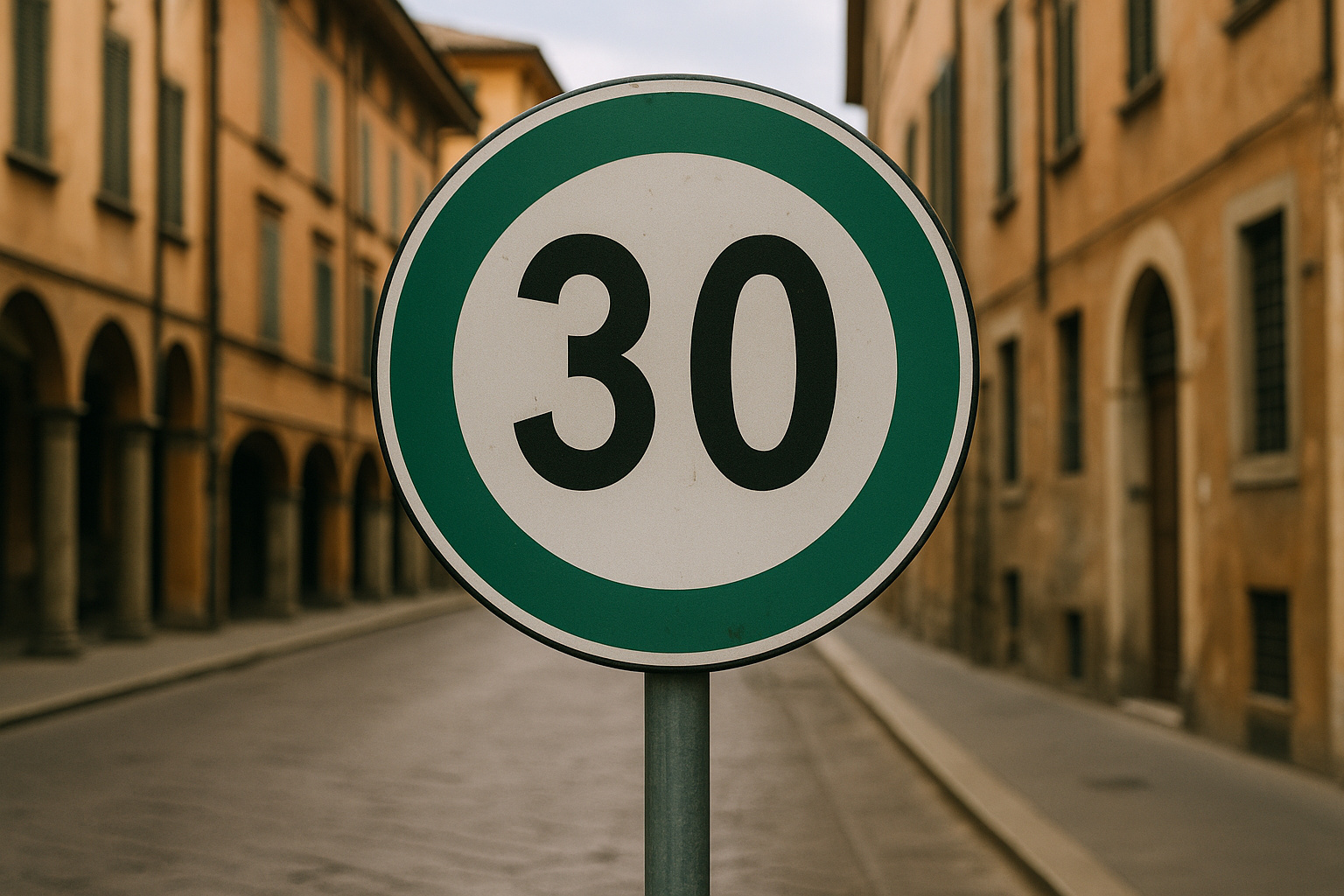


New Green Circle Signage with Central Numbers Gains International Spotlight and Reignites Discussions About Safety, Signage Overload, and Possible Changes to Urban Traffic Regulations
The so-called green circle signs have been garnering attention in recent months, especially in Italy, where the debate over their adoption has gained traction among authorities and drivers. Although they already exist in countries like the United Kingdom, France, and Spain, this type of signage is still not mandatory and serves only as an alert for drivers to reduce speed. This information was initially highlighted by the website Italianismo, which analyzed how the proposal is expanding in Europe.
What Are Green Circle Signs and How Do They Work
These signs have a circular shape, a white background, and a central number indicating the suggested speed. Visually, they resemble traditional speed limit signs quite a bit, but with one essential difference: the border is not red, but green.
This detail completely changes the meaning of the sign. Instead of representing a mandatory limit — whose violation results in a fine — the green border indicates merely a recommendation, primarily used near schools, hospitals, and residential areas. Thus, the idea is to encourage more cautious behavior without imposing penalties.
-
The village where two rivers run side by side without mixing in Santarém and Alter do Chão reveals some of the most beautiful freshwater beaches on the planet.

-
Brazil’s nuclear submarine with a speed 5 times greater than normal advances after nearly 50 years and R$ 40 billion spent.

-
A Brazilian island charges R$ 0.50 to receive visitors and prohibits any new residents.

-
Why was the Great Wall of China built? The truth that many are unaware of!


However, in Italy, this model still lacks official recognition. To integrate this signage into Italian traffic, it would be necessary to modify parts of the Highway Code, as well as conduct tests and studies on effectiveness and impact on traffic flow.
Why the Signs Generate Controversy in Italy
Even though many support the initiative, Italian experts point out clear risks of confusion. This is because the visual similarity to official signs may lead drivers to interpret the recommendation as a rule — or worse, to ignore actual mandatory limits. This point was addressed in an analysis published by the portal Mobilità Urbana, which highlighted the need for visual standardization to avoid misunderstandings in traffic.
Another problem frequently mentioned is the overabundance of signage. In various cities of Italy, drivers already contend with a large number of signs, panels, and alerts. Adding another model might increase visual noise and compromise attention while driving.
Concrete examples illustrate the scale of the discussion:
- In Sassuolo, eight recommendation signs were installed in just 300 meters;
- In Florence, thirty signs were fixed with a spelling error — “infomazione” instead of “informazione” — generating criticism and jokes on social media.
Debate Remains Open Among Authorities, Experts, and Drivers
For now, the green circle signs are not officially part of Italian signage. Despite this, the debate continues strongly among traffic authorities, scholars, and driver associations, especially since some argue that the measure could improve road safety without increasing fines or penalties.
Meanwhile, critics assert that premature adoption, without clear regulations, could amplify confusion and hinder the effectiveness of traditional signs. Thus, the topic remains under discussion, directly impacting the future of Italian urban mobility regulations.






Qual o interesse disso para os motoristas brasileiros. Começamos a ler a matéria com a dúvida “placa com círculo verde????”, para descobrirmos que não tem nada haver com o Brasil. Jornalismo ridículo…
Para que uma “reportagem” dessa se a placa não consta do Código de Trânsito Brasileiro -CTB. Isso não é jornalismo é desinformação.