





 Portuguese
  English
  Spanish
  3 min of reading
  0 comments


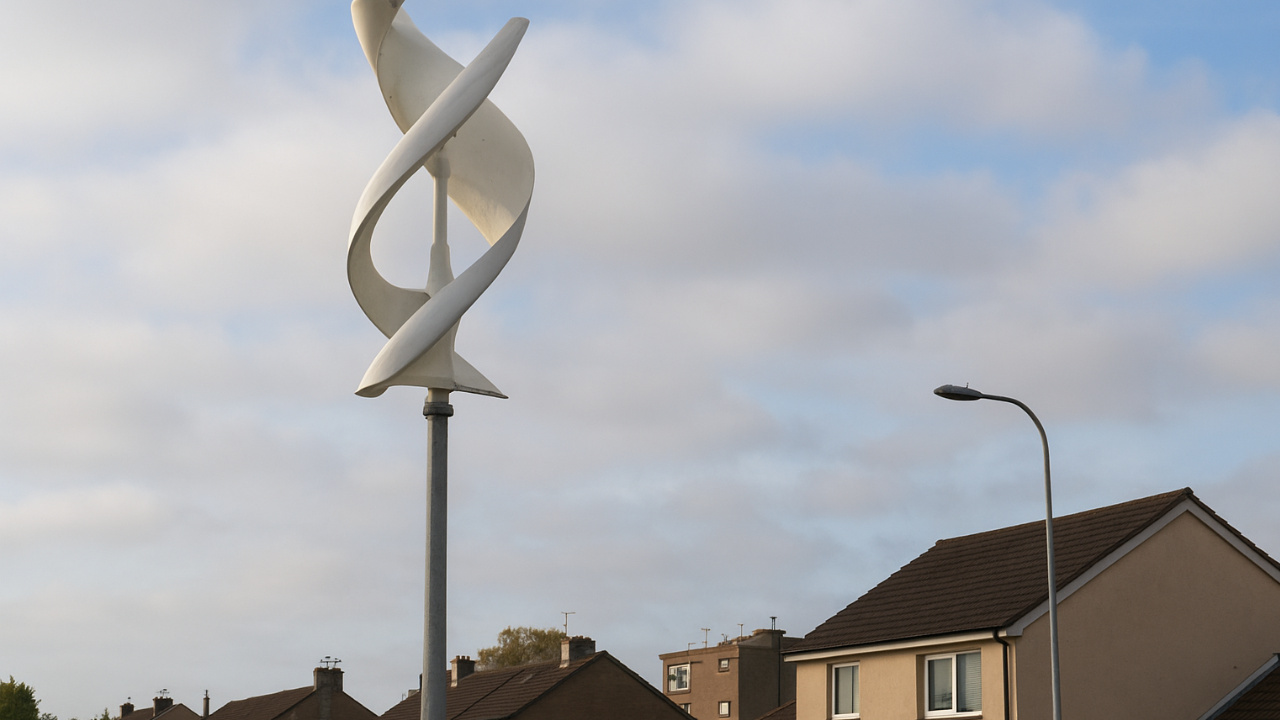
New Wind Energy Technology Bets on Compact, Cheap, and Silent Turbine Inspired by Archimedes’ Screw, Capable of Generating Electricity with Any Breeze and Functioning in Multiple Urban and Rural Scenarios.
The search for more accessible alternatives within the wind energy sector has gained momentum with the arrival of a compact turbine that promises to revolutionize the market. While traditional models depend on strong winds, large metal structures, and wide spaces, the new proposal takes the opposite approach: mechanical simplicity, low cost, and silent operation. This way, it opens up opportunities for more people to have access to their own renewable energy generation, especially in places where solar panels are insufficient or cannot be installed.
Millennial Inspiration and Modern Reinvention to Generate Clean Energy
The innovation stems from a concept that spans more than two millennia. The turbine’s design uses the same principle of the Archimedes’ screw, created around 250 B.C. Although originally used to lift water, the mechanism has proven highly efficient when adapted for small hydropower plants.
Engineers realized that the helical structure reacted very well to flow variations, meaning less performance loss when the amount of water — or wind — fluctuates. Thus, the turbine maintains stability in scenarios that would normally be challenging for traditional wind systems.
-
Conflict in the Sertão: Rural communities in Rio Grande do Norte report issues with wind farms and the new challenges of clean energy in the semi-arid region.
-
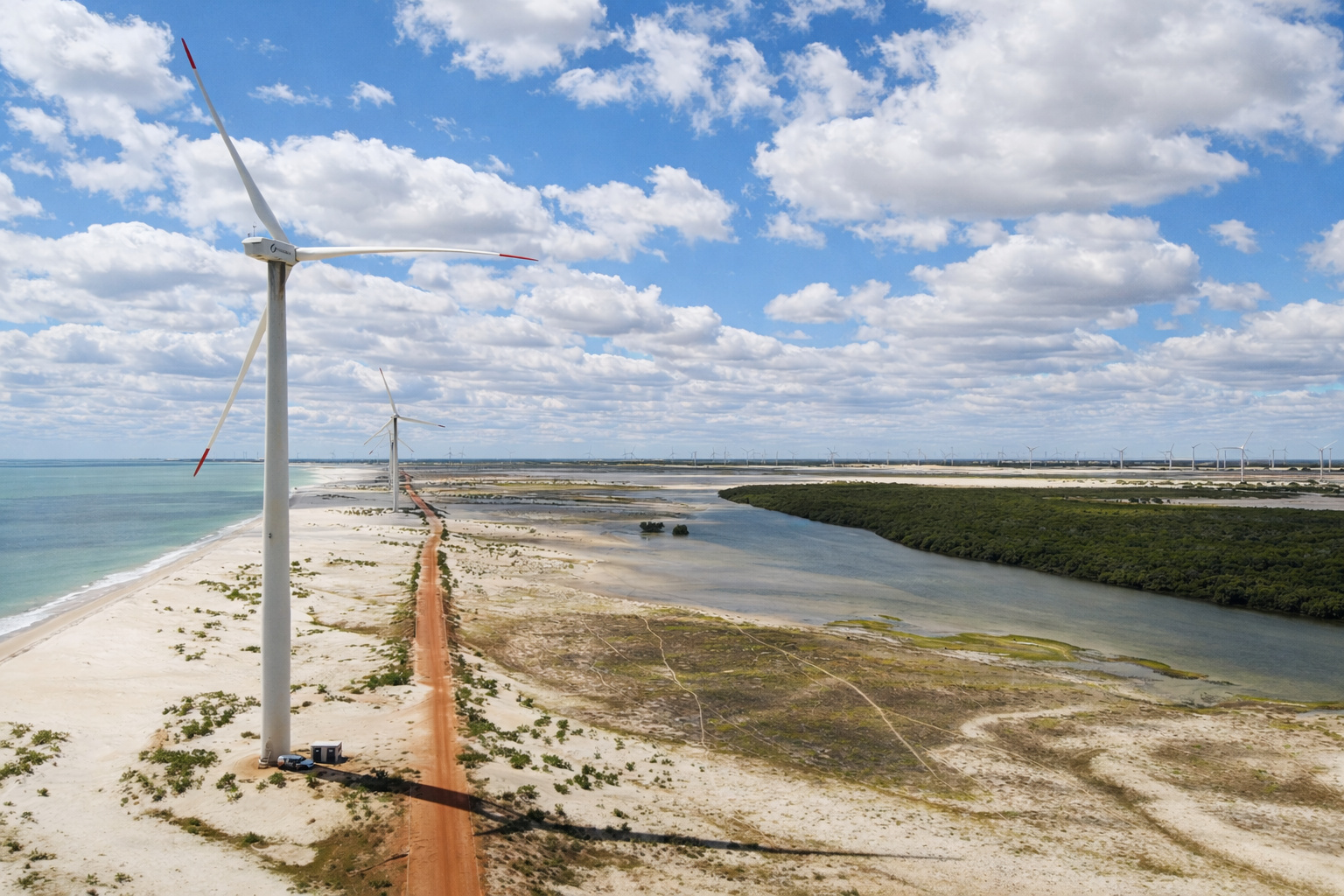
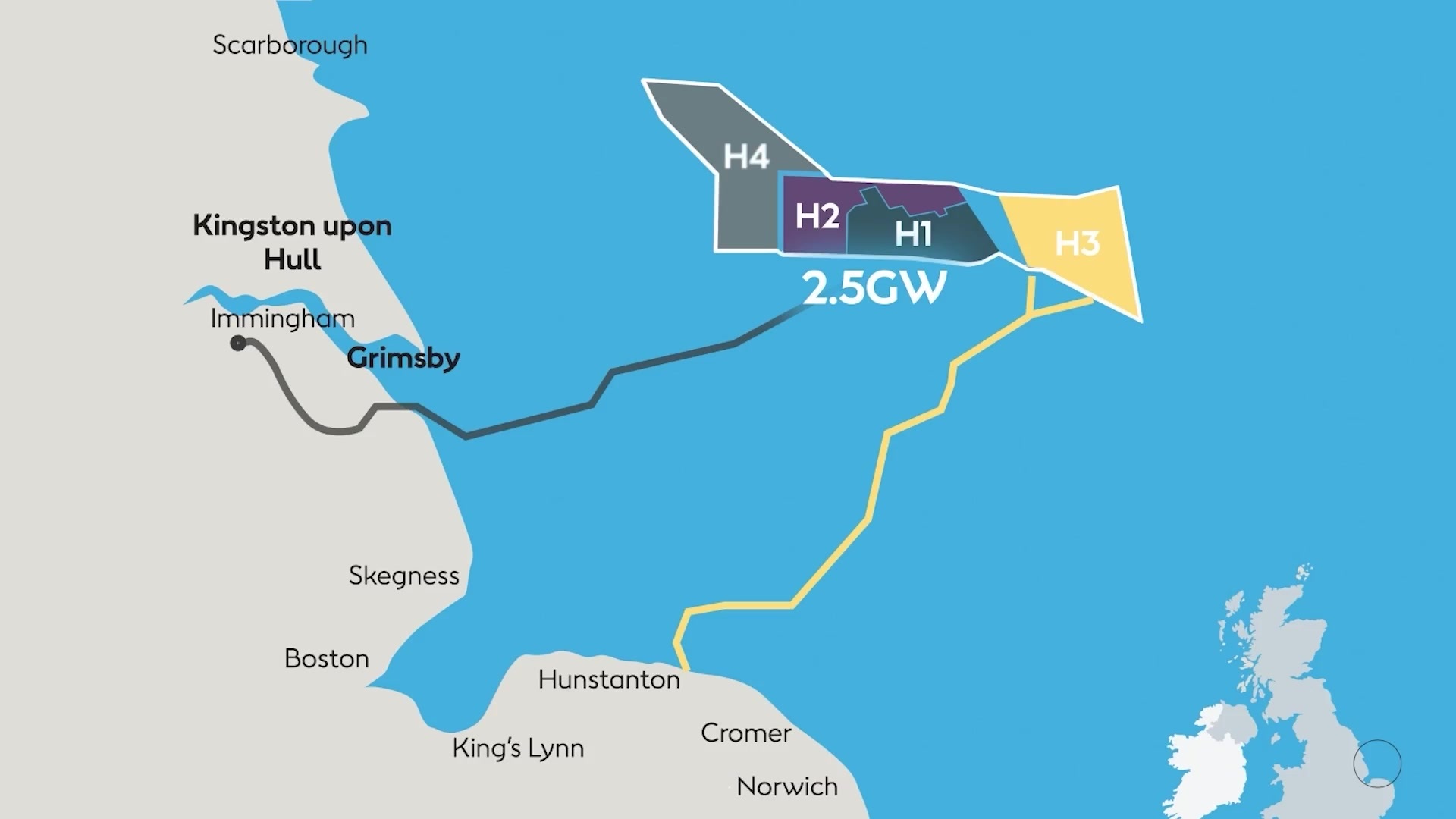
231 turbines of 260 meters at 160 km from the coast, monopiles weighing as much as nine blue whales embedded in the North Sea, and a crane ship taller than the Eiffel Tower: Hornsea 3 will be the largest offshore wind farm on the planet by 2027, and its first components have already arrived in England.
-
International Certification Puts Senai Norte on the Renewable Energy Map and Expands Access to Essential Training for Qualified Wind Power Professionals

-
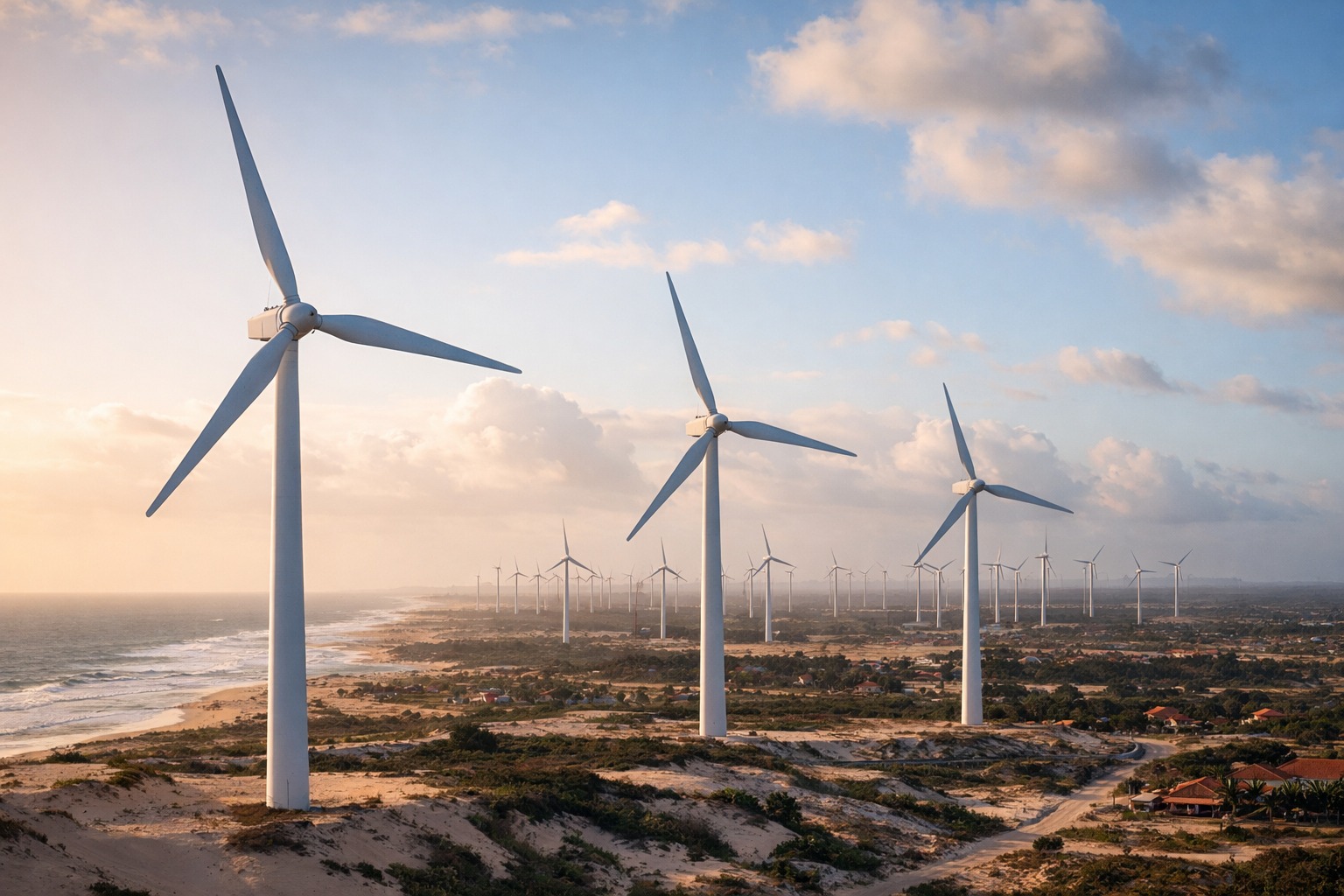
The Winds of the Northeast Are in Foreign Hands: Nearly 70% of the Region’s Wind Farms Are Owned by International Companies, with France, China, and Italy Leading Investments in Wind Energy in Brazil

From this observation, the model was reinterpreted to capture the movement of air. Instead of relying solely on directed wind force, the helical turbine receives flow along the entire structure, allowing operation even when the wind arrives weak, irregular, or from different directions.
Wind Energy in Any Direction: Versatility as a Competitive Differential
Differently from conventional turbines that need to rotate to align with the wind, the helical model operates independently of orientation. This feature reduces mechanical wear, eliminates complex rotation systems, and lowers installation costs.
Additionally, since the blades do not extend laterally, the equipment becomes ideal for urban areas. The turbine poses no risk to birds and occupies little space, allowing installation on rooftops, patios, parking lots, or small lots — significantly expanding the applicability of wind energy.
Absolute Silence: A Solution for Residential Areas and Sensitive Environments
Another aspect that highlights this technology is its practically silent operation. By eliminating the rapid spinning of metal blades, the design avoids the characteristic noise of traditional turbines, which can be a problem in densely populated areas.
This differential directly appeals to urban residents seeking energy autonomy but who do not want to deal with noise disruptions. Thus, wind energy gains new installation perspectives in regions where it was previously unfeasible to operate.
Compact Structure, Reduced Costs, and Minimal Maintenance
The logic behind the helical turbine also directly impacts the consumer’s wallet. The equipment requires fewer materials, does not need giant towers, nor deep foundations. Therefore, the manufacturing and installation process is simpler and cheaper.
The helical shape itself contributes to durability:
- tolerates dust and debris,
- reduces chances of dirt accumulation,
- prevents damage caused by leaves and particles,
- demands sporadic maintenance.
This combination of factors drastically reduces operational costs, making wind energy accessible even to low-income families or small businesses.
Viable Alternative to Solar Panels in Adverse Scenarios
The new turbine offers something that the renewable energy market has always sought: a viable solution where the sun is not constant or where shadows hinder the performance of photovoltaic panels. Thus, it can complement or even replace solar installations in various contexts.
Since it works with any breeze, the equipment ensures energy regularity even in regions with unstable climates — including valleys, mountainous areas, dense cities, or locations with low solar incidence.
With the combination of silence, low cost, high tolerance to irregular flows, and the ability to operate independently of wind direction, the compact turbine presents itself as a potential “next wave” of renewable energy.
Experts already point out that technologies of this type could democratize access to wind energy, just as solar panels did in the last decade. If mass production is achieved, the helical turbine could reshape the landscape of distributed generation and boost the adoption of clean energy in contexts where it currently does not reach.








Seja o primeiro a reagir!