





 Portuguese
  English
  Spanish
  5 min of reading
  0 comments


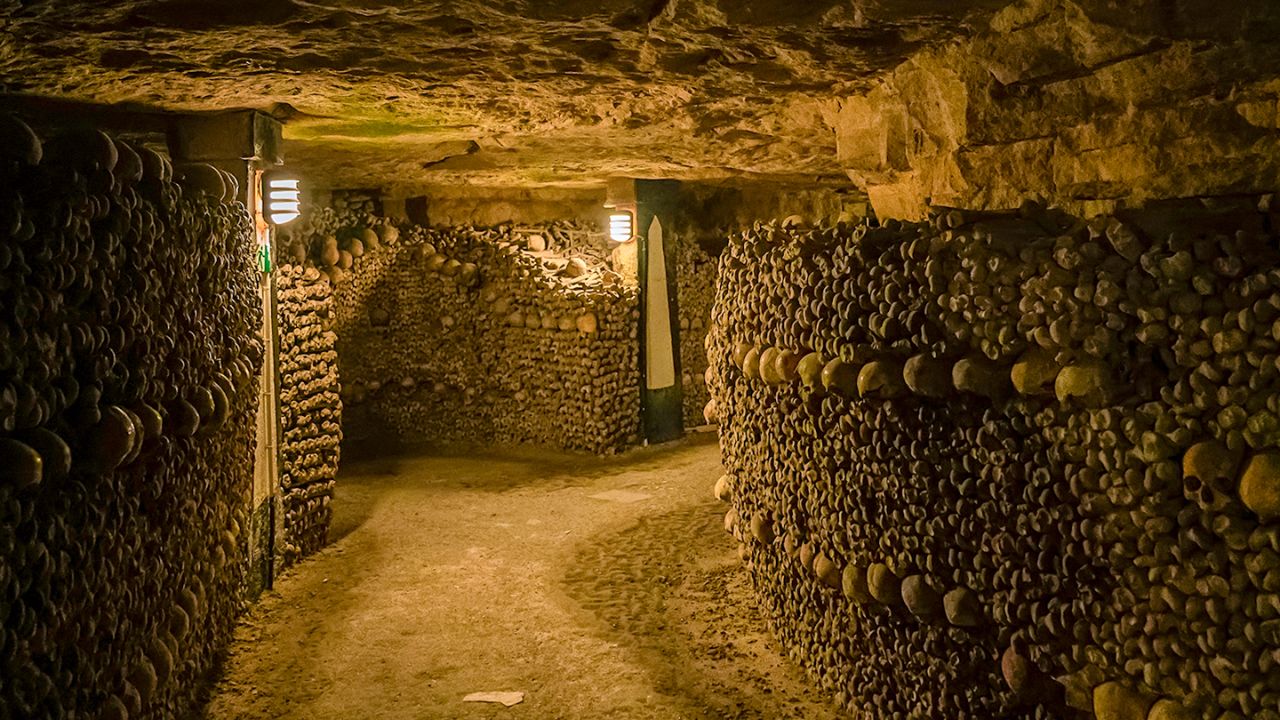
Explore The Vast Underground World Of Paris, Traversing Historical Tunnels, Mysterious Catacombs, And Secret Bunkers That Reveal The Invisible History Beneath The City Of Light
The Paris area has been inhabited for over 8,000 years and has never stopped transforming, evolving from a small Celtic village into one of the largest metropolises in Europe, home to over 12 million people. While the city attracts millions of tourists drawn by the surface’s glow, the true complexity of the French capital lies beneath the sidewalks. Underneath the famous avenues is an impressive underground world formed by a labyrinth of tunnels, ancient quarries, and hidden rivers that extend for hundreds of kilometers, telling the other half of the city’s story.
This invisible universe is a patchwork that stitches together distinct eras, from Roman times to modernity. Just below the asphalt, essential drainage galleries and cables are found, but as one descends deeper, the scenery changes drastically. The Parisian underground world is not just an empty space, but a place of memory and survival that has served as a source of raw materials, a refuge during wars, and a monumental cemetery, revealing that Paris was built twice: once on the land and once beneath it.
The Ancient Quarries And The Birth Of The Depths
Long before the Eiffel Tower dominated the skyline, the underground was already being intensely explored. During Roman times, when the city was still called Lutetia, workers descended with torches in search of limestone. These early quarries provided the material to erect icons like Notre-Dame Cathedral and the Louvre Museum. However, rampant extraction created kilometer-long corridors that left the city hollow and unstable.
-
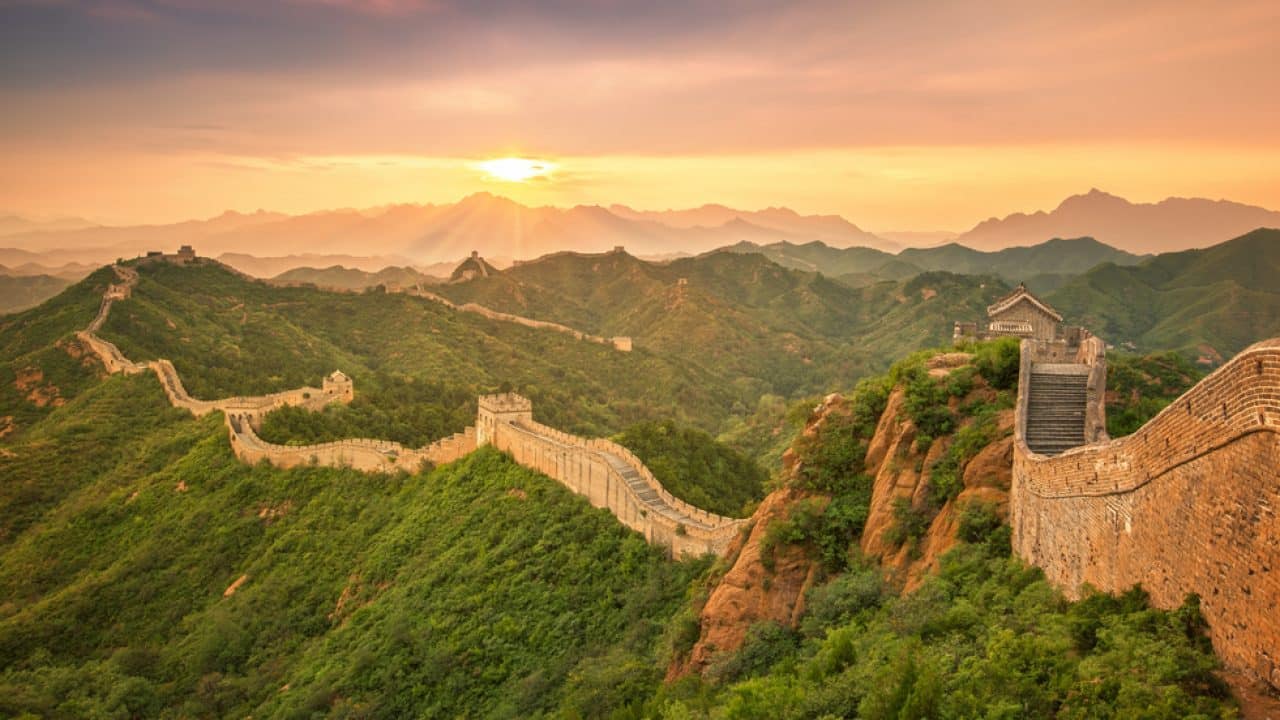
Why was the Great Wall of China built? The truth that many are unaware of!
-
At 73.8 meters tall, the world’s tallest teapot-shaped building has 15 floors, ensures stability, and impresses with an internal space of 28,000 cubic meters.

-
Ambev has planted over 3 million trees and restored an area equivalent to the coastline from São Paulo to Natal, and the result after 15 years of silent investment has finally appeared for all of Brazil to see.

-
A new AI collar technology for cattle eliminates physical fences, creates virtual barriers, monitors animals 24/7, and detects changes in behavior and health.


The danger became real in 1774 when a collapse in the Saint-Médard neighborhood swallowed houses and streets, serving as a tragic warning. In response, King Louis XVI created the General Inspection of Quarries, the world’s first underground engineering body. From that moment on, the vast underground world ceased to be merely a site of extraction and became a field of study and rigorous control, essential for the safety of the population living above.
The Empire Of Death And The Secrets Of The Galleries
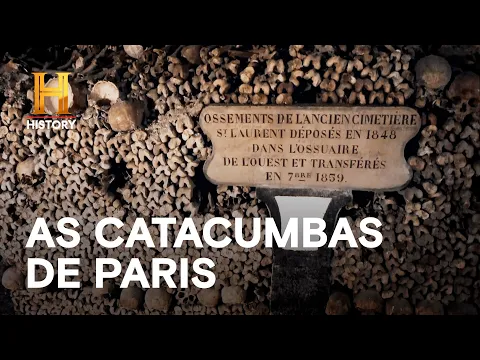

In the 18th century, Paris faced another critical challenge: the sanitary collapse caused by overcrowding in cemeteries. The Innocents Cemetery, a source of disease and unbearable odors, needed to be emptied. The solution found by the king in 1786 was to transfer millions of remains to old disused quarries in the south of the city, giving rise to the famous Catacombs of Paris. It is estimated that more than 6 million people are buried there, forming a true silent population underground.
The location, known as “The Empire of Death,” has tunnels extending over 300 km. Bones have been arranged with artistic precision, creating walls and columns that blend architecture and morbidity. Over the centuries, this sector of the underground world has served as a refuge for revolutionaries, inspiration for poets, and a hideout for clandestine explorers known as “cataphiles,” becoming a dark mirror of life above ground.
The Sewer Museum And The Engineering Of Life
While the catacombs represent death, another underground system pulses with life and functionality. The sewer system of Paris, modernized in the 19th century by Baron Haussmann, is a masterpiece of engineering that transformed the city’s sanitation. With over 2,600 km of galleries, this network functions like a city beneath the city, containing crossings, bridges, and channels that keep the Seine River clean and the metropolis functional.
Open to visitors since the 1867 World’s Fair, the Sewer Museum allows the public to walk over real passages. Despite the humid environment and characteristic odor, the place reveals human ingenuity in mastering nature. There, far from the light of cafes, the underground world shows its most practical face: a colossal structure that operates 24 hours a day to sustain the Parisian lifestyle.
The World War II Bunker And The Resistance
The underground of Paris also holds echoes of conflict and bravery. During the Nazi occupation in World War II, the French Resistance used the depths of the city to operate clandestinely. One of the most symbolic locations of this period is the bunker located under the Denfert-Rochereau neighborhood. It was in this secret shelter that Colonel Henri Rol-Tanguy coordinated the uprising that would lead to the liberation of Paris in August 1944.
Today transformed into part of the Liberation Museum, the bunker preserves the tense atmosphere of that time. The visitor descends 100 steps to find a space where gas masks, radios, and operation maps remain as witnesses to history. The strategic use of this underground world was vital for victory, proving that the shadows of the city served not only to hide but to fight for freedom.
From The Metro Tracks To The Legends Of The Unknown
The complexity of the underground increased with the arrival of the metro, inaugurated in 1900. Designed by Fulgence Bienvenüe and featuring Art Nouveau-style entrances designed by Hector Guimard, the system connects the city through over 200 km of tracks. Modern stations with futuristic designs coexist with old stops that hold layers of history, and recent projects even seek to use the heat from the underground to generate clean energy.
However, the mystery persists. Official maps still indicate forbidden zones where access is prohibited due to instability or danger. Legends about secret passages that would connect the Louvre to the Bastille or hidden galleries beneath cemeteries fuel popular imagination. Whether through science, history, or myth, the underground world of Paris continues to fascinate, reminding everyone that beneath the City of Light lies a heart of stone beating in the dark.
Would you dare to explore the forbidden tunnels of the catacombs, or would you prefer to stay safely above ground? Share your opinion in the comments!







Seja o primeiro a reagir!