





 Portuguese
  English
  Spanish
  4 min of reading
  0 comments


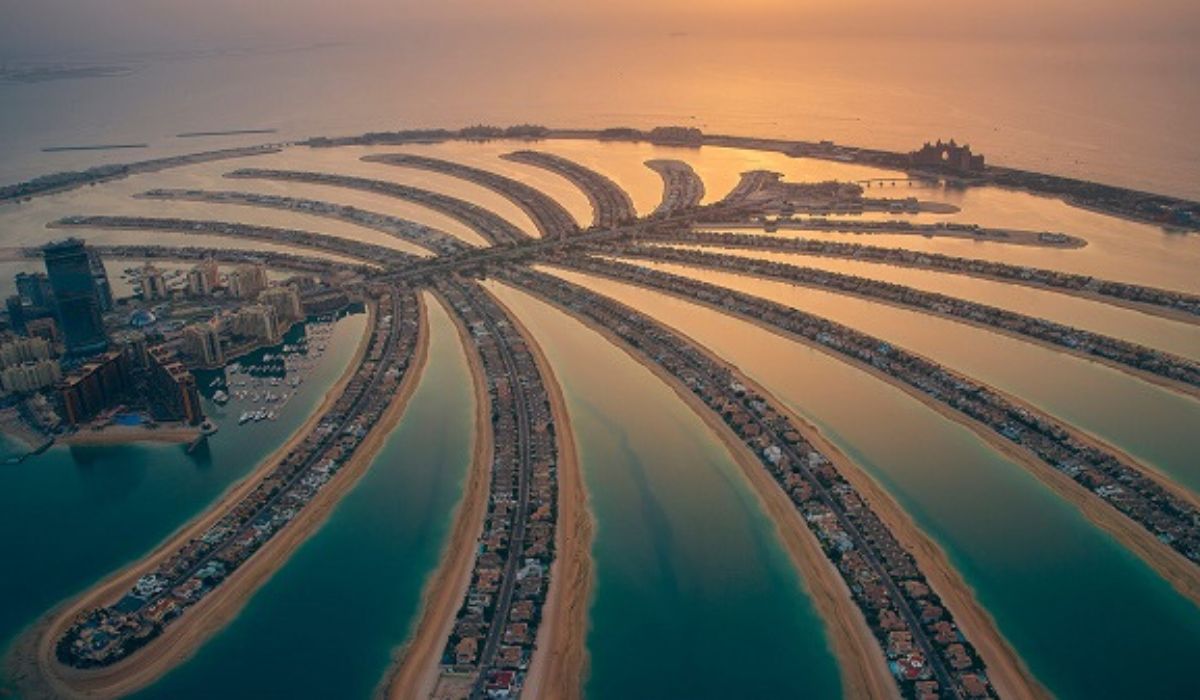
Billion-Dollar Project Redesigned The Map Of Dubai With Large-Scale Marine Engineering, Expanding The Coastal Area And Boosting Tourism And The Real Estate Market Through An Artificial Island Built On Dredged Sand And Rocks.
The Palm Jumeirah, in Dubai, was launched in the early 2000s as part of the emirate’s strategy to expand its coastal area and boost tourism and the real estate market.
Estimated at around US$ 12 billion, the artificial island was constructed using large volumes of dredged sand from the Persian Gulf and rocks used to form a protective breakwater, according to widely circulated data by the developer Nakheel and public records about the project.
The initiative emerged at a time when the local government sought to diversify the economy, reducing dependency on oil and strengthening sectors such as hospitality, trade, and services.
-
Friends have been building a small “town” for 30 years to grow old together, with compact houses, a common area, nature surrounding it, and a collective life project designed for friendship, coexistence, and simplicity.

-
This small town in Germany created its own currency 24 years ago, today it circulates millions per year, is accepted in over 300 stores, and the German government allowed all of this to happen under one condition.

-
Curitiba is shrinking and is expected to lose 97,000 residents by 2050, while inland cities in Paraná such as Sarandi, Araucária, and Toledo are experiencing accelerated growth that is changing the entire state’s map.

-
The lack of welders, electricians, and operators becomes a structural threat in 2025, with the construction industry and manufacturing already suffering from delays, cost pressures, and labor shortages in Brazil.

At the time, the geographical limitation of the beach area was seen as an obstacle to the expansion of high-end resorts and residential developments.
Coastal Expansion And Dubai Urban Strategy
By the late 1990s, official urban development plans indicated the intention to increase the availability of waterfront areas.
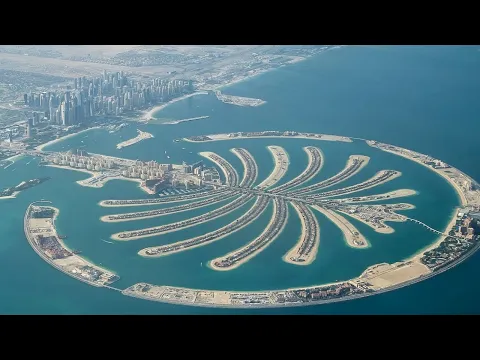
The Palm Jumeirah was conceived within this context, with a shape inspired by a palm tree and surrounded by an outer arch that functions as a breakwater.
According to technical descriptions collected in public records and institutional materials, the design aimed to combine visual appeal and coastal functionality.

The “crescent” surrounding the island acts as a barrier against more intense waves, while the inner areas were divided into fronds intended for residences and hotels.
Historical accounts attribute to the then-ruler of Dubai, Sheikh Mohammed bin Rashid Al Maktoum, the direct encouragement of the project’s conception, integrated into a broader set of urban interventions carried out in the emirate from the 2000s.
Marine Engineering And Dredged Sand Volumes
The execution of the work required specific solutions in coastal engineering.
The sand used did not come from the desert, as its fine granulation is considered inadequate for marine landfills.
Instead, approximately 94 million cubic meters of sand were dredged from the bottom of the Persian Gulf, according to data consolidated in public records regarding the construction of the island.
The material was deposited with the help of dredges and satellite positioning systems to ensure precision in the outline of the structure.
Experts in marine engineering explain that this control is essential to maintain stability and avoid displacements caused by currents and tides.
Meanwhile, the formation of the breakwater required approximately 5.5 million cubic meters of rock.
The stones were stacked to create a barrier approximately 11 kilometers long, designed to dissipate wave energy before it reaches the inner areas.
Unlike conventional reinforced concrete works, the system was mainly conceived based on the weight and fitting of the rocks, a technique common in coastal protection projects.
Periodic maintenance is considered an integral part of this type of venture.
Water Circulation And Environmental Monitoring
During the planning phase, studies indicated the need to ensure adequate water circulation between the fronds.
The concern was to avoid stagnant areas that could compromise environmental quality.
In response, the breakwater received openings to allow for the renewal of seawater.
There are records mentioning openings of about 100 to 150 meters intended to facilitate the exchange of currents, as described in technical and institutional materials related to the project.
Academic research on coastal interventions in Dubai indicates that large landfills can alter sediment patterns and impact marine ecosystems.

These studies highlight the importance of continuous monitoring to mitigate environmental effects associated with projects of this scale.
Economic Impact And Urban Map Transformation
With the completion of the main stages in the 2000s, the Palm Jumeirah became part of the set of residential and tourist areas of Dubai.
The island features hotels, condominiums, internal roads, and infrastructure connected to the mainland by bridges and monorail.
Public sources frequently cite that the project added about 56 kilometers of new coastline to the emirate, expanding the availability of waterfront land.
This data is used to illustrate the physical impact of the intervention on the local urban map.
Among the developments established in the area is the Atlantis resort, located at the end of the crescent.
The complex is cited by institutional materials as one of the main hubs of accommodation and entertainment on the island.
Despite the extensive publicity of the project, there is no single and consolidated number, in easily verifiable official sources, regarding the current resident population exclusively on Palm Jumeirah.
Market estimates vary, and demographic data typically consider the entire emirate or broader areas.
Over the years, the island has featured in reports and analyses on megaprojects of coastal engineering, often cited as an example of large-scale marine landfill.
Experts note that initiatives of this type involve ongoing costs for maintenance and environmental monitoring.
The Palm Jumeirah remains one of the best-known cases of artificial territorial expansion in the Persian Gulf, associated with Dubai’s urban and tourism growth strategy over the past two decades.








-

-

-

5 pessoas reagiram a isso.