





 Portuguese
  English
  Spanish
 4 min of reading
  0 comments


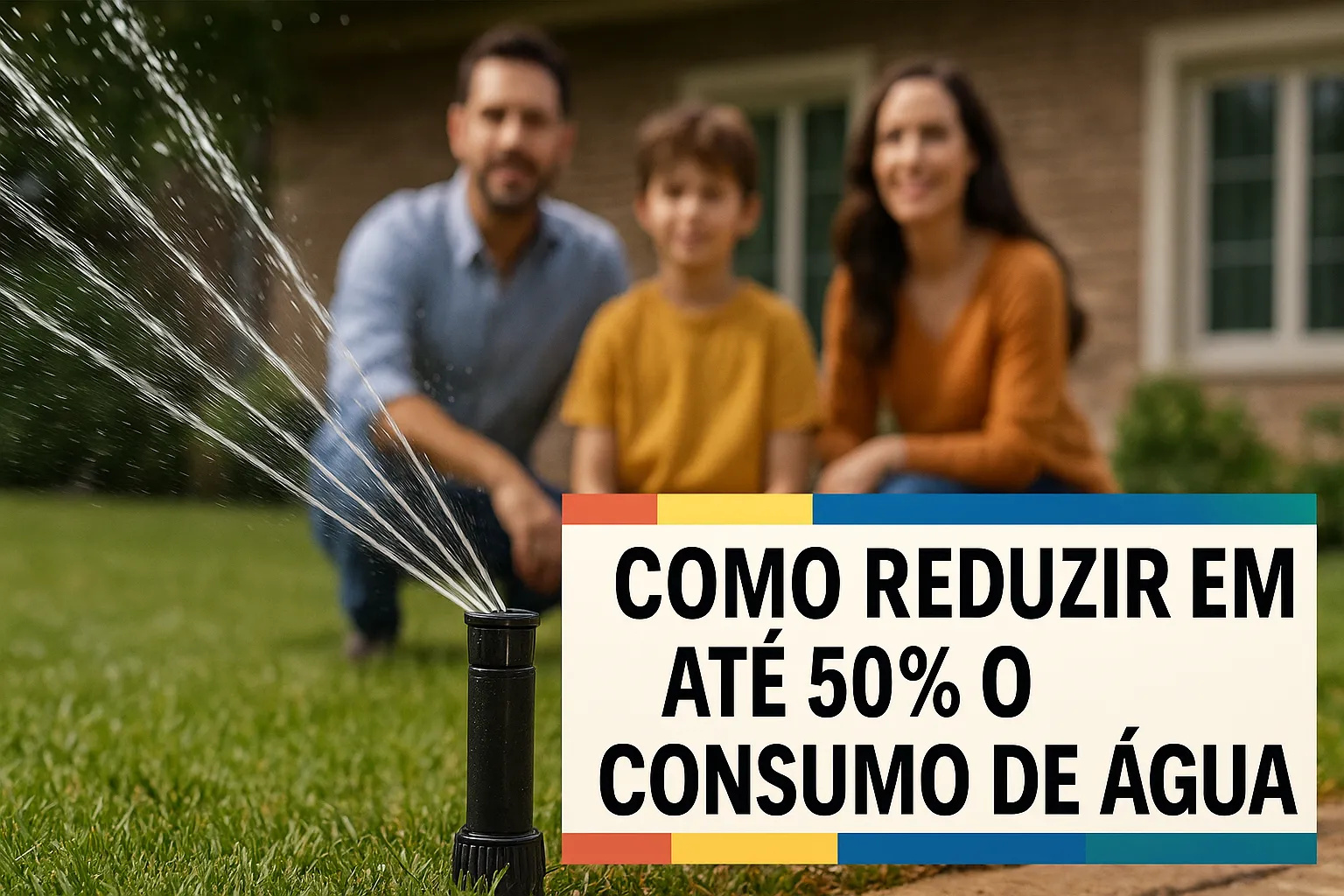
Have you ever stopped to think about how much water might be wasted every time you manually water your plants? Automated irrigation is not just a modern resource but a true game changer for those who maintain a garden at home. The promise is bold: reduce water consumption by up to 50% without compromising plant health. According to the National Water Agency (ANA), smart systems can cut usage in gardens and green areas by nearly half. But how does this happen in practice?
Automated Irrigation And The Direct Impact On Water Consumption
Automated irrigation works like a “brain” in garden care. It dispenses exactly the right amount of water at the right time and place. This avoids the most common errors of manual handling: overwatering, waste through evaporation, and even plant death due to waterlogging.
In recent years, residents of condominiums and homes with green areas have realized that installing this type of system is not just a luxury, but a real way to save money on the water bill and contribute to more sustainable consumption. According to Sabesp, homes with water automation can register monthly reductions of 30% to 50% in their bills.
The Difference Between Manual Watering And Automatic Control
Imagine a typical scenario: you rush out to work in the morning and, in your haste, throw buckets or turn on the hose without calculating how much each plant needs. The result can be soaked soil in some areas and completely dry in others.
With automated irrigation, each nozzle or dripper is programmed to release the exact amount of water in short, efficient cycles. This means that water goes directly to the roots, reducing losses from wind or excessive heat. The logic is simple: less waste, more results. According to Embrapa, localized irrigation can reduce evaporation losses by up to 90%.
-
The Himalayas continue to grow to this day, with tectonic plates advancing 5 cm per year, mountains rising up to 10 mm annually, and the 2015 earthquake that killed 9,000 people may have increased the risk of an even larger seismic mega-event.

-
At an altitude of 400 km by astronauts from the International Space Station, Paris transforms at night into a golden mesh so precise that it reveals the outline of the Seine River, avenues, and entire neighborhoods like a luminous map drawn over the Earth.

-
iPhone 17 reaches historic low price with 256 GB, 120 Hz display, and drops to R$ 5,703 on Shopee, featuring A19 chip, dual 48 MP cameras, battery life of up to 30 hours, and advanced AI features.

-
Trip to Mars getting closer: Pulsar Fusion, from the UK, advances with plasma ignition in fusion engine and could drastically reduce space travel time, making crewed missions faster, safer, and economically viable.
How Technology Understands The Needs Of Plants
The most modern systems already come equipped with moisture sensors and even Wi-Fi connectivity. They adjust the volume according to weather conditions: if it rained the previous day, the programming automatically pauses. According to experts from the University of São Paulo (USP), this adjustment reduces silent waste in urban areas, especially in regions with unstable climates.
In practice, the garden receives exactly what it needs, no more, no less.
Extra Benefits Beyond Water Savings
Although the reduction in consumption is the strongest argument, the gains go beyond:
- Healthier Plants: consistent and balanced watering prevents water stress and irregular growth.
- Less Manual Labor: you no longer need to worry about being home at the right times.
- Property Value Increase: a well-maintained and sustainable garden can be a differentiator for buyers. Real estate agents report that green areas with automated systems increase the attractiveness of homes on the market.
- Environmental Awareness: saving water in times of water crises is a practical and responsible action. According to the UN, by 2030, the planet may face a 40% supply deficit if sustainable practices are not expanded.
Initial Investment And Day-To-Day Return
Many give up hearing about “automated irrigation” due to the thought of high costs. However, prices vary depending on the size of the garden and the type of system chosen.
A basic kit with a timer and hoses can cost just slightly more than a month’s worth of wasted water. Professional projects, with sensors and complete integration, require a larger investment but provide quick returns when compared to the savings made in the medium term.
In practice, the system pays for itself in a short time, especially in cities where the water rate is high. According to studies by the Brazilian Association of Sanitary and Environmental Engineering (ABES), water automation can recover the investment in up to 18 months.
Real Stories From Those Who Have Already Adopted Automated Irrigation
In residential neighborhoods in São Paulo and Porto Alegre, residents reported reductions of up to 45% in their water bills within the first few months. A resident of Campinas shared that her orchids used to suffer from overwatering. After installation, she noticed more intense blooming and fewer pests in the substrate.
These accounts show that the change is not just technical but also emotional: seeing the garden thrive without excessive effort brings satisfaction and pride.
Installation Care To Ensure Efficiency
The efficiency of automated irrigation depends on some details:
- Planning water points according to the planted species.
- Periodic checking of nozzles and drippers to avoid clogs.
- Seasonal adjustments: consumption may be higher in the summer but still controlled.
- Simple maintenance: cleaning filters and checking sensors is sufficient to keep the system active for years.
The Future Of Home Gardening Passes Through Automation
If before taking care of a garden seemed synonymous with hose in hand and available time, now the trend is opposite: more technology, less effort, greater efficiency. Automated irrigation connects aesthetic care with environmental responsibility, proving that it is possible to have beauty and sustainability side by side.
In the end, the big truth is that a well-kept garden does not have to be expensive or demand hours of daily dedication. It can flourish with intelligence and awareness, transforming the relationship between people, plants, and the most valuable resource on the planet: water.








Seja o primeiro a reagir!