





 Portuguese
  English
  Spanish
  8 min of reading
  0 comments


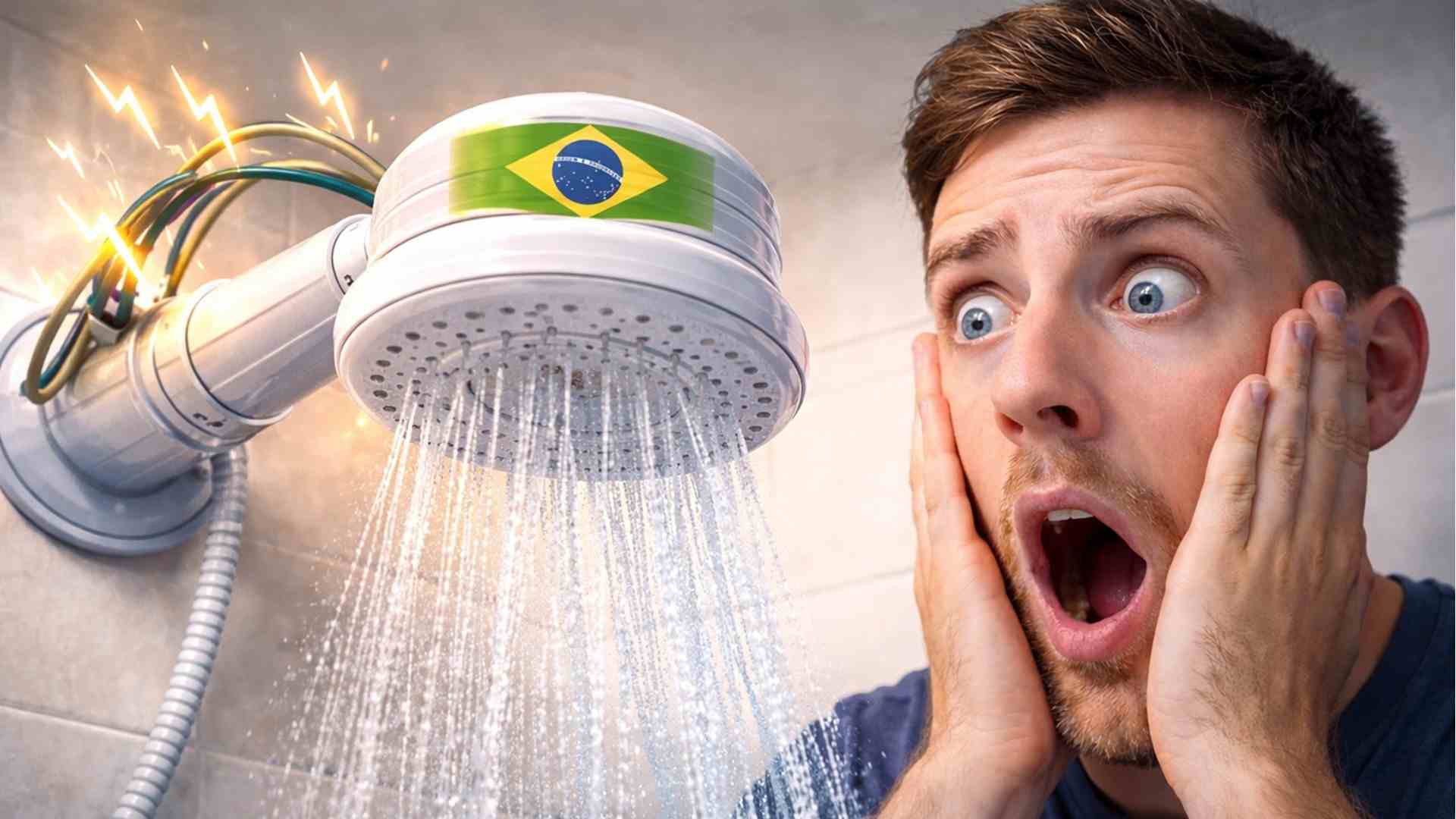
Invented in the Interior of São Paulo in the 1930s, the Brazilian Electric Shower Combines Direct Heating by Resistance, Low Cost, and Decentralized Use, Became Standard in Millions of Homes, and Began to Generate Surprise, Strangeness, and Debates About Safety Among Americans and Other Foreigners on Social Networks
The combination of electricity, water, and bare feet has been part of the daily life of most Brazilian households for decades, with the daily use of the electric shower, a device created in the country in the 1930s, which became nationally popular throughout the 20th century and has recently surprised foreigners as it circulates in videos and reports on social media.
Origin of the Electric Shower and the Invention in Jaú
The history of the electric shower, as known today, begins in the interior of São Paulo, in the city of Jaú, around the 1930s.
Although bathing devices had existed since antiquity, in Egypt and Greece, the application of electricity to heat water at the point of use only emerged in the 20th century, thanks to the Brazilian Francisco Canhos.
-
Church from 1888 becomes a mansion of over 330 m² in Canada after a renovation of R$ 3.4 million and is eventually sold for nearly R$ 4.3 million.

-
How an innovative city combines high technology, well-being, and sustainability to become the largest reference in clean energy on the planet.

-
Couple buys 1846 church in ruins for R$ 660,000, invests R$ 3.2 million in renovations, transforms it into a millionaire mansion, and even preserved a historic cemetery with over 300 graves.

-
He started running at 66 years old, broke records at 82, and is now a subject of study for having a metabolic age comparable to that of a 20-year-old, in a case that is intriguing scientists and inspiring the world.


A resident of Jaú and under 20 years old at the time, Francisco Canhos did not have formal academic training but was already known for developing inventions in the workshop set up in his own home.
According to family accounts, the creation of the electric shower arose from a practical and daily need related to caring for his father, who suffered from a rheumatic disease and needed to take hot baths daily.
The initial process was laborious. Water had to be heated on a wood stove and then poured into makeshift containers for bathing.
From this routine, Canhos began to experiment with solutions to reduce daily effort. He was inspired by another device that already existed at the time, the electric iron, which he disassembled to understand how heating by resistance worked.
Upon identifying the presence of the resistive element inside the iron, Canhos adapted the principle for bathing by positioning the resistance inside a pipe through which the water flowed.
The first tests were manual and required successive adjustments, as the resistance would burn out when there was insufficient water to cool it. The development occurred empirically, with successive attempts until a stable functioning was achieved.
From Manual Model to Patented Automatic System

The first showers created by Francisco Canhos were not automatic. The activation of the electric resistance had to be done manually, only after the water flow began.
Still, the novelty quickly piqued curiosity and began to spread across the city of Jaú, being sold informally, door to door.
The major technological advancement came with the development of the automatic system, considered the landmark of the invention and later patented by Canhos.
In this model, the shower came to include a diaphragm that detected the flow of water. When the tap was turned on, the water pressure activated the internal mechanism, automatically closing the electrical circuit and turning on the resistance only when there was sufficient flow.
This system eliminated the need for manual activation and reduced the risk of dry operation, which occurs when the resistance burns out due to lack of water.
The automatic model represented a technological leap for the era, incorporating a safety principle that remains in the electric showers manufactured in Brazil today.
With the patent of the automatic system, the invention gained industrial scale. The F. Canhos factory was established in the Jardim Santo Antônio neighborhood in Jaú, a location that currently names an avenue in the city. Production began to serve various regions of the country, consolidating the electric shower as a viable and accessible domestic solution.
In addition to showers, the industry created by Canhos expanded its product line over time, also manufacturing electric grills, coffee roasters, and fans, keeping pace with the increasing use of electricity in Brazilian homes.
National Expansion, Loss of Patent, and Continuity of Industry
Despite the initial success and patented innovation, Francisco Canhos’s family reports that the patent for the automatic electric shower did not remain under his control. Due to an administrative oversight, the legal protection expired and was not renewed, allowing other companies to start producing equipment based on the same principle.
With the expiration of the patent, manufacturers such as the Italian Lorenzetti and other companies in the electrical sector began to develop and market automatic showers inspired by the original model created in Jaú. According to family reports, a former employee of the factory is said to have taken the technical knowledge to other regions, contributing to the dissemination of the system.
Even after the loss of the patent, the F. Canhos factory continued to operate for decades. Besides the unit in Jaú, there was a branch in São José do Rio Preto, leased by one of the inventor’s daughters. Production was only halted in 2019. Francisco Canhos passed away on May 27, 1988, also in Jaú, leaving a legacy that became integrated into the domestic routine of the country.
Cultural, Climatic, and Economic Factors of Popularity in Brazil
The widespread adoption of the electric shower in Brazil did not occur solely due to its local invention, but also due to a combination of structural factors.
According to explanations from Professor José Alfredo Covolan Ulson, from the Electrical Engineering Department of the Faculty of Engineering of Bauru at Unesp, the popularity of the equipment results from the interaction between cultural habits, climate, and economic conditions.
The first highlighted factor is cultural. In a predominantly tropical climate country, the habit of taking several baths a day is common. This constant demand for heated water favors quick, individual solutions installed directly at the point of use.
Unlike Europe and the United States, where central heating systems heat large volumes of water for the entire residence, Brazil has predominantly adopted a decentralized model. In this system, each bathroom has its own electric shower, responsible for heating only the water used at that moment.
This decentralized model reduces installation and maintenance costs, making the equipment more accessible to the population. Energy utilization also occurs more directly, as only the water necessary for bathing is heated, avoiding waste associated with heating large reservoirs.
Technical Operation and the Principle of the Joule Effect
The electric shower operates based on the Joule Effect, a physical principle according to which the passage of electric current through a metal conductor generates heat.
Inside the shower, current flows through the resistance, which quickly heats up and transfers heat to the water flowing around it.
Unlike other devices using the same principle, such as irons or toasters, in the electric shower, the resistance is immersed in the water. This characteristic is precisely what draws the most attention from foreigners, but it does not result in electric shocks when the equipment is correctly installed.
According to Professor José Alfredo, the user does not receive a shock because the water in contact with the resistance and the person taking a bath remain at the same electric potential. To ensure this safety condition, it is mandatory that the shower is properly grounded, with the ground wire connected to the electrical system of the house.
Grounding allows any unwanted electric charge to be safely diverted. The electric circuit is activated only when the diaphragm detects the flow of water, closing the circuit and energizing the resistance only during use.
Despite being widely used in Brazil, this type of design, with unshielded resistance in direct contact with water, is prohibited in some countries. In Europe, legislation requires shielded resistors, preventing direct contact between water and the energized resistive element.
Safety Guidelines and Limitations of the System
Although considered safe when installed correctly, the electric shower requires specific precautions. Experts point out that the main cause of accidents is related to self-maintenance or improper installation without the supervision of a qualified professional.
Among the recommendations are the obligation of grounding, checking hydraulic conditions to ensure adequate minimum pressure, and the care of never turning on the shower dry after changing the resistance. It is also advised to avoid use during storms with lightning, due to the risk of electrical discharges in the system.
These guidelines are part of the everyday use of the equipment in Brazil and help explain why, despite its unusual appearance, the electric shower has consolidated as a safe and efficient solution over the decades.
Reaction of Foreigners and the Surprise with the Brazilian Model
In recent decades, videos and reports from foreigners have started circulating on social media, highlighting their astonishment with the Brazilian electric shower. A foreign YouTuber described the equipment as one of the most curious things about Brazil, pointing out the visible presence of wires and the direct electric heating inside the shower.
According to the account, throughout his life he believed that electricity and water should not be mixed, questioning whether the use in Brazil was related to lower costs or the absence of central heating systems, common in colder climate countries.
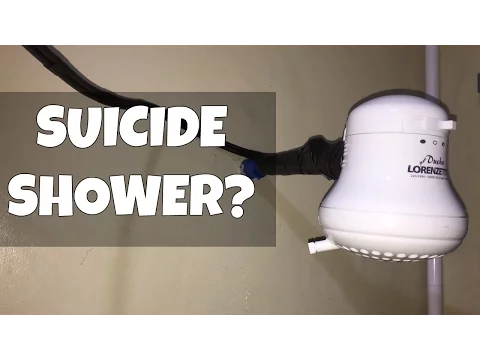
Another international channel, Gadget Addict, analyzed a Brazilian-made electric shower from the brand Lorenzetti.
In the video, the presenter states that these showers do not have a very good reputation outside Brazil, mainly due to examples of poorly done installations, with exposed wires and lack of grounding.
The video details the internal functioning of the equipment, showing the water inlet, the energized wires, the grounding system, and the diaphragm that only allows current to pass through when there is sufficient water. The presenter emphasizes that when installed correctly, the shower can be “somewhat safe,” although he notes that many users do not connect the ground wire, which causes tingling sensations.
During the tests, the YouTuber measured the power of the equipment, recording values between 2,300 and 3,500 watts, depending on the temperature selector position. He also demonstrated that the shower works with safety devices like RCD or GFCI, without triggering the automatic shutdown, indicating compatibility with additional safety systems.
Despite recognizing the operation and efficiency of the heating, the presenter states that personally, he still prefers systems with separate heaters, citing the uncomfortable feeling of mixing water and alternating current, even with adequate grounding. Still, he describes the equipment as a “very interesting” item and acknowledges its low cost and practicality.
At the end of the test, the YouTuber emphasizes that the negative nickname associated with the electric shower is more linked to the poor installations seen in different countries than to the principle of operation itself. He reinforces that the proper use of grounding is essential and that the international reputation of the equipment reflects, largely, installation failures and not the original design.

From Local Invention to Global Curiosity
Created from a domestic need in the countryside of São Paulo, the Brazilian electric shower has traveled a path that led it from Francisco Canhos’s workshop to the homes of millions of Brazilians and, more recently, to the curious gaze of foreigners.
The equipment, simple in conception and direct in operation, has become a symbol of a solution adapted to the cultural, climatic, and economic conditions of the country.
The surprise expressed by foreigners and Americans underscores the contrast between the infrastructure models adopted in different regions of the world.
While in some countries central heating is the norm, in Brazil decentralization has consolidated as a standard, shaping habits and technical solutions that today attract attention beyond borders, even with minor errors of perception about their risks and actual operation.






-

-

-

-

-

11 pessoas reagiram a isso.