





 Portuguese
  English
  Spanish
  8 min of reading
  0 comments


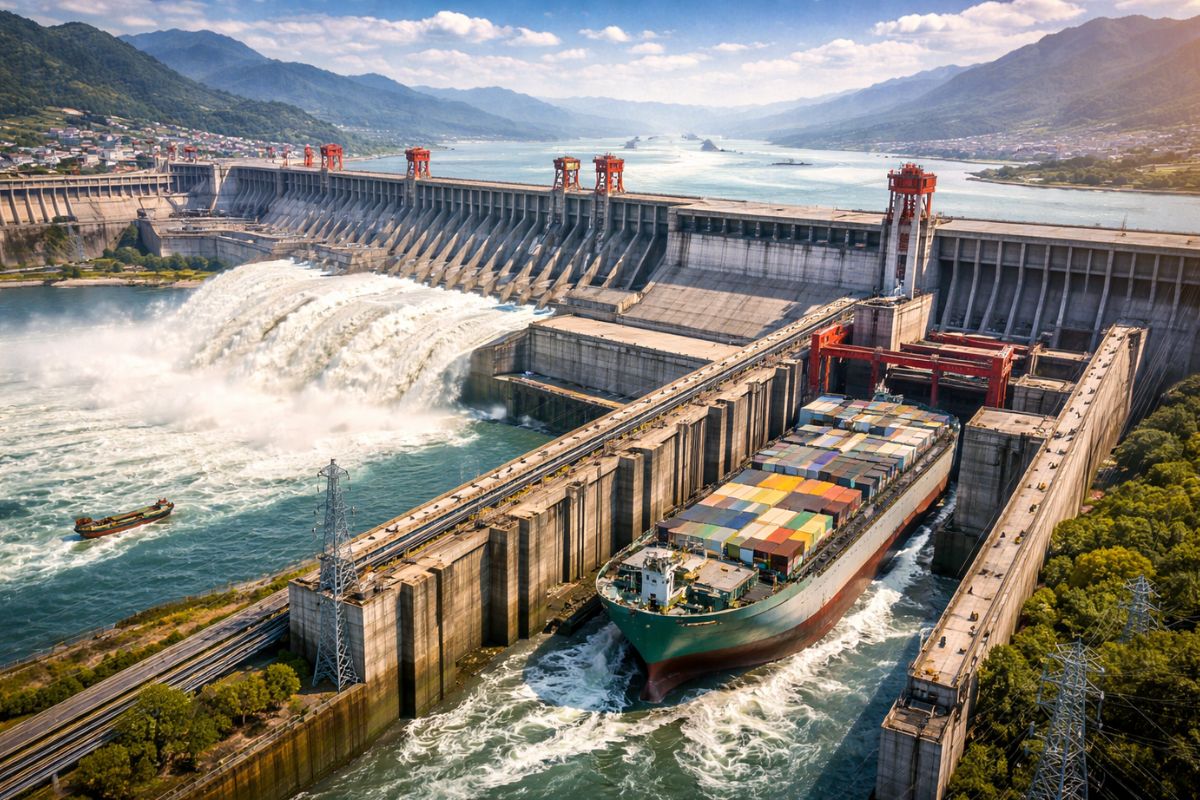
How The Three Gorges Dam Diverted The Yangtze, Controls Historic Floods, Generates More Energy Than Nuclear Power Plants, Lifts 3,000-Ton Ships, And Operates At The Edge Of Modern Engineering
It looks like just a concrete wall crossing a gigantic river, but behind the Three Gorges Dam lies a precision machine that generates more energy than nuclear power plants, controls floods that have killed millions of people throughout China’s history, and still keeps one of the busiest navigation corridors in the country running.
Built over the Yangtze River, the dam changed the geography, water flow, and even seismic risks of the region. To come to fruition, it required temporarily diverting one of the most powerful rivers in the world, building a 2.3-kilometer-long wall, installing giant turbines, and creating systems to ensure that this infrastructure, which generates more energy than nuclear power plants, remains safe even under extreme pressure.
Why China Needed A Dam That Generates More Energy Than Nuclear Power Plants

The Three Gorges Dam was not built just to showcase technological power. It is a direct response to one of China’s oldest problems: the devastating floods of the Yangtze.
-
With 55 floors, 177 meters in height, a 15-meter walkway between the twin towers, ventilated facade, and 6,300 m² of leisure space, Ápice Towers already has one tower completed and another nearly at the top.

-
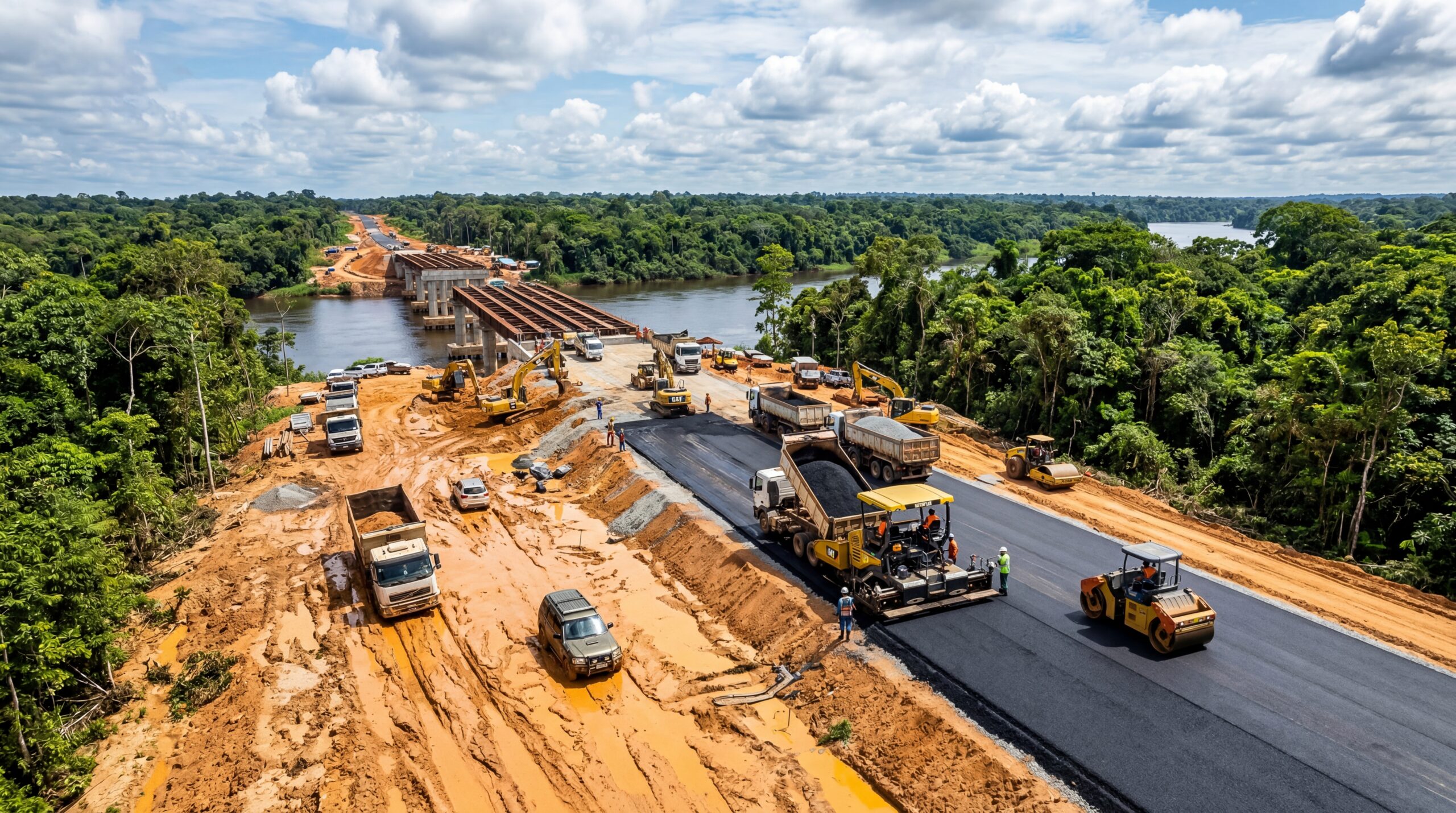
After nearly 50 years of neglect, BR-319 receives R$ 678 million to pave 340 km, gain a 320-meter bridge, and try to lift Amazonas out of the mud, the quagmire, and road isolation.
-
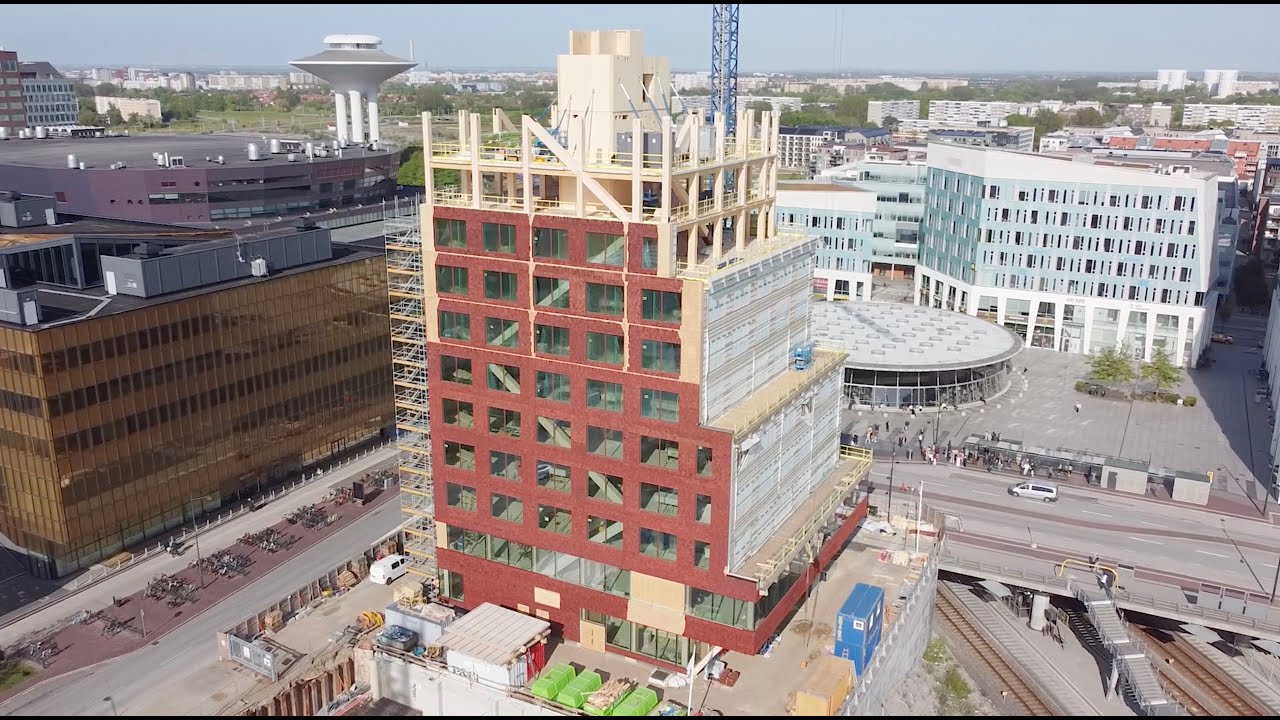
In Sweden, a 51-meter tower was built almost entirely of wood, without a concrete structural core and with solar panels integrated into the facade, using CLT and laminated beams to challenge the dominance of steel and concrete in modern buildings.
-
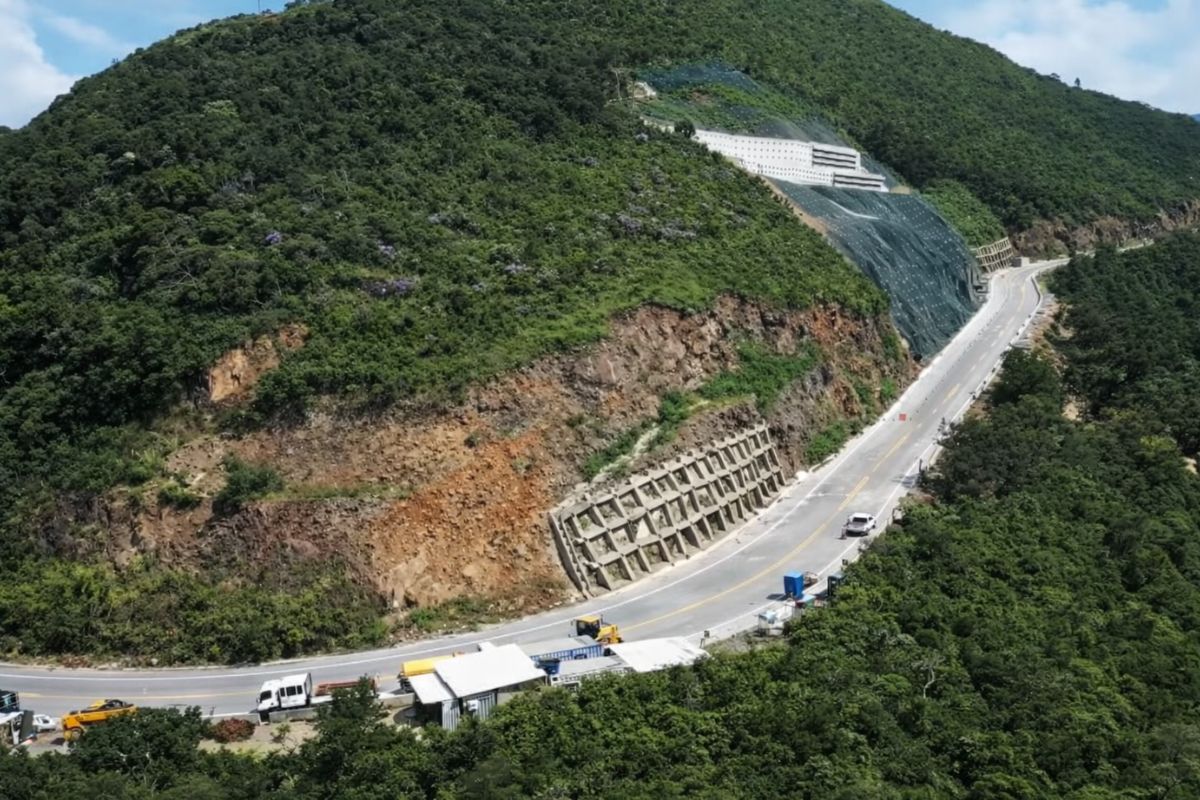
The section of Serra da Rocinha on BR-285 is now open in Timbé do Sul: 50 m tensioned curtains and top-down technique stabilize the slope, with a stairway duct controlling the water.

The river runs across the country, from the Tibetan plateau to the Shanghai region, sustaining agriculture, transportation, and trade for centuries. However, this same river, during flood years, becomes a threat. Throughout history, Yangtze floods destroyed entire cities and claimed the lives of millions of people.
Chinese leaders began discussing the construction of a large dam as early as the beginning of the 20th century. However, the idea did not advance seriously until the 1990s, when the project was approved by Congress after significant political pressure. The goal was clear: to build a structure capable of taming part of the Yangtze’s force while simultaneously creating a hydroelectric power plant that generates more energy than conventional nuclear power plants.
How to Divert The Yangtze To Raise The Largest Concrete Wall In The World

To build any dam of this size, there are two basic requirements. It must have solid rock to support the structure and a temporarily dry riverbed to safely set concrete. This means, in practical terms, changing the course of the river before constructing the main wall.
In the case of the Yangtze, this was an extreme challenge. At its peak flow, the river discharges about 110,000 cubic meters of water per second, more than forty times the flow of Niagara Falls.
Engineers began by creating temporary barriers called cofferdams. The first cofferdam was built on the left bank, between 1994 and 1997. It allowed the blockage of approximately two-thirds of the flow, concentrating the water in the remaining riverbed.
To erect this “dam within the river,” interlocked steel sheets were driven into the riverbed, forming walls that were then braced with large internal beams.
Next, a thick layer of concrete was poured underwater, at the base, sealing the structure and preventing the force of the river from tearing it apart.
The diverted water needed a new path. Therefore, a bypass canal 3.5 kilometers long was excavated along the right bank, transforming part of the mountain into the new temporary riverbed of the Yangtze.
Pumps emptied the section protected by the cofferdam until the riverbed was exposed, where the foundation of the dam would be built.
To avoid internal cracks, the concrete wall was not built all at once. Over several years, the wall was constructed in thousands of individual blocks.
Each block was fitted with a mesh of steel tubes through which cold water flowed, cooling the concrete from the inside and preventing curing heat from creating invisible but dangerous cracks.
By mid-2002, about two-thirds of the main wall was already finished, including the entire structure on the left bank and the massive central spillway.
Then, the process was repeated on the right bank, with a new cofferdam blocking the bypass channel. Three years later, the wall closed from bank to bank.
The result was the largest concrete gravity dam in the world, approximately 2.3 kilometers long, 185 meters high, and with a reservoir stretching for hundreds of kilometers upstream.
How The Dam Protects Itself From Floods, Cracks, And Earthquakes


On the outside, the Three Gorges Dam seems immobile, but, in practice, it is constantly moving. Temperature variations, changes in water levels, and even small deformations of the terrain cause the structure to shift a few millimeters throughout the year.
To monitor this, more than 5,000 sensors were installed on the dam and nearby structures, measuring temperature, pressure, displacements, and seepage in real time. Additionally, satellites monitor the dam’s surface by radar, detecting any unusual deformation.
If the internal sensors or radar scanning detect abnormal movement, the safety system issues alerts at four levels.
In critical situations, the reservoir can be relieved by opening spillways, and authorities are mobilized to evacuate downstream areas, as happened during recent flood periods when elevated-level alerts were issued and hundreds of thousands of people were preemptively evacuated.
Another critical point is seismic activity. The Three Gorges region is not far from major fault zones, such as the Sichuan area, where an earthquake in 2008 destroyed cities and caused billion-dollar damages.
During that event, the dam suffered no significant damage, partly due to its enormous weight, but also due to the way it was segmented.
The structure is divided into thousands of interlocking blocks, separated by contraction joints. These joints allow the wall to absorb some of the ground movements without breaking like a solid piece.
According to technical authorities, the Three Gorges Dam was designed to withstand shocks of magnitude 7 in the vicinity, a level that could seriously compromise other concrete structures.
All of this is essential because a dam that generates more energy than nuclear power plants cannot risk structural failure, whether due to floods, earthquakes, or internal wear.
Inside The Plant That Generates More Energy Than Nuclear Power Plants
If the concrete wall is the shield, the plant is the heart of the Three Gorges Dam. The hydroelectric complex installed there has a capacity of 22.5 gigawatts and can generate over 110 terawatt-hours of electricity per year, enough energy to power entire countries for months.
In practice, this means that the dam generates more energy than typical combined nuclear power plants, replacing dozens of reactors in terms of annual production.
This power comes from 32 Francis-type turbines installed in powerhouse structures that extend along and beneath the main structure.
Each turbine is a colossus: it can deliver about 700 megawatts of power, operating with a head of approximately 113 meters and a peak flow near 964 cubic meters per second.
To withstand this force, the turbines were custom-designed in a partnership between manufacturers from France, the United States, and Germany, redefining the global standard for hydroelectric machines.
The central component of each unit is the rotor, a wheel with curved blades about 9.7 meters in diameter and over 450 tons.
These blades were designed to achieve efficiency around 94 percent, converting almost all the water’s energy into mechanical energy and then into electrical energy.
In early tests, however, the turbines vibrated so much that they were on the verge of destruction. The turbulent flow created cavitation, small vapor bubbles that explode against the metal and corrode blades and housings.
Several rounds of adjustments to geometry, angles, and surfaces were necessary until the engineers found a design capable of channeling over 900 tons of water per second in each unit without falling apart.
Furthermore, it was essential to avoid what is known as water hammer. When a turbine of this size abruptly stops or changes speed too quickly, the water backs up through the conduits, creating pressure waves capable of damaging everything.
The traditional solution would be to construct massive surge chambers excavated into the mountain, but this proved too risky at this scale.
Instead, the team opted for a sloped ceiling return tunnel, designed to naturally absorb pressure variations as the water slows down.
This engineering shortcut eliminated the need for giant chambers and made it feasible to operate a plant that generates more energy than nuclear power plants in variable load cycles.
The Ship Elevator For 3,000-Ton Vessels And The Five Step Locks

Building a 185-meter wall in a strategic river doesn’t just affect the water. It also affects transportation. The Yangtze is one of China’s main routes for freight and passengers, and stopping this flow was not an option.
To resolve this, engineers created two solutions. The most impressive is a ship elevator, embedded in a concrete tower on the left bank, next to the dam.
This elevator is a steel chamber filled with water, perfectly balanced, capable of lifting vessels of up to 3,000 tons in one movement.
The journey between the downstream level and the reservoir level takes about 22 minutes, a very short time to overcome a height difference of nearly 113 meters.
Larger ships or convoys that cannot use the elevator ascend through a system of five large step locks excavated into the hillside.
Each chamber functions like a step: the boat enters, the gates close, the water rises about 20 meters, and releases the vessel for the next level.
The process is repeated until the total height difference is overcome. In this case, ascending takes about four hours, compared to the 22 minutes of the elevator.
Even so, it is this combination of elevator and locks that keeps a corridor moving millions of tons per year, even with a dam that generates more energy than nuclear power plants right in the way.
Three Gorges at The Limit And Future Plans
Once completed, the Three Gorges Dam became a symbol of ambition and also of controversy.
From a technical perspective, it demonstrates just how far modern engineering can go to tame a gigantic river, generate more energy than nuclear power plants, and maintain a complex transportation system running simultaneously.
However, the project did not stop on inauguration day. There is a continuous effort for modernization. One of the focuses is to relieve the queue of vessels waiting to pass through the locks, which during peak times can reach several days of waiting.
Recent plans point to the construction of a second, even larger lock system, designed to reduce congestion and increase navigation capacity in the stretch.
Meanwhile, the operation of the dam is constantly adjusted to balance flood control, energy generation, and structural safety, at a level of monitoring that is rare even by global standards.
The truth is that, looking at all of this, the Three Gorges Dam has already entered history as one of the boldest projects of the century, uniting scale, risk, and technical sophistication in a single point on the map.
And you, after learning how this dam diverts an entire river, lifts ships, and generates more energy than nuclear power plants, do you think such megaprojects are worth the impact and risk, or should they be replaced by smaller and more distributed solutions?





-

-

-

-

-

12 pessoas reagiram a isso.