





 Portuguese
  English
  Spanish
  4 min of reading
  0 comments


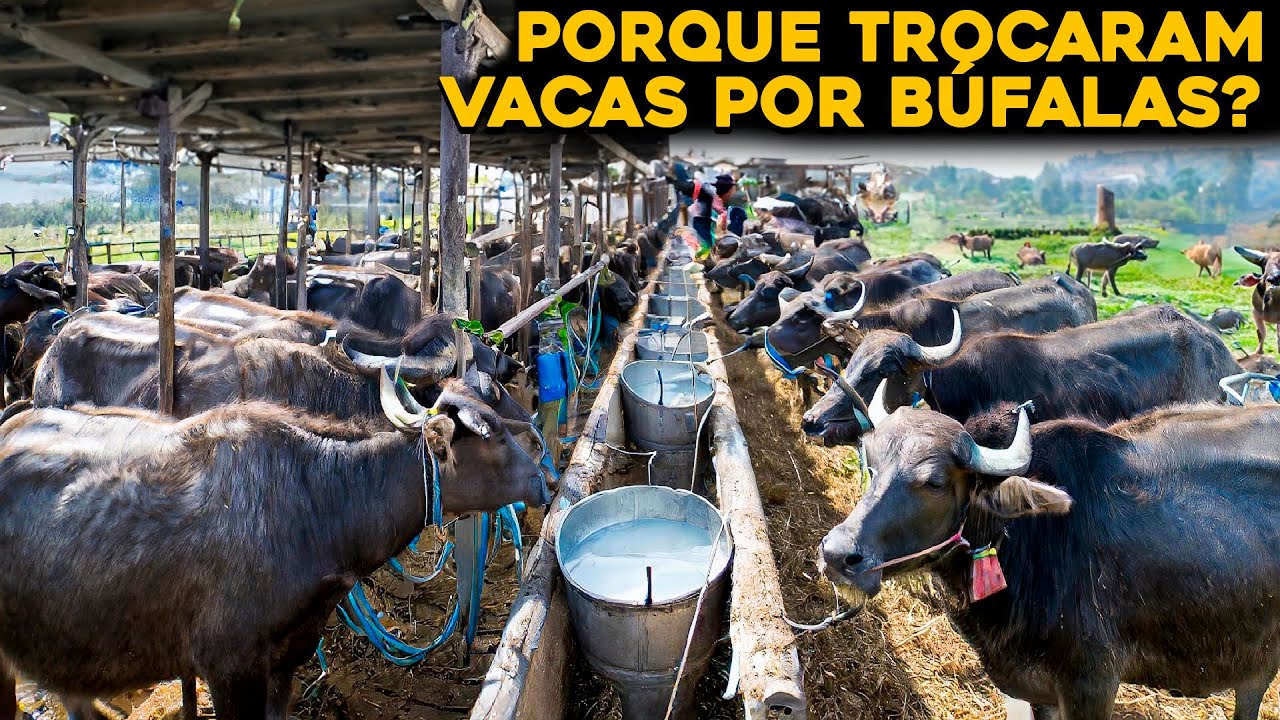
In Rural Areas Of India, Pakistan And Brazil, Millions Of Buffalos Ensure Milk, Meat And Agricultural Traction Where Tractors Don’t Reach, Sustaining A Resilient And Low-Tech Agro.
In vast rural areas of the planet, where precarious roads, flooded soils or difficult terrain make the use of modern machinery unfeasible, one animal continues to be the backbone of agricultural production: the buffalo. Far beyond a cultural symbol, buffalo farming sustains entire economies in regions of Asia and South America, providing milk, meat, labor, and food security for millions of people. In countries like India, Pakistan, and Brazil, the buffalo occupies a strategic space precisely because it thrives where mechanized agriculture meets physical and economic limits.
Why Buffalos Have Become Essential In Non-Mechanized Areas
The domestic buffalo, especially the Asiatic buffalo (Bubalus bubalis), exhibits unique characteristics that explain its widespread adoption in low-tech agricultural systems.
It withstands high temperatures, works well in flooded areas, feeds on lower quality pastures, and maintains productive performance even in environments considered marginal for traditional cattle. In regions where tractors get stuck, engines break down, and fuel is expensive or scarce, animal traction is still the most efficient and reliable solution.
-
A Brazilian millionaire couple restores a farm over 150 years old in the interior of São Paulo and transforms the historic property with Portuguese tiles, antique furniture, and new spaces into a refuge that blends tradition, comfort, and sophistication.

-
Submerged city in a lake in Minas reveals intact streets, preserved vehicles, and houses after more than 60 years, impressing divers.

-
Yellowstone has started to rise again in an area of the caldera, and the movement rekindles fears surrounding the U.S. supervolcano, as scientists monitor the deformation and try to understand what is happening underground.

-
Woman arrested after receiving $1.2 million due to banking error and not returning the amount.




Moreover, the maintenance cost of a buffalo is significantly lower than that of agricultural machinery, especially for small producers. The animal provides daily labor, reproduces naturally, and still generates high-value economic products, such as milk and meat, creating a complete productive cycle within the property itself.
India And Pakistan: The World’s Heart Of Buffalo Farming
India is home to the largest buffalo herd in the world, with tens of millions of animals distributed mainly in rural and semi-urban areas. In the country, buffalo milk accounts for a significant portion of national dairy production, serving as the basis for products such as clarified butter, yogurts, and traditional cheeses.
The high concentration of fat and protein in buffalo milk makes it especially valued, both for internal consumption and for export.
In Pakistan, the scenario is similar. The buffalo is central to food security, providing milk daily to families that rely on local production to survive.
In many regions, these animals are also used to plow fields, transport harvests, and move simple equipment, maintaining agricultural productivity in areas where mechanization is still not technically or economically viable.
Agricultural Traction: When The Animal Replaces The Engine
In rural areas of Asia and South America, animal traction is not a relic of the past but a rational choice. Buffalos pull plows, carts, and light agricultural equipment efficiently, especially in waterlogged soils, such as rice paddies.
Their strength, combined with physical endurance and docile behavior, allows for long working hours with low operational risk.
This model reduces dependence on fossil fuels, imported parts, and specialized maintenance. For isolated communities, this represents productive autonomy and lower vulnerability to economic or logistical crises. At a time of debate about sustainability and emissions reduction, animal traction reemerges as a functional and environmentally efficient solution.
Meat Production And Adaptation To Extreme Environments
Although less known than milk production, buffalo meat also plays a relevant role. In Asian countries, it is consumed locally and exported to various markets.
In Brazil, the buffalo found space mainly in the North region, where it perfectly adapts to the flooded areas of the Amazon and Marajó, places where traditional cattle face greater challenges.
The hardiness of the buffalo allows it to be raised in natural pastures, with a lower need for inputs and intensive supplementation. This makes buffalo farming a strategic alternative to expand animal protein production without encroaching on more sensitive areas or requiring large investments in infrastructure.
The Brazilian Case: Buffalo Farming As A Regional Solution
In Brazil, buffalo farming has consolidated especially in regions where the moist soil and logistics make traditional cattle ranching difficult.
The animal provides milk for the production of differentiated cheeses, meat with good market acceptance, and is also used as labor in family properties. In many cases, the buffalo represents the difference between producing or abandoning agricultural activities.
Brazilian buffalo farming is also advancing in integrated systems, combining animal production with sustainable management of flood-prone areas. This reinforces the role of the buffalo as a key animal in climate adaptation strategies and rational land use.
A Low-Tech Agro, But High Resilience
The strength of buffalo farming lies in its functional simplicity. Without relying on high technology, it sustains entire production chains, guarantees income for small producers, and keeps agricultural production active in regions where mechanization does not reach.
In a world facing climate change, rising energy costs, and logistical challenges, the buffalo emerges as a symbol of productive resilience.
More than a working animal, it represents a model of agro adapted to local realities, capable of feeding populations, generating income, and keeping production alive where technological advancement still meets natural limits.





-

-

-

-

-

-

63 pessoas reagiram a isso.