





 Portuguese
  English
  Spanish
  4 min of reading
  1 comment


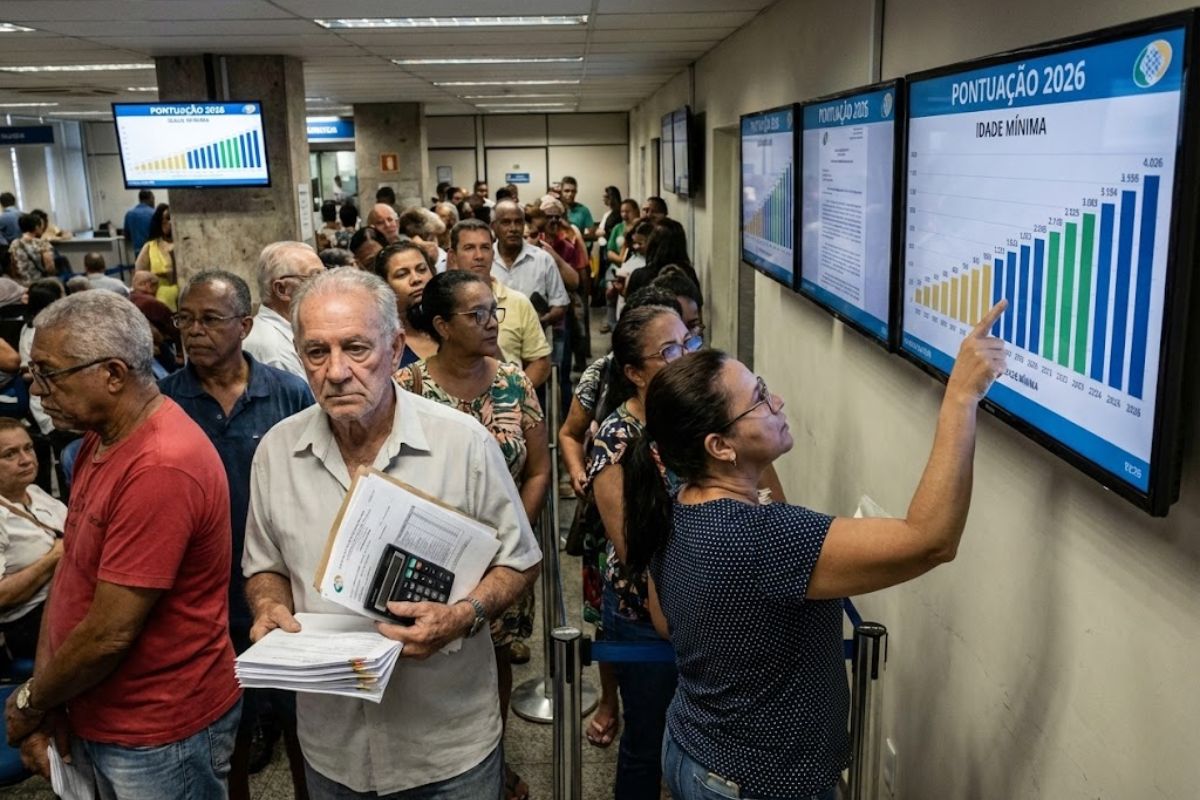


In Brazil, the INSS Implemented in 2026 New Annual Adjustments to the 2019 Reform: Progressive Minimum Age Increases to 59 Years and Six Months for Women and 64 Years and Six Months for Men; Points Rule Goes to 93 and 103; Ceiling Adjusts 3.90% to R$ 8,475.55 and Changes the Planning
The turn of 2026 put the INSS at the center of a new round of retirement demands in Brazil, with stricter rules specifically for those who had been contributing before November 2019 and depend on the transitions created by the pension reform.
In practice, the annual changes planned since 2019 advanced another step, raising the minimum age and points while pushing the plan to stop working further ahead, at the same time 2026 also brought value updates, with adjustments for those earning above the minimum wage and a new official ceiling.
What Changed in 2026 in the Transition Rules
Since the approval of the pension reform in November 2019, the transition rules have been progressively adjusted each year.
-
Lula responds directly to Trump and says that Pix is from Brazil and will not change under pressure from anyone, after a report from the United States pointed out the Brazilian payment system as an American trade barrier.

-
Amazon has just announced a new fee on all deliveries, and your online purchases will become more expensive starting April 17, including for those buying from the United States here in Brazil.

-
He sold his share for R$ 4 thousand, saw the company become a giant worth R$ 19 trillion, and missed the opportunity of a lifetime.

-
Elon Musk’s Starship megafrocket puts $8 billion at risk, raises alarms in the market, and could affect technology, mining, and space internet startups in the coming years.

In 2026, this automatic mechanism advanced again, raising the bar for workers who were close to meeting the criteria and who had a “finish line” that was closer.
The most sensitive effect is the calendar: those who organized their retirement based on a specific combination of age and time of contribution now need to recalculate deadlines, as the requirements have increased without changing the minimum contribution time, but elevating the age and points markers.
Progressive Minimum Age: Exact Numbers and Who is Most Affected
In the progressive minimum age rule, the numbers for 2026 are as follows:
Women: 59 Years and Six Months
Men: 64 Years and Six Months
The minimum contribution time, in turn, remains the same within this rule:
Women: 30 Years of Contribution
Men: 35 Years of Contribution
This layout creates a typical bottleneck for those who were already “on the edge”: even maintaining the required contribution time, the person may stumble on the age requirement, which grows over the years.
For many workers, this means that the delay does not come from a lack of contributions, but because the minimum age now requires more months before the request can be made.
Points Rule: Sum of Age and Contribution Became Stricter in 2026
Besides the progressive minimum age, 2026 also toughened the points rule, which sums age + time of contribution.
The new thresholds were defined as follows:
Women: 93 Points
Men: 103 Points
As the scoring works by summation, it directly affects those who already have many years of contribution but have not yet reached the sufficient age to complete the required total.
This is why the points rule is often perceived as the most frustrating for those who were close to requesting the benefit: a small increase in the final number can represent another entire work cycle, depending on the distance to close the count.
Who Falls Under the Permanent Rules and Why There is No Annual Adjustment
The permanent rules remain in effect for workers who started contributing to the Pension System after November 2019.
In this model, the requirement does not change each year, which makes the scenario more predictable for those who came in after the reform.
The permanent criteria are:
Women: 62 Years Old and a Minimum of 15 Years of Contribution
Men: 65 Years Old and a Requirement of 20 Years of Contribution to the INSS
The central difference, therefore, is that a person does not need to follow annual increases in age and points within the transitions.
In return, there are fixed demands that start higher in minimum age and, in the case of men, with a higher minimum contribution time.
Values in 2026: Adjustment for Those Earning Above Minimum Wage and New INSS Ceiling
Besides the tightening of the rules, 2026 brought an adjustment in the amounts paid by the INSS for beneficiaries who receive above the minimum wage, with a 3.90% adjustment.
As a result, the ceiling of benefits was updated from:
R$ 8,157.41 to R$ 8,475.55
In practice, this detail changes the top of the table and the maximum reference of the system that year, even though the tightening of access rules has been what drew the most attention for those trying to retire through the transitions.
Do you think the INSS should maintain this annual increase in requirements in 2026, or should those who were already close to retiring deserve a less burdensome transition rule?









como sempre,trabalhador sendo sacrificado,enquanto isso ,políticos não trabalham tanto e tem aposentadorias milionárias.