





 Portuguese
  English
  Spanish
  5 min of reading
  0 comments


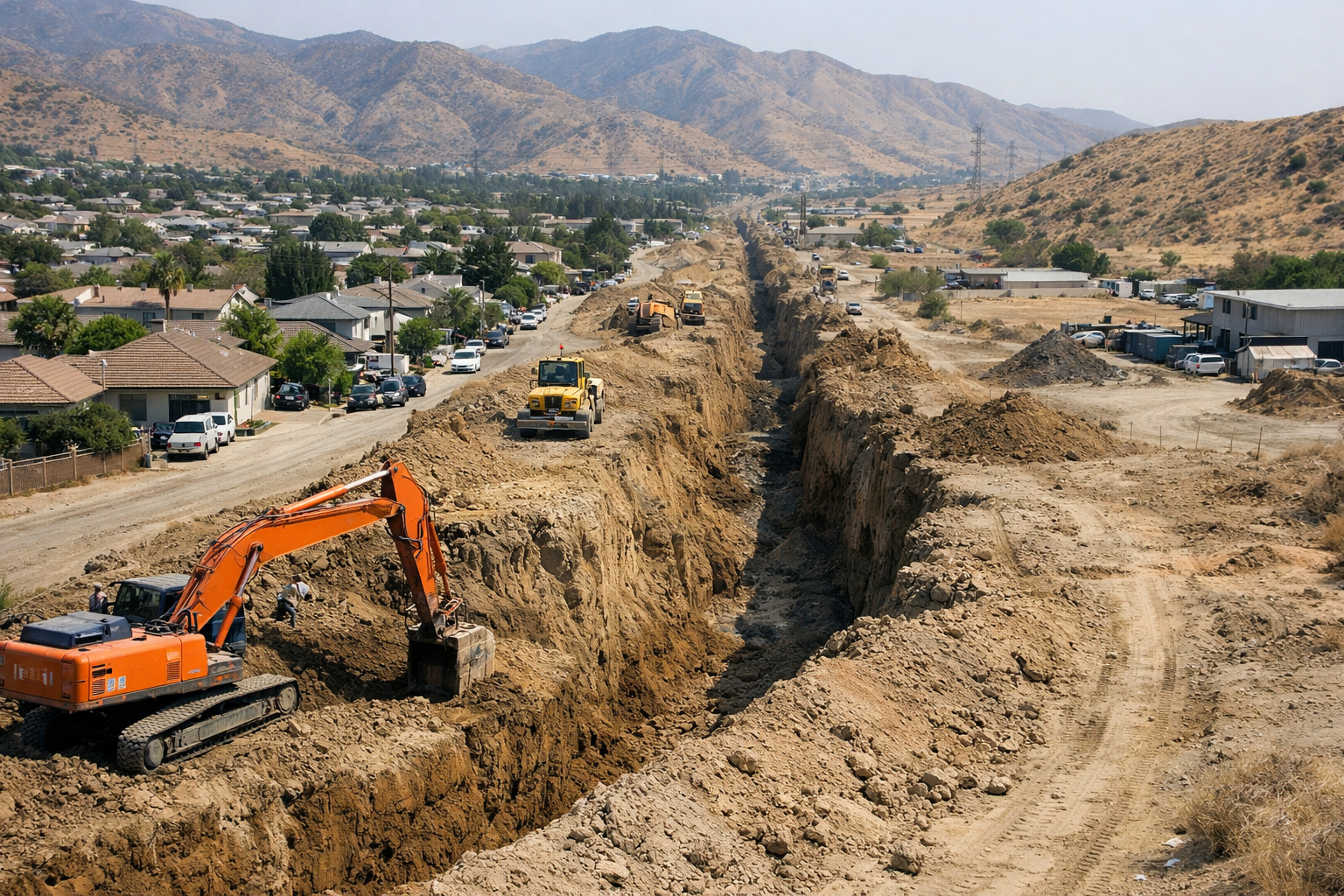
A Silent And Billion-Dollar Intervention Advances Through The Territory Of The Richest State In The U.S., Crossing Urban Areas, Slopes And Forests, While Authorities Seek To Contain An Increasing Threat That Has Already Cost Thousands Of Lives And Billions Of Dollars
On the morning of November 8, 2018, everything seemed normal in the small mountainous region of Pulga, Northern California. A light fog covered the slopes, there were no thunderstorms, explosions, or any immediate warning signs. Meanwhile, the neighboring town of Paradise, with over 26,000 residents, was still asleep. However, on a power pole more than 100 years old, a simple metal hook holding electrical cables broke.
The wire fell, came into contact with the metal structure, and produced an electrical arc. Subsequently, glowing particles hit a thick layer of pine needles accumulated over decades. This seemingly trivial detail was the starting point of one of the most destructive wildfires in modern U.S. history.
In the first 60 minutes, the fire advanced so rapidly that many people did not even understand what was happening. At certain moments, the flames traveled over 1 kilometer in just a few minutes, overwhelming any evacuation capacity in mountainous areas. Hot, dry winds, extremely low humidity, and the rugged terrain created the perfect conditions for tragedy.
-
Created by George Lucas with over $1 billion, a futuristic museum in the shape of a spaceship with 1,500 curved panels is about to open in Los Angeles and will house one of the largest private collections of narrative art in the world.

-
Couple shows how they built a retaining wall on their property using 400 old tires: sloped land turned into plateaus, tires are aligned, filled, and compacted with layers of soil, with grass helping in support and at almost zero cost.

-
Engineer explains drainage during the rainy season: the difference between surface water and deep water, ditches, gutters, and water outlets on the road, as well as drains and drainage mattresses, to prevent erosion, aquaplaning, and flooding at the construction site today.

-
With 55 floors, 177 meters in height, a 15-meter walkway between the twin towers, ventilated facade, and 6,300 m² of leisure space, Ápice Towers already has one tower completed and another nearly at the top.


Uncontrolled Fires And Impacts That Go Beyond The Forests

The so-called Camp Fire lasted 17 days until it was completely extinguished. During that time, practically everything was consumed. In the end, 85 people lost their lives, 18,804 structures were destroyed — including homes, schools, hospitals, fire stations, shops, and the entire administrative center of the town. About 90% of Paradise was simply devastated.
Electricity, water, sewage, and telecommunications simultaneously collapsed, making the region uninhabitable for months, in some cases for years. Economic damages were estimated between 16 and over 20 billion dollars, making the Camp Fire the most expensive natural disaster in the world in 2018.
The information was released by official reports and technical investigations widely reported by the U.S. press, which began to treat wildfires in California no longer as isolated events but as a structural crisis. After all, similar episodes occur every year. Viewed from above during the dry season, California resembles a permanent alert map, with hundreds of active hotspots, smoke covering entire valleys, and recurring evacuations.
When Electrical Infrastructure Becomes Part Of The Problem
As early as the 2000s, the numbers were alarming. Between 2000 and 2001, the state registered between 7,000 and 9,000 fires a year. However, the situation significantly worsened. Just between 2016 and 2020, there were 16,377 wildfires, burning around 3.4 million acres. This area exceeds the territory of Montenegro, is nearly half of Belgium, and is larger than the sum of burned areas in several other U.S. states during the same period.

In addition to material destruction, the wildfires have come to represent a serious public health crisis. During major incidents, cities like Sacramento, San Francisco, and Fresno recorded concentrations of fine particulate matter PM2.5 between 150 and 200 µg/m³. The safe daily exposure limit, according to the World Health Organization, is only 15 µg/m³, meaning levels up to 13 times above what is considered safe. As a consequence, clear increases in cases of stroke, asthma, and cardiovascular diseases were observed, particularly affecting children and the elderly.
Although traditional causes like human carelessness, lightning, and illegal burning still account for most fires, a new factor has come to the forefront. Data from 2016 to 2020 indicate that about 10% of California’s wildfires were linked to the electrical system. At first glance, this percentage seems small. However, these fires were responsible for the largest burned areas, totaling approximately 642,000 acres, more than several other causes combined.
The Decision That Led California To Dig Itself

The Camp Fire also triggered an unprecedented legal and financial crisis. Pacific Gas and Electric (PG&E), the largest utility company in the state, acknowledged responsibility for the incident. The result was an avalanche of civil lawsuits and claims for compensation for human and material losses. In 2019, the company filed for bankruptcy under Chapter 11, marking the largest bankruptcy in U.S. electric utility history.
In light of this scenario, authorities began to consider profound changes to the infrastructure. Prior to this, an emergency solution was attempted: the Public Safety Power Shutoff (PSPS), which consists of preventive power shutdowns during extreme weather conditions. Technically effective, the method provoked strong public rejection, as millions of people were left without electricity for days, putting the elderly, patients dependent on medical devices, and small businesses at risk.
It was in this context that California began to prioritize a more radical alternative. The digging of thousands of miles of trenches to alter electrical infrastructure became visible in cities, suburbs, and mountainous regions. After 2018, companies identified the so-called high fire threat districts, areas with frequent winds, low humidity, steep terrain, and a history of major fires. In these places, excavation became an absolute priority.
Costs, Controversies, And A Debate That Divides The State


Despite the technical benefits, the decision sparked strong public debate. The cost of burying the electrical network varies from 2.4 to 10 times more than maintaining overhead cables, averaging 3.88 million dollars per mile. If the entire network in California were modified, the estimated cost would reach about 559 billion dollars, a figure comparable to the annual budget of several countries.
Furthermore, part of the expenses was passed directly on to residents. In suburban areas, homeowners received charges between 8,000 and 10,000 dollars just for the connection in front of their homes, amounts not covered by insurance. Meanwhile, since 2024, the average electricity bill has increased by about 34 to 34.50 dollars per month.
Still, operational data show clear results. Sections where the network was modified practically did not register fires started by electrical equipment. Power outages have significantly decreased, especially during Santa Ana winds, and the need for preventive shutoffs has drastically fallen.
In the end, California came to an uncomfortable conclusion: there is no one-size-fits-all solution. The combination of infrastructure, environmental management, technology, and early prevention has become the only possible way to make fires harder to start, slower to spread, and less destructive when they inevitably occur.








-

-

5 pessoas reagiram a isso.