





 Portuguese
  English
  Spanish
  3 min of reading
  1 comment


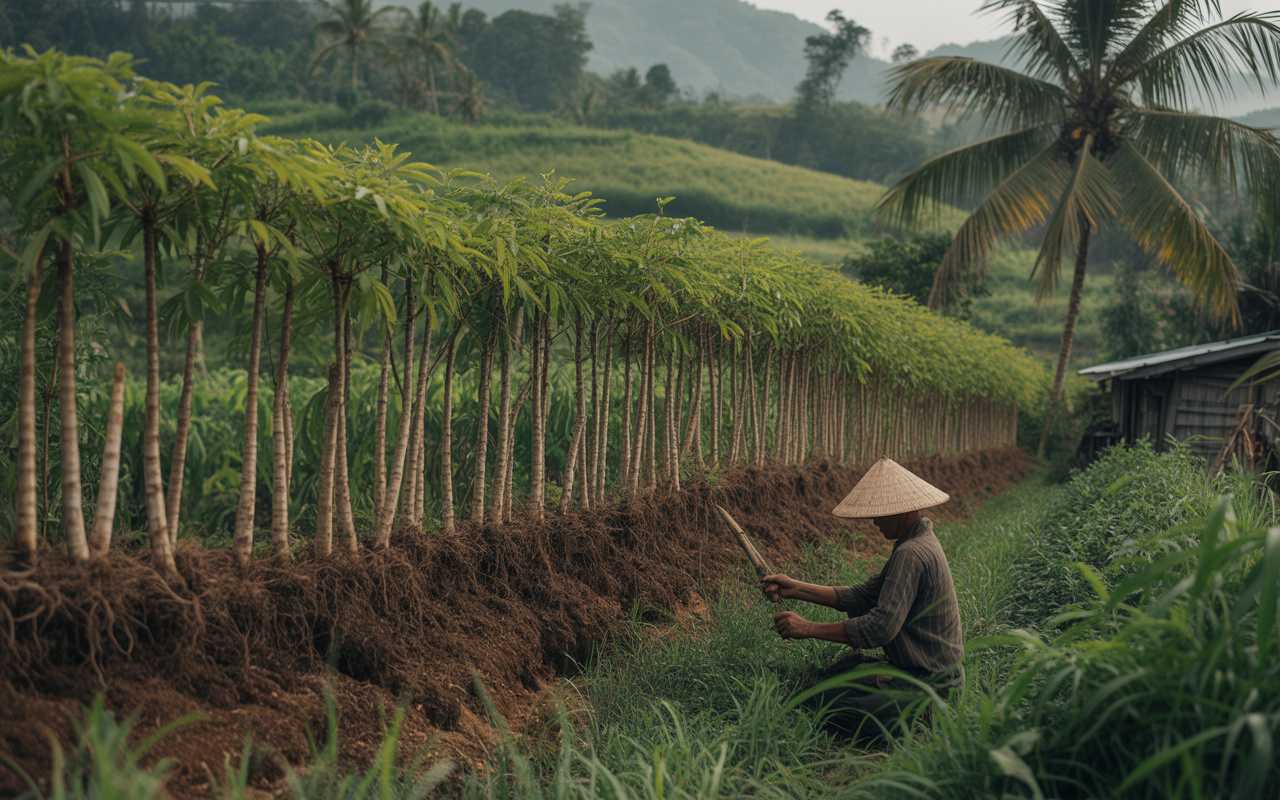


Indonesian Farmers Use Cassava as Live Fencing to Protect Crops, Reduce Erosion, Keep Animals Away, and Also Produce Food.
In various rural regions of Indonesia, small farmers use cassava (Manihot esculenta) as “live fencing” around vegetable gardens, orchards, and plots of annual crops. This technique is not new and did not arise as an exotic curiosity but as a practical solution to a real problem: enclosing properties at low cost, with locally available materials that simultaneously prevent erosion, serve as a barrier against animals, and also provide food.
The result is a multifunctional system that, although simple, aligns with modern principles of agroecology and sustainable soil management.
Why Use Cassava as Live Fencing?
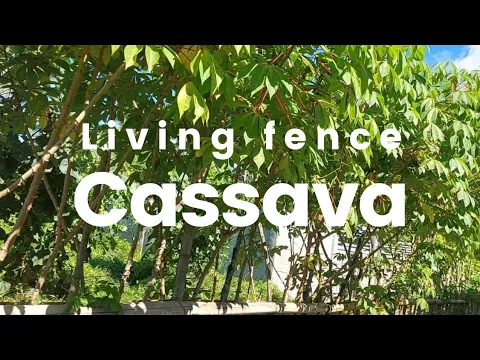

The choice of cassava is not random. The plant possesses agronomic and ecological characteristics that make the system viable:
-
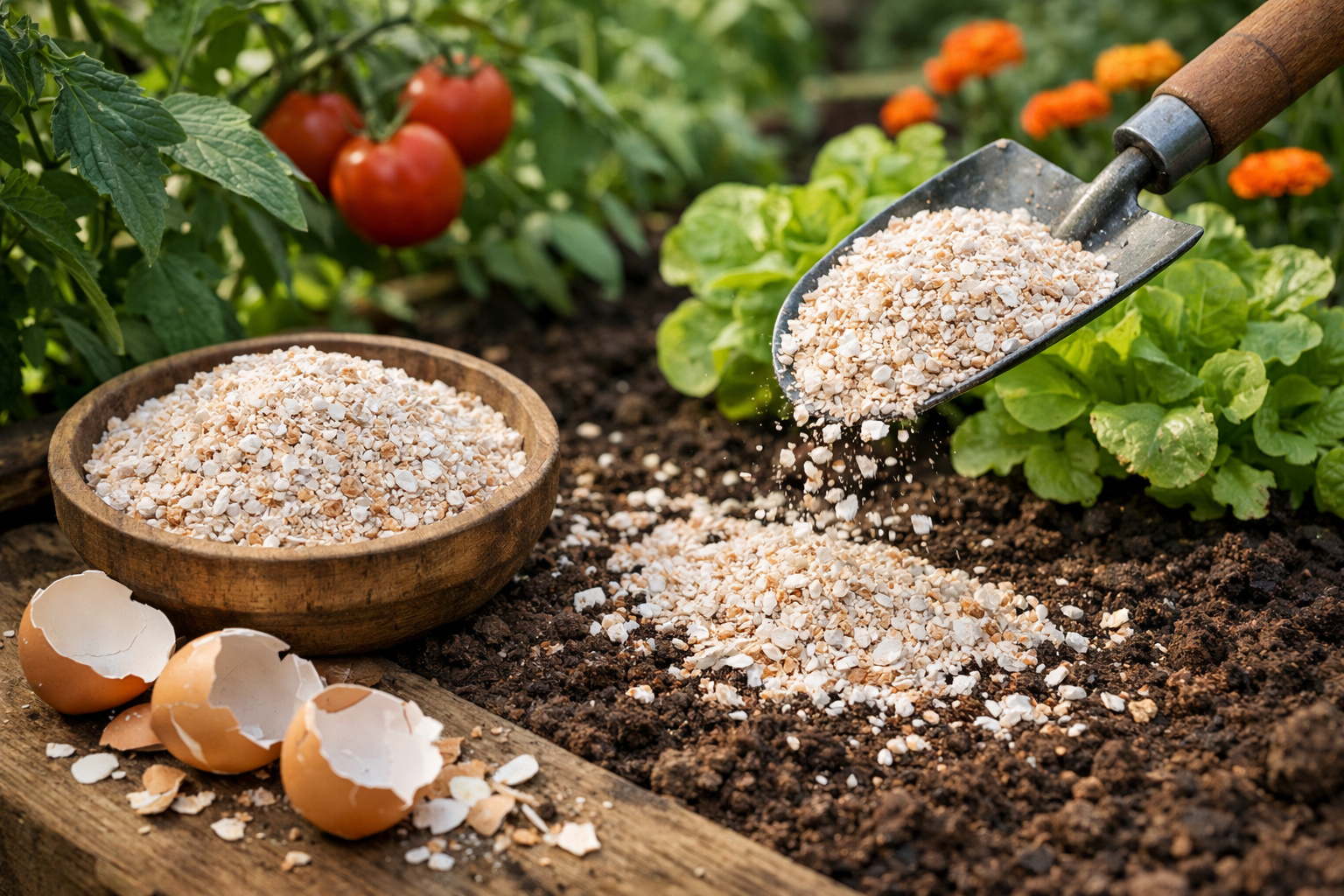
The eggshell that almost everyone throws away is made up of about 95% calcium carbonate and can help enrich the soil when crushed, slowly releasing nutrients and being reused in home gardens and vegetable patches.
-
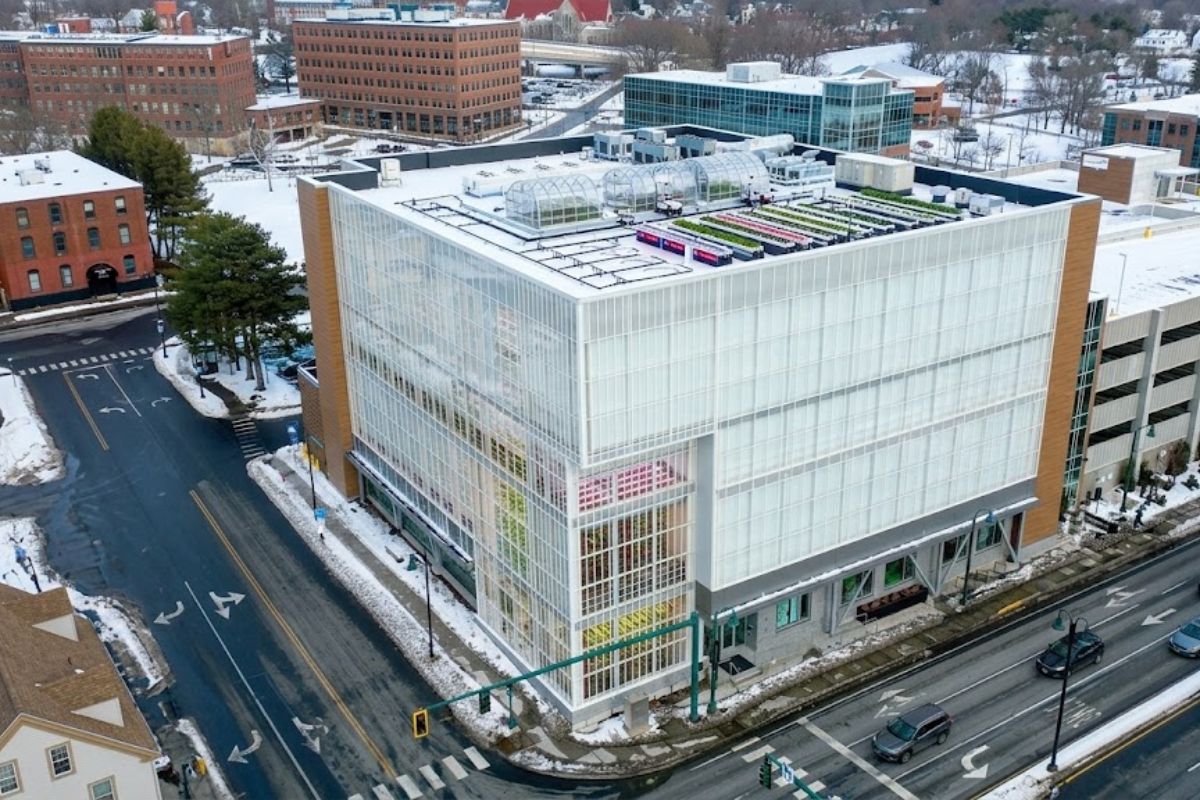
This farm in the United States does not use sunlight, does not use soil, and produces 500 times more food per square meter than traditional agriculture: the secret lies in 42,000 LEDs, hydroponics, and a system that recycles even the heat from the lamps.
-
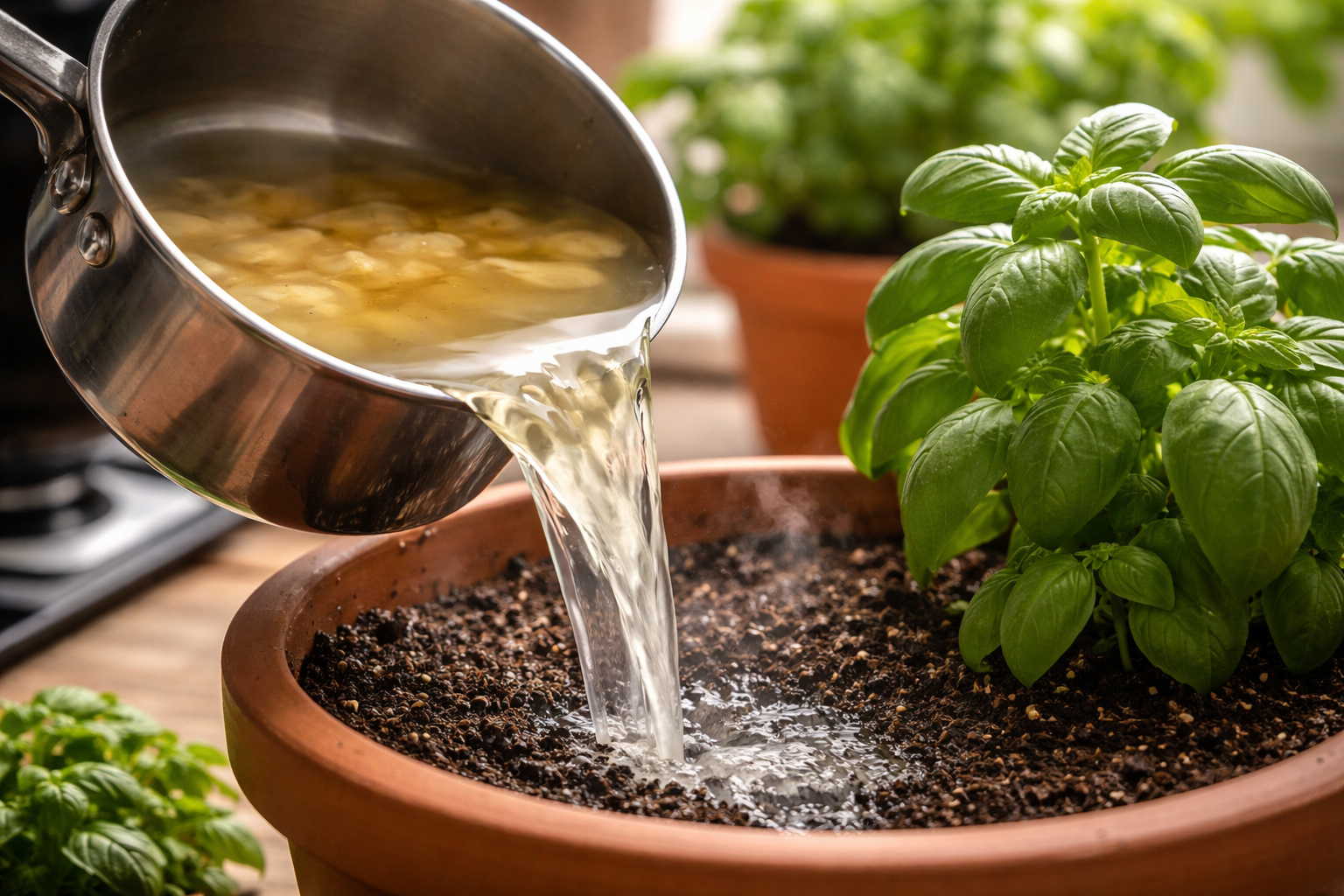
The water that almost everyone throws away after cooking potatoes carries nutrients released during the preparation and can be reused to help in the development of plants when used correctly at the base of gardens and pots, at no additional cost and without changing the routine.
-
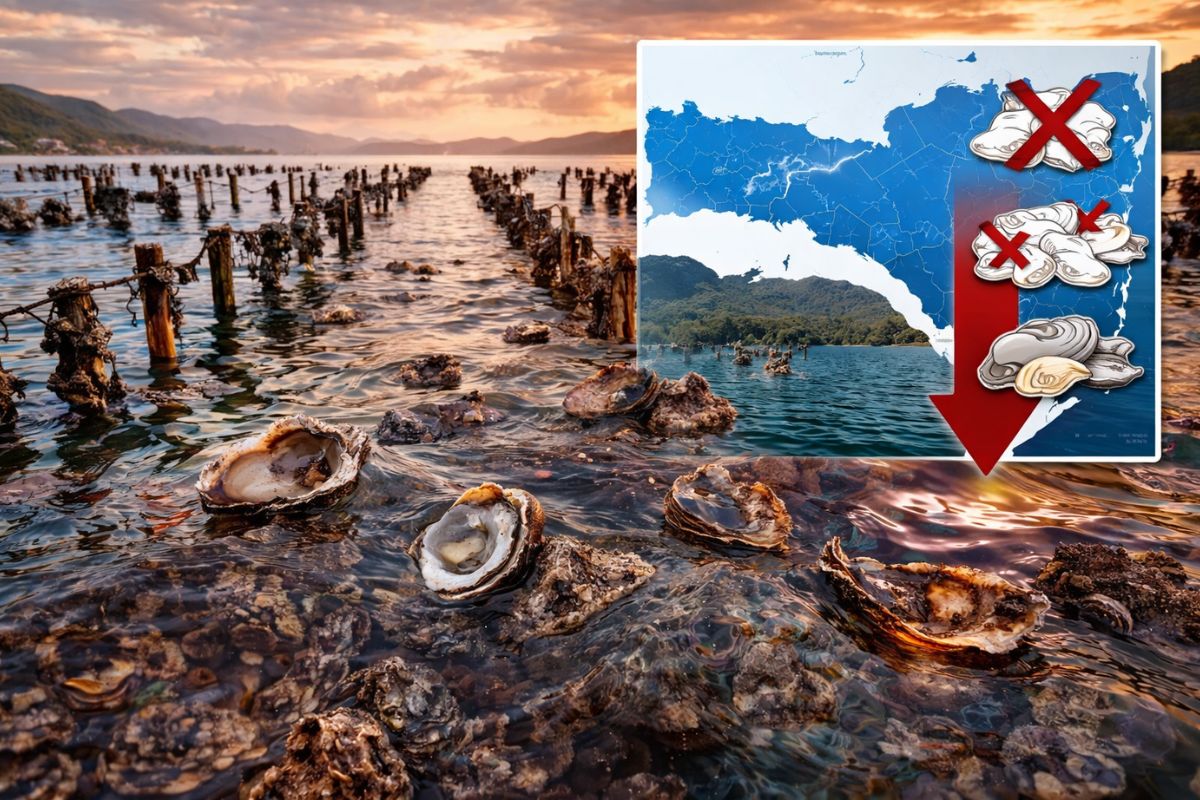
The sea water temperature rose from 28 to 34 degrees in Santa Catarina and killed up to 90% of the oysters: producers who planted over 1 million seeds lost practically everything and say that if it happens again, production is doomed to end.
- Easy to Plant: a single piece of stem (cutting) pushed into the soil already sprouts and grows.
- Drought Tolerance: withstands dry periods, common in various islands of Indonesia.
- Deep Root System: helps stabilize the soil, reducing erosion on sloped terrain.
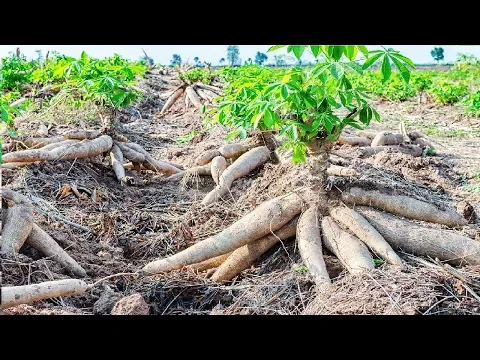
- Harvestable Leaves and Roots: the same element that forms the fence also turns into a staple food.
- Very Low Cost: does not require wire, posts, or expensive maintenance.
In many rural communities, the alternative would be to use wood, bamboo, or wire — materials that cost more, require maintenance, and do not provide any food return.
Barrier Against Animals, Wind, and Erosion
In addition to the obvious function of demarcating the perimeter of small properties, cassava acts as a physical and ecological barrier against:
• Goats and Chickens, which are common in rural areas and can devastate gardens in a matter of hours.
• Wind Currents, reducing the dehydration of vegetables during dry periods.
• Surface Runoff, decreasing erosion in mountainous areas, especially in provinces like West Java, Central Java, and parts of Sumatra.
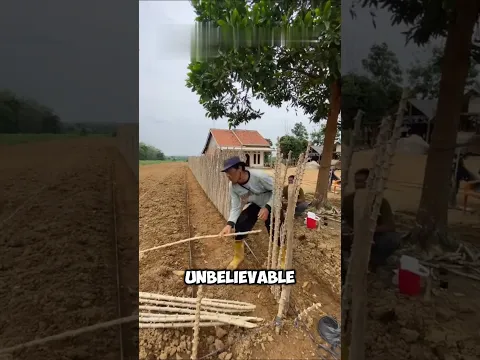
When used around slopes and rural road edges, cassava functions as plant containment, preventing landslides and the loss of fertile soil during heavy rain.
The Fence That Also Feeds
One of the most interesting factors of this practice is the dual productive function: while serving as a barrier, cassava continues to be a food crop.
• The roots turn into staple food, rich in carbohydrates and important for local food security.
• The leaves can be cooked, providing plant protein, iron, and vitamins (a common practice in various regions of Africa and Asia).
On family properties with limited square meters, transforming the fence into food is a way to optimize space and ensure diverse production.
Connection with Agroforestry and Tropical Polyculture Systems
Cassava as live fencing easily integrates into traditional practices of tropical agroforestry, which are prevalent in rural areas of Indonesia and Timor-Leste. In these configurations, the fence can appear alongside banana plants, papayas, peppers, and various species of tubers.
This system reduces reliance on external inputs and adapts to a central principle of small tropical agriculture: each plant needs to have more than one function — to feed, protect, shade, or keep the soil alive.
Not a Myth, Not a Legend, and Not “Agricultural Folklore”
It is important to highlight that this practice exists and is used mainly by small farmers and rural communities. It does not appear in industrial agribusiness manuals and is unlikely to be seen in large monocultures, as it does not fit into large-scale mechanized models.
This helps explain why many people in Brazil or other countries have never heard of the topic, even though it is perfectly real and technically coherent.
A Solution That Sparks Interest in Other Tropical Regions
In recent years, universities and institutes related to agroecology have been studying systems of productive live fences in countries in Africa, Southeast Asia, and Latin America.
The interest is not in cassava itself, but in the concept: replacing passive infrastructure with useful plants, generating food + protection + soil conservation, all at once.
In the case of Indonesia, cassava has become the perfect candidate because it grows quickly, withstands water stress, and does not require technology.






Que impressionante