





 Portuguese
  English
  Spanish
  5 min of reading
  0 comments



Sentence Indicates That Keeping An Employee Without Salary Involved Exhausting Hours, Degrading Conditions, Dormitory on a Gurney at the Clinic and May Lead to Criminal Investigation After Final Judgment.
The Labor Court sentenced Chinese medicine influencer Peter Liu in Campinas for keeping an employee without salary for approximately 30 years, in a situation recognized as analogous to slavery. The decision states that the worker acted as a domestic employee without pay, under exhausting hours and conditions considered degrading.
In addition to the influencer, the sentence holds his wife and two children jointly liable, ordering the payment of R$ 1.2 million in labor rights and compensation, including R$ 400,000 for moral damages. An appeal can be made against the decision.
What the Justice Decided and How Much the Family Was Ordered to Pay
The conviction was issued by the 10th Labor Court of Campinas and set the payment at R$ 1.2 million, a sum that includes back wages, vacation, 13th salaries, overtime, fines, and compensations. Of the total, R$ 400,000 were determined as moral damages.
-
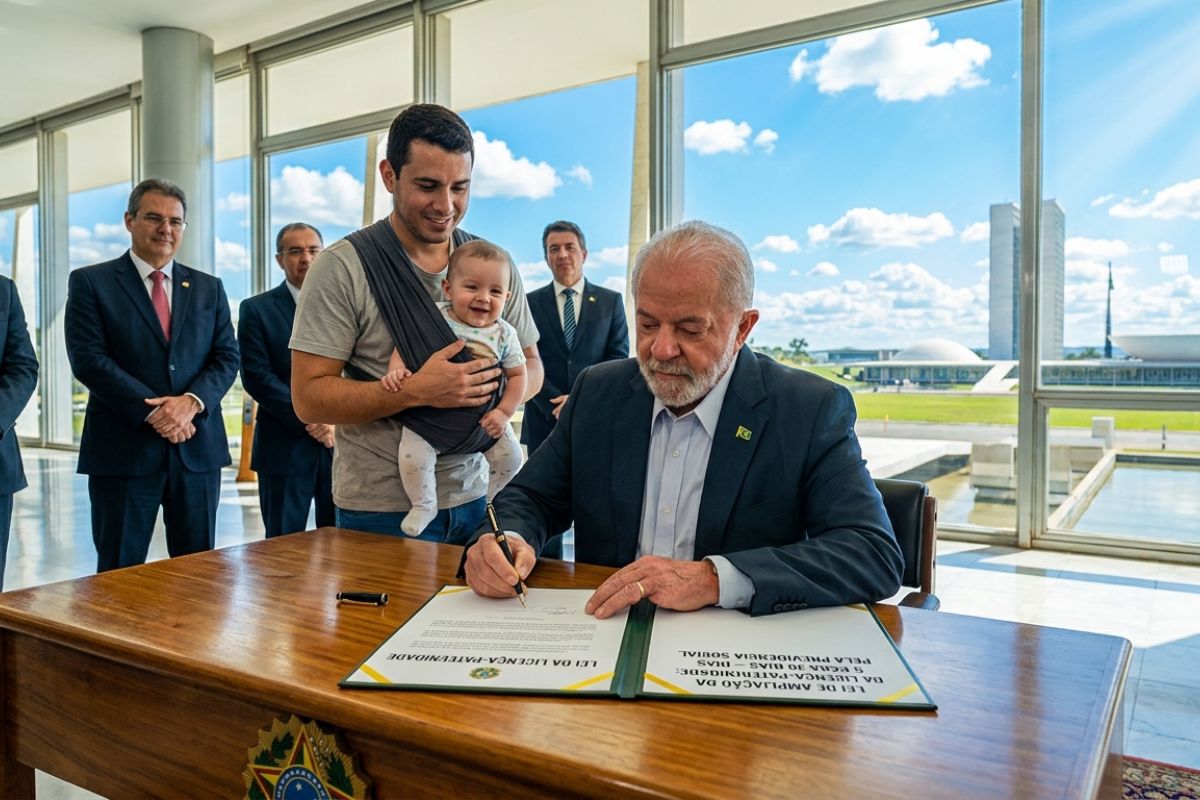
Government enacts new law: paternity leave increases from 5 to 20 days with gradual increases until 2029, and Social Security pays the paternity salary; companies no longer bear the absence cost, estimated at R$ 5.4 billion.
-
End of the 1-hour lunch break in the CLT? Current labor law maintains the break, allows for negotiated reductions, and defines rules for working hours and home office in Brazil.

-
Employee Fired After Accumulating 114 Days of Medical Leave in One Year, Labor Court Upholds Company’s Decision

-
Employee Fired While Treating Depression Wins in Court and Vale Is Required to Rehire Him Following Decision Based on the CLT and INSS Benefits

The ruling emphasizes that keeping an employee without salary for decades does not merely involve the absence of payment, but encompasses the set of elements recognized in the case, such as the continuity of service and the work conditions described in testimonies.
Employment Link Recognized for 30 Years and Joint Liability

The Justice recognized the employment link between the worker and the Liu family from April 1, 1992, to August 31, 2022. The understanding was that Peter Liu, his wife, and their two children directly benefited from the work rendered without compensation.
According to the records, the woman was brought from Pernambuco to Campinas with the promise that she would start receiving wages once the family regularized their status in Brazil, which did not occur.
The decision indicates that she remained at the family’s disposal continuously, without formal registration and without any regular payment, a situation that supports the thesis of keeping an employee without salary for a long period.
Routine Described in the Process: Early Morning, Clinic, and Long Hours
Testimonies collected in the case indicated that the workday began around 4 AM, when she prepared the family’s breakfast, and extended until late at night.
After domestic activities, she would accompany Peter Liu to the clinic where he worked, remaining there until approximately 10:30 PM on some days.
The decision emphasizes that keeping an employee without salary was compounded by a work regime considered exhausting, with continuous availability and without the formalization required by labor legislation.
Housing and Food Conditions Cited by the Sentence
The case states that initially, the woman slept on a sofa and later began sleeping on a gurney set up in the clinic, in an environment deemed unsuitable for living.
The food, as reported, often depended on donations made by patients of the establishment.
This collection of information was used to support the classification of keeping an employee without salary in degrading conditions, reinforcing the understanding of a serious violation of rights.
Termination of the Employment Link, Labor Action, and Current Situation of the Worker
The link was terminated in 2022, after the worker reported threats made by Peter Liu’s wife. From then on, she sought legal assistance and initiated the labor action.
Currently, the woman lives in the house of one of the influencer’s daughters, whom she helped raise since childhood. In her testimony, the daughter stated that upon learning about the situation, she stopped any provision of services and encouraged the former employee to seek Justice.
The case reinforced the debate about keeping an employee without salary within domestic relationships without a formal contract.
Possible Criminal Investigation After Final Judgment
In addition to labor convictions, the judge ordered that, after final judgment, notices be sent to the Federal Public Ministry and the Federal Police to investigate any crime of reducing someone to an analogous condition of slavery, as outlined in Article 149 of the Penal Code.
The penalty mentioned in the decision can vary from two to eight years of imprisonment, depending on the investigation. This directive broadens the case’s scope and shows that keeping an employee without salary may also have criminal repercussions, in addition to labor compensation.
What the Defense Says and Why the Family Claims They Will Appeal
In a statement, the defense for Peter Liu and his family declared that the accusations are unfounded and that there was no establishment of work analogous to slavery.
The lawyers argue that the relationship was of a familial and assistive nature, without restrictions on freedom or undignified living conditions.
The defense also contends that the action was prompted by family disputes, attributed to the initiative of the influencer’s daughter, and that the decision failed to analyze what they consider relevant evidence. Therefore, they informed that they have already taken steps to appeal.
Even with this position, the sentence points out elements that characterize keeping an employee without salary for decades, with routine and conditions described in the case.
Repercussions and Debate on Informal Domestic Work
The case gained attention due to Peter Liu’s notability on social media, where he has millions of followers with content about traditional Chinese medicine.
The decision reignites the debate on informal domestic work, labor exploitation, and the importance of monitoring and enforcing labor laws in Brazil.
When situations of keeping an employee without salary appear in court decisions, the impact often goes beyond the case: it exposes how relationships without registration and payment can drag on for years under “familial” justifications until Justice intervenes.
Do you think cases of keeping an employee without salary are still underreported in Brazil, or is monitoring and reporting becoming more effective?









-

Uma pessoa reagiu a isso.