





 Portuguese
  English
  Spanish
  4 min of reading
  1 comment


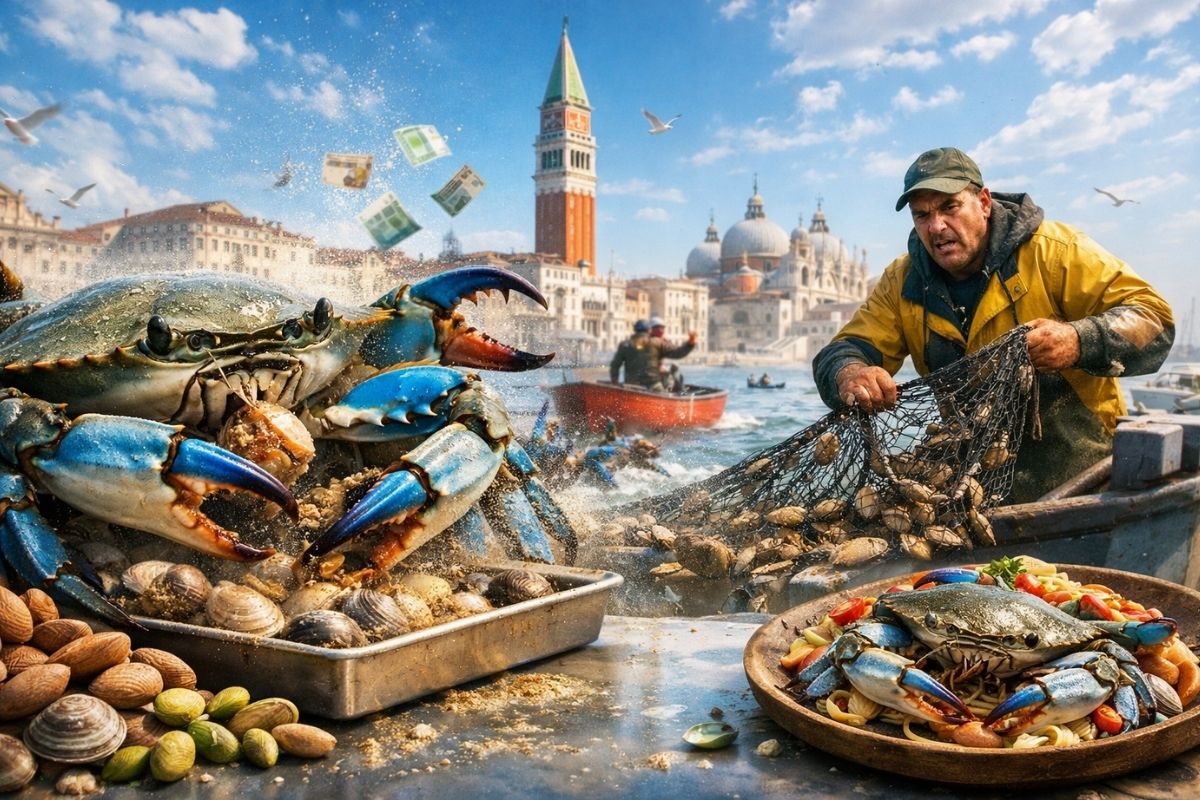


In Skardavari Lagoon, Near Venice, The Blue Crab Devours Clams, Destroys Fishermen’s Income, and Forces Government and Local Chefs to Turn The Pest Into A New Dish to Try to Save The Region’s Economy.
On the shores of Skardavari Lagoon, in the shallow waters near Venice, fishermen who once lived by harvesting clams for the beloved spaghetti vongole now deal with a voracious invader. The blue crab, a non-native species, has been destroying shells, emptying natural beds, and putting at risk a tradition that has sustained families for generations. In the face of this advance, the pressure is growing to turn the pest into a new dish, using cuisine as a form of economic defense.
Native to the east coast of the United States, the blue crab likely crossed the Atlantic hidden in ships and found a paradise in the Mediterranean without natural predators. In the region’s warmer waters, it spread quickly and altered the balance of local species. What began as a discreet presence has turned into an invasion that threatens both the ecosystem and the food culture tied to clams.
An Invader That Devours The Heart Of The Lagoon

In practice, the impact is seen in the routine of those who depend on the lagoon. The fishermen of Skardavari report that the blue crab has become particularly skilled at opening clam shells, using its strong, blue claws. This means less product to sell, more uncertainty, and more fear for the future.
-
“No one will make us change the Pix,” says Lula after the US report.

-
Lula responds directly to Trump and says that Pix is from Brazil and will not change under pressure from anyone, after a report from the United States pointed out the Brazilian payment system as an American trade barrier.

-
Amazon has just announced a new fee on all deliveries, and your online purchases will become more expensive starting April 17, including for those buying from the United States here in Brazil.

-
He sold his share for R$ 4 thousand, saw the company become a giant worth R$ 19 trillion, and missed the opportunity of a lifetime.


In recent months, the problem has worsened to the point that sections of the lagoon have begun to look like an underwater desert.
Fishermen say they return from entire weeks of work without being able to catch almost anything, while blue crabs “eat everything” in their path.
The feeling is like watching, live, the erosion of a way of life that revolved around clam fishing.
Government Opens The Coffers to Contain The Advance
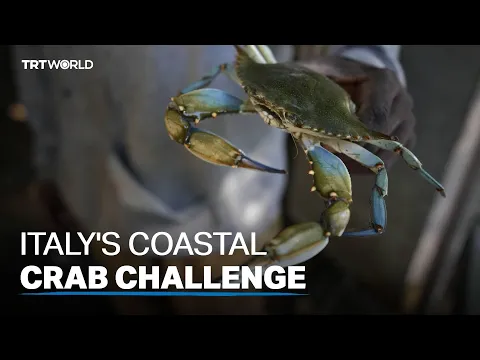

In light of the escalating problem, the Italian government announced funding of over 3 million dollars to tackle the blue crab.
The agriculture minister himself classified the situation as critical, acknowledging that it is not just a local issue, but a sign of a broader environmental imbalance.
The plan includes economic incentives for those who catch the invader, in an attempt to reduce its population and, at the same time, generate some income from the catch.
By paying to remove the blue crab from the lagoon, the government is trying to turn the enemy into an opportunity, paving the way to transform the pest into a new dish on Italian menus.
Chefs Test Recipes to Turn The Pest Into A New Dish

While fishermen struggle to keep their boats active, some chefs have decided to take a different approach: instead of just combating the blue crab, they try to make use of it in the kitchen.
In restaurants in the region, a movement is beginning to emerge to present the invader as a delicacy to customers.
One chef quoted in the report explores creative ways to serve the blue crab, from appetizers to main courses.
He talks about using the meat in starters, first courses, and second courses, and even considers how to incorporate the ingredient into desserts, although these ideas are still in the testing phase.
The logic is clear: if it is possible to transform the pest into a new dish desired by the public, what is currently a threat could become a source of income and an incentive to remove the animal from the lagoon.
This change of perspective also helps reinforce the message to consumers. By explaining that the crab is precisely the invader that devours clams, chefs invite the public to be part of the solution, choosing a dish on the menu that, indirectly, contributes to controlling the species.
A Laboratory of Adaptation in Times of Climate Change
The case of the blue crab in Italy is presented as an example of broader challenges related to climate change and the accelerated transformation of ecosystems.
As seas warm and shipping routes intensify, invasive species find new areas to colonize, often without natural barriers.
Just as in Skardavari Lagoon, ecosystems around the world are being reshaped, and entire communities must decide whether to fight these changes or adapt to them.
The Italian experience suggests that, in some cases, adapting may mean finding economic value in what was previously seen only as a pest.
By connecting the plight of fishermen, the government’s reaction, and the creativity of chefs, the story shows that the response to the blue crab is not simple. It is a mix of control, incentives, and reinvention, where cooking becomes a tool for survival.
Adaptation or Resistance: Which Path Should The Lagoon Take?
As boats return almost empty and kitchens begin testing new recipes with the invader, Skardavari Lagoon becomes a symbol of a dilemma that goes far beyond Venice.
The decision to turn the pest into a new dish is not just a culinary strategy, but an experiment in coexisting with a rapidly changing world.
In the end, a question remains that goes from the dish to environmental policy: do you think betting on recipes with blue crab is truly a smart way to protect fishermen and clams, or should the path be different in combating this invasive species?








No by eating them will empty the natural breeding grounds of the clams and restoration of their presence into their natural breeding environment.
The crabs could also be harvested to
make gardern fertiliser and pet food.