





 Portuguese
  English
  Spanish
  5 min of reading
  1 comment


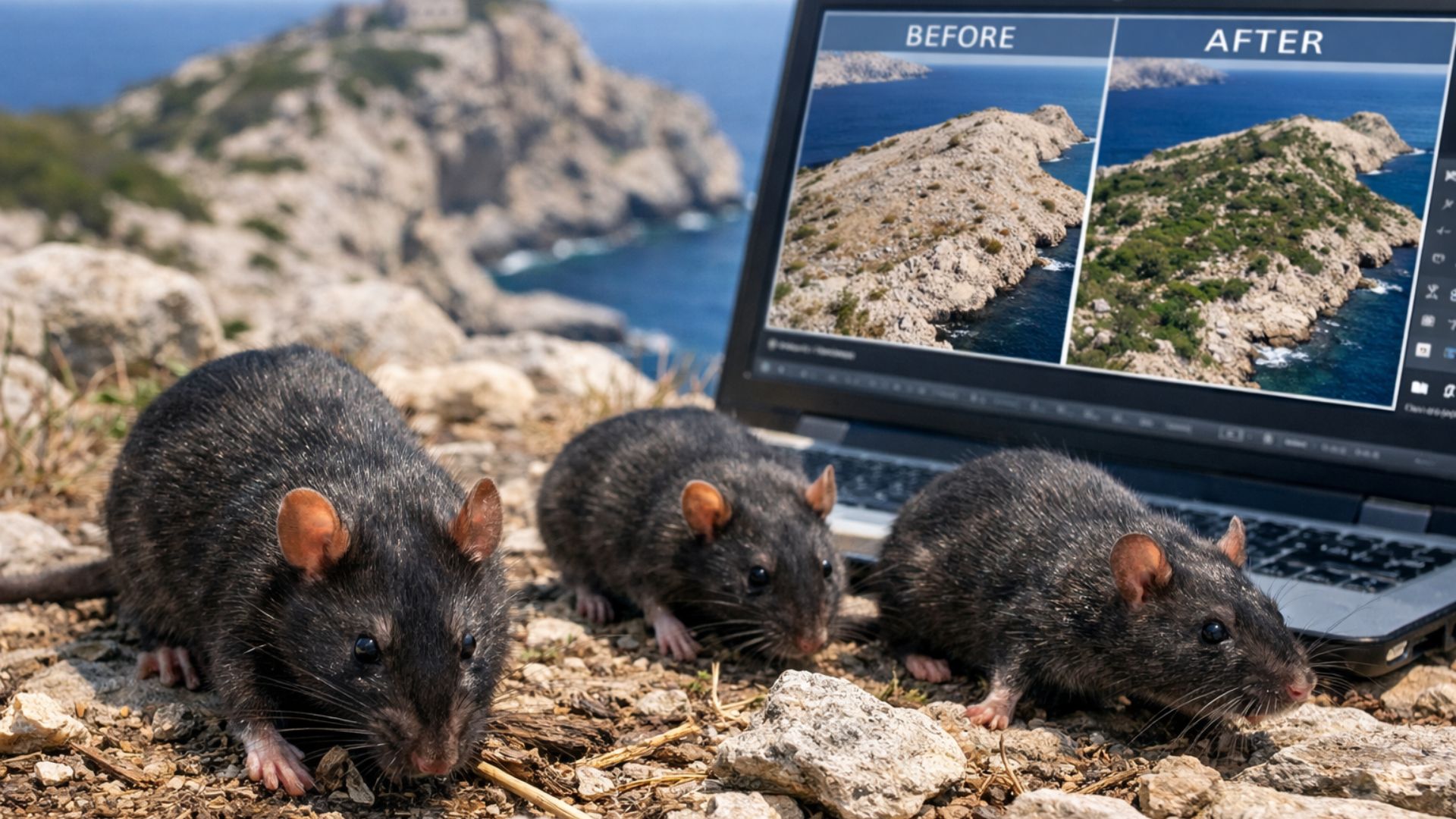


Experiment on Mediterranean Island Tested Satellite Images After Invasion Rodent Elimination, In Search of Vegetation Recovery Signs.
Historical NDVI series and Landsat data were included in the scientific analysis. The result contradicted expectations and revealed limitations of remote monitoring.
A small rocky island in the Mediterranean became an open-air laboratory for a question that often arises in environmental restoration projects: when an intervention works, can we see nature’s response in the space?
In the case of Sa Dragonera, a small island near Mallorca, Spain, the attempt to use satellite images to measure the “before and after” of the elimination of invasive rats yielded a finding that surprised even researchers accustomed to monitoring vegetation through numerical indices: the signals detected by the satellite did not directly confirm the expected recovery of plant productivity after eradication.
-
After the union of Brazil and China, BRICS plays a leading role in the merger between two powers: Egypt and India move forward with agreements exceeding US$ 4 billion, expanding industrial capacity in strategic sectors and accelerating the establishment of factories and global production chains.

-
Church from 1888 becomes a mansion of over 330 m² in Canada after a renovation of R$ 3.4 million and is eventually sold for nearly R$ 4.3 million.

-
How an innovative city combines high technology, well-being, and sustainability to become the largest reference in clean energy on the planet.
-
Couple buys 1846 church in ruins for R$ 660,000, invests R$ 3.2 million in renovations, transforms it into a millionaire mansion, and even preserved a historic cemetery with over 300 graves.
Sa Dragonera, Invasive Rats, and Island Impacts
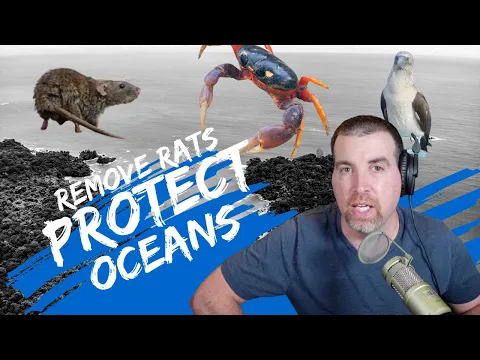
For decades, Sa Dragonera had the presence of the black rat (Rattus rattus), a species introduced to numerous islands worldwide and known for impacting seeds, shoots, and young parts of plants, as well as affecting entire food chains.
In island environments, where various plant and animal species evolved without similar predators or consumers, the arrival of rodents can alter plant recruitment, reduce shrub regeneration, and change soil cover patterns, with effects that take time to reveal in the field.

Therefore, the eradication of rodents became a common strategy in conservation, especially on islands, where control is more feasible than on continents.
NDVI, Landsat, and How Vegetation is Measured from Space
The logic seemed simple: if rats remove seeds and attack shoots, vegetation should gain strength when the pressure disappears, and this gain could appear as an increase in “greenness” or productivity in metrics derived from orbital images.
To test this hypothesis without relying solely on periodic expeditions, a group of researchers decided to transform the satellite into a witness of restoration.
The work analyzed the primary productivity of vegetation through time series of NDVI, an index widely used to estimate vigor and density of vegetation cover based on light reflection recorded by orbital sensors.
BFAST and Time Series to Detect Environmental “Breaks”
The study used a monthly series of NDVI extracted from Landsat images, with a time frame long enough to compare trends before and after the black rat eradication campaign.
Instead of looking only at point values, the authors applied an approach aimed at identifying structural changes in the series, seeking “breaks” in the trend that could coincide with the intervention.
To achieve this, the BFAST method was employed, a technique used to detect changes in environmental data that mix seasonality and long-term trends, precisely the type of noise that makes it difficult to attribute a change to management, rather than to natural climate variation.
Climate, Rain, and the Challenge of Separating Cause and Coincidence
The main difficulty, however, arises when the goal is to separate cause and coincidence.
Vegetation on Mediterranean islands responds strongly to factors such as precipitation, heat waves, dry periods, and seasonal variations.
A wetter year can raise the NDVI even without intervention; a drought cycle can lower the index despite local improvements in regeneration.
To reduce this risk of interpretation, the study compared Sa Dragonera with a control area, where there was no rat eradication, allowing verification if the observed trends could be associated with meteorological changes affecting the region as a whole.
Unexpected Result: When the Satellite Does Not Confirm Recovery

It was at this point that the result deviated from the most anticipated script.
Nine years after the rodenticide campaign, the sustained increase in primary productivity in Sa Dragonera, which would be the “classic” signal of recovery, did not appear as a clear pattern attributable to the removal of rats.
The changes identified by the break detection method occurred in a manner consistent with variations also observed in the control, which weakened the direct link between eradication and plant response measured by NDVI.
Practically, the satellite did not provide a robust signature of recovery that could be pointed out, with certainty, as a consequence of the elimination of rodents.
What NDVI May Overlook in Ecological Restoration
The interpretation of the finding requires caution because “not seeing” in the satellite does not automatically mean there was no ecological benefit.
NDVI is an indirect measure, sensitive to coverage and vigor, but limited in capturing certain types of change, such as seedling regeneration under canopy, discrete changes in species composition, or increases in still-small woody plants.
Moreover, ecological processes on islands may follow different rhythms than expected: even if the pressure on seeds and shoots decreases, recovery may depend on already reduced seed stocks, pollinators, dispersers, and the time necessary for shrubs and trees to change canopy structure enough to alter orbital indices.
When Scale and Metric Determine What Appears on the Map
The study reinforces a central point in restoration: the scale of intervention and the type of metric chosen need to communicate.
In small areas, or where vegetation coverage is already naturally fragmented, satellite resolution and the mixing of signals in each pixel can hide important local variations.
In environments with strong climatic control, plant productivity can fluctuate so much due to rainfall and temperature that any biological gain becomes difficult to isolate without a rigorous comparison design, with controls and analyses that take this variability into account.
What Changes in the Evaluation of Conservation Projects
The most direct implication of the work is not to discourage eradications but to require a more specific question: what type of recovery is intended to be measured, and with which tool?
In islands where the goal includes increasing the survival of seedlings or recovering species sensitive to consumption by rodents, monitoring may need to combine field indicators, such as plant recruitment and vegetation composition, with orbital metrics of productivity that capture broader changes.
The satellite, in this context, remains valuable, but the study shows that it may mainly record the “pulse” of the climate, and not necessarily the isolated effect of biological management.
Remote Sensing and the Promise of “Seeing Nature Recover”
By placing a real intervention under the scrutiny of long-term data, the case of Sa Dragonera also exposes how conservation projects are being evaluated in an era of remote sensing.
The promise of “seeing nature recover from space” is powerful and communicable, but the evidence needs to be treated with the same rigor that would be applied to any scientific measurement.
When the result contradicts expectations, the most useful response is not to seek an easy narrative, but to understand what the method can capture, what it loses, and how to improve the evaluation design so that future decisions are better informed.
If the elimination of an invasive species may not appear on the satellite as imagined, which other indicators should be prioritized to measure, accurately, the actual return of biodiversity on islands?






doomed and expired lady settler called alisson ficher, I think 🤔🤔🤔 after thailand, you will have popularity across the African continent…