





 Portuguese
  English
  Spanish
  4 min of reading
  25 comments


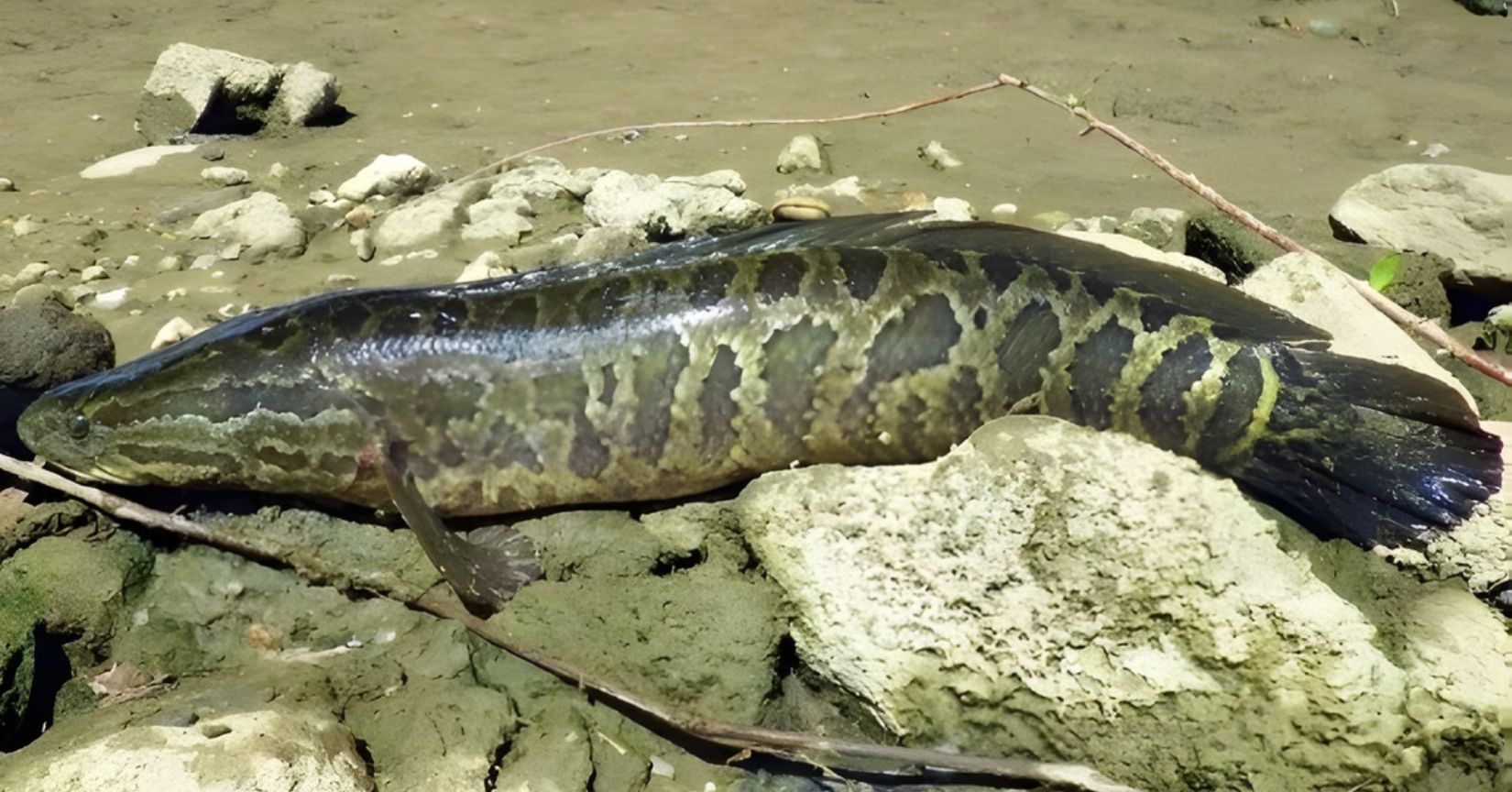


Able To Breathe Air, ‘Walk’ On Land And Survive Days Out Of Water, The Snakehead Fish Spreads Through Rivers In Asia And North America And Threatens Entire Ecosystems.
Few modern animals cause as much astonishment among biologists, environmental managers, and authorities as the snakehead fish of the genus Channa. At first glance, it seems just another elongated and muscular fish, but its physiology places it in a completely different category from most known aquatic species. It breathes atmospheric oxygen, survives out of water for several days, and moves on solid ground, using its own body to “crawl” between lakes, rivers, and flooded areas.
These features, which seem straight out of a science fiction movie, are real and widely documented by institutions such as the US Geological Survey (USGS) and by articles published in high-impact scientific journals like Nature Ecology & Evolution. The problem is that, outside its native area, these same abilities have turned the snakehead fish into one of the most dangerous invasive species in the world.
How The Snakehead Fish Can Breathe Out Of Water
The secret lies in a special respiratory organ known as the suprabranchial organ, a highly vascular structure located above the gills. This system allows the fish to absorb oxygen directly from the air, functioning similarly to a primitive lung.
-
The Himalayas continue to grow to this day, with tectonic plates advancing 5 cm per year, mountains rising up to 10 mm annually, and the 2015 earthquake that killed 9,000 people may have increased the risk of an even larger seismic mega-event.

-
At an altitude of 400 km by astronauts from the International Space Station, Paris transforms at night into a golden mesh so precise that it reveals the outline of the Seine River, avenues, and entire neighborhoods like a luminous map drawn over the Earth.

-
iPhone 17 reaches historic low price with 256 GB, 120 Hz display, and drops to R$ 5,703 on Shopee, featuring A19 chip, dual 48 MP cameras, battery life of up to 30 hours, and advanced AI features.

-
Trip to Mars getting closer: Pulsar Fusion, from the UK, advances with plasma ignition in fusion engine and could drastically reduce space travel time, making crewed missions faster, safer, and economically viable.


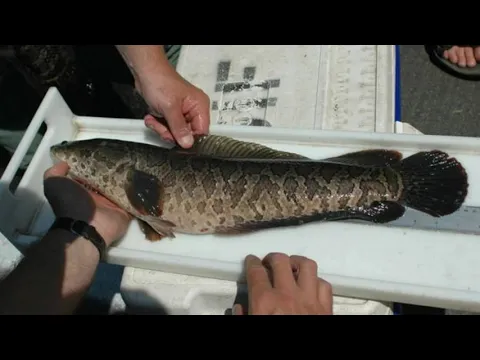

Thanks to this adaptation, the snakehead fish can:
• survive up to several days out of water, as long as the environment is minimally moist
• cross stretches of land to reach new bodies of water
• withstand extreme conditions of low oxygen, where other fish die quickly
This biological advantage explains why the species thrives in degraded, polluted, or low water quality environments, where natural predators and competitors cannot survive.
A Dominant Predator Without Natural Brakes
In addition to aerial respiration, the snakehead fish is an extremely aggressive top predator. It feeds on practically everything it encounters:
• native fish
• amphibians
• crustaceans
• aquatic insects
• small reptiles
• even young water birds, in recorded cases
USGS studies show that, in invaded environments, the introduction of the snakehead fish can lead to sudden declines in native fish diversity, altering the entire food chain. In some rivers and lakes, the presence of the species has resulted in reductions exceeding 50% in the biomass of local fish in just a few years.
The problem is exacerbated because the species reproduces rapidly, with females capable of releasing tens of thousands of eggs per reproductive cycle, and adults exhibit parental care behavior, aggressively protecting the young.
From Regional Fish To Global Threat
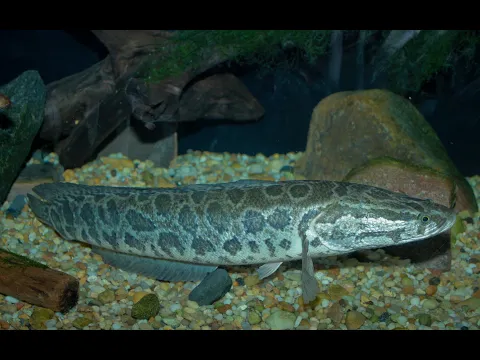
Originally, species of the genus Channa are native to Asia, especially Southeast Asia, India, China, and parts of Eastern Russia. In these regions, the snakehead fish is part of the natural ecological balance, with predators and competitors limiting its expansion.
The problem began when the species was taken to other countries, mainly through three routes:
• live fish trade for food consumption
• aquarism and ornamental aquariums
• illegal or accidental releases into natural environments
In North America, the first confirmed records occurred in the early 2000s in the United States. Since then, established populations have already been identified in several states, including Maryland, Virginia, New York, Pennsylvania, and Arkansas.
The Ability To ‘Walk’ On Land And Colonize New Rivers
One of the most alarming aspects of the snakehead fish is its ability to move on solid ground. Unlike other fish that merely flail out of water, this species uses undulating movements of its body and fins to slowly advance over wet surfaces, mud, or vegetation.
This means that:
• natural barriers between rivers do not always prevent its expansion
• isolated lakes can be colonized without direct human intervention
• entire water systems can be invaded in succession
Biologists warn that this ability makes controlling the species extremely complex, as it is not enough to isolate bodies of water with dams or nets.
Ecological And Economic Impacts
The spread of the snakehead fish represents not only an environmental problem but also a significant economic risk. In affected regions, the following have been observed:
• losses to commercial and recreational fishing
• collapse of native fish populations of economic value
• high costs associated with control and monitoring programs
• imbalance in wetlands and environmental protection zones
According to USGS analyses, aquatic invasive species already cause billions of dollars in annual damages in the United States, and the snakehead fish is among those with the greatest potential for long-term impact.
Control Attempts And Authorities’ Warnings
In light of the threat, environmental authorities have adopted strict measures. In several U.S. states, for example, it is illegal to transport, sell or release live snakehead fish. In some places, fishermen are advised to kill the animal immediately after capture, precisely to prevent its return to the water.
Educational campaigns warn that releasing exotic species into rivers and lakes can lead to irreversible consequences.
Still, the advance of the snakehead fish continues to be monitored with concern by scientists and environmental agencies.
The case of the snakehead fish is an extreme example of how a single species, endowed with exceptional biological adaptations, can redefine entire ecosystems when introduced outside its natural environment.
Breathing air, walking on land, and dominating rivers are not just scientific curiosities — they are the factors that have turned this fish into one of the greatest symbols of the risk of biological invasions in the modern world.
The question remains how far this expansion can go — and whether natural systems will be able to recover before the damage becomes permanent.









No Brasil já tem o bagre africano, um sabor desagradável, sem predadores,, uma espécie invasora que está dizimando espécies nativa, imagina se essa espécie chega também!!!
Emilio, te cuento lo mismo que al autor de este desastre de artículo. Los humanos somos el cáncer maligno de todos los ecosistemas, el terror del planeta, y sin embargo, te centras en despotricar al bagre. Eres patético.
sería bueno encontrarle utilidad como materia prima para alimentar otras especies ya que abundan , lo que se podría hacer también con la carpa o el pez diablo
Cierto, pero para eso hace falta sustituir a todos nuestros gobernantes por personas capacitadas y resolutivas.
Este artículo es falso, miren nomás los errores ortográficos que tiene, además si no estoy mal Schinus no es un género de peces, sino un género de árboles.
Não mano parece tar tudo certo, o gênero channa realmente existe e é coerente com o que foi dito