





 Portuguese
  English
  Spanish
  4 min of reading
  0 comments



Christmas Pix Scam Uses Fake Investment Tables on Social Media and Threatens Personal Economy. Learn How to Identify the Dangers.
With the arrival of the year-end, a type of fraud grows in Brazil that mixes emotion, urgency, and false promises of easy money. Known as the Christmas Pix Scam, the scheme uses false investment tables to convince victims to transfer funds via PIX, exploiting information gaps and putting personal economy at risk.
The scam mainly circulates on social media platforms like Instagram and WhatsApp. In it, criminals promise immediate money multiplication, using the argument of a holiday promotion or alleged errors in the banking system. However, behind the promise, there are serious financial dangers.
How the Christmas Pix Scam Works
The Christmas Pix Scam does not involve real investment. In practice, it is a digital fraud based on social engineering, a technique that manipulates the victim’s behavior to lead them to act without reflection.
-
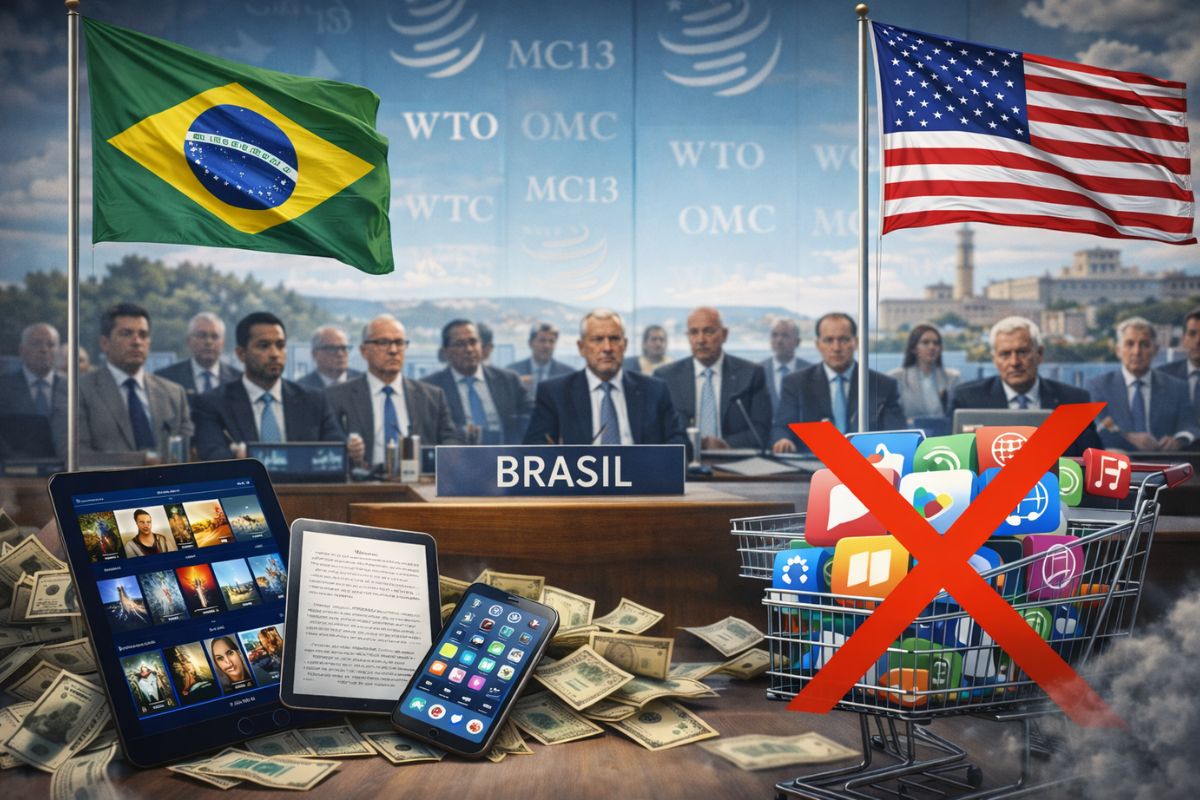
Brazil blocked a proposal from the United States at the WTO that would make the exemption from tariffs on digital products like streaming and ebooks permanent, favoring American tech giants at the expense of developing countries.
-
IPTU exemption for seniors in 2026: see how to secure the benefit.

-
The institute that trained the greatest aerospace engineers in Brazil has just opened its first campus outside São Paulo after 75 years: ITA Ceará will have R$ 445 million, new courses in energy and systems, and classes are expected to start in 2027.

-
Luciano Hang, owner of Havan, goes to Juiz de Fora after the tragedy in February, brings R$ 1 million, hands out R$ 2,000 cards, and donates up to R$ 15,000 to victims in the region.


The criminals claim to have privileged access, financial robots, or “bugs” in the banking system capable of turning small amounts into large sums. These promises, however, have no technical or legal backing.
Moreover, the use of PIX, created by the Central Bank of Brazil, gives a false sense of security. Although the system is safe, transfers are instantaneous and, in most cases, irreversible.
Fake Investment Tables Are at the Center of the Fraud
The so-called investment tables show values like “send R$ 50 and receive R$ 500.” This simple format is used to facilitate the victim’s quick decision.
On the other hand, no legitimate investment offers guaranteed returns of 500% or 1,000% in minutes. This type of promise violates any basic financial logic and serves only as bait.
Thus, whenever a table promises instant multiplication of money via Pix, the risk of a scam is certain.
Common Steps of the Scam on Social Media
The scam follows a repeated pattern. First, the criminal posts the table in stories, often using hijacked accounts of real people to generate trust.
Next, fake screenshots of alleged completed payments appear. These images are montages created to generate social proof.
After that, the victim makes contact, receives a Pix key, and completes the transfer. Soon after sending the proof of payment, the scammer blocks the contact or demands new payments under the pretext of nonexistent fees.
How to Identify the Fake Pix Table on Instagram
Recognizing the scam is the main form of protection. Some signs are clear and should raise an alarm immediately.
Promise of Impossible Returns
No regulated financial product offers guaranteed immediate returns. If the table ignores risks and promises absurd gains, it’s fraud.
Account with Strange Behavior
Hacked accounts often change their type of content suddenly. When someone who has never talked about finance starts promoting Pix and investments, the chance of a scam is high.
Amateur Design and Urgency Sense
Fake tables use bright colors, Portuguese errors, and phrases like “last chance” or “only today.” The goal is to prevent the victim from thinking before acting.
Pix for Unknown Individual
Another important sign is the Pix key in the name of third parties, usually individuals unrelated to financial institutions. This method facilitates the dispersion of money and makes tracking difficult.
Impacts of the Scam on Personal Economy
The Christmas Pix Scam causes direct losses to family economies. Many victims lose essential funds for year-end expenses.
Moreover, recovering the lost money is difficult. The Special Return Mechanism exists, but it does not always work, as the balance has often been transferred to other accounts.
Meanwhile, the criminals continue to implement new versions of the scam, taking advantage of holidays and changes in digital behavior.
What to Do If You Fall for the Christmas Pix Scam
Upon noticing the fraud, the first step is to contact the bank immediately. You need to request the opening of a request via MED.
In parallel, the victim should file a police report and gather all evidence, such as screenshots, Pix keys, and proofs of payment.
The quicker the notification, the greater the chances of partial blocking of the funds.
Sharing Fake Tables Also Brings Risks
Even those who do not transfer money can face problems. Sharing the fake table contributes to the dissemination of the scam.
Depending on the case, the judiciary may understand that there was indirect participation in the fraud, especially if there are signs of benefit or intention.
Why the Christmas Pix Scam Grows Each Year
The increase in this type of fraud is linked to the combination of rapid technology and human vulnerability. Pix facilitates payments, but does not replace critical analysis.
Therefore, understanding that Pix is just a transfer method, and not a form of investment, is essential to avoid losses.
Increased Vigilance Is the Best Defense
The Christmas Pix Scam poses a real risk to financial security in Brazil. It exploits trust, haste, and ignorance about investments.
Therefore, being skeptical of easy promises, avoiding transfers to unknown individuals, and carefully analyzing profiles are essential actions to navigate the festive period without financial losses.









Seja o primeiro a reagir!