





 Portuguese
  English
  Spanish
  4 min of reading
  1 comment


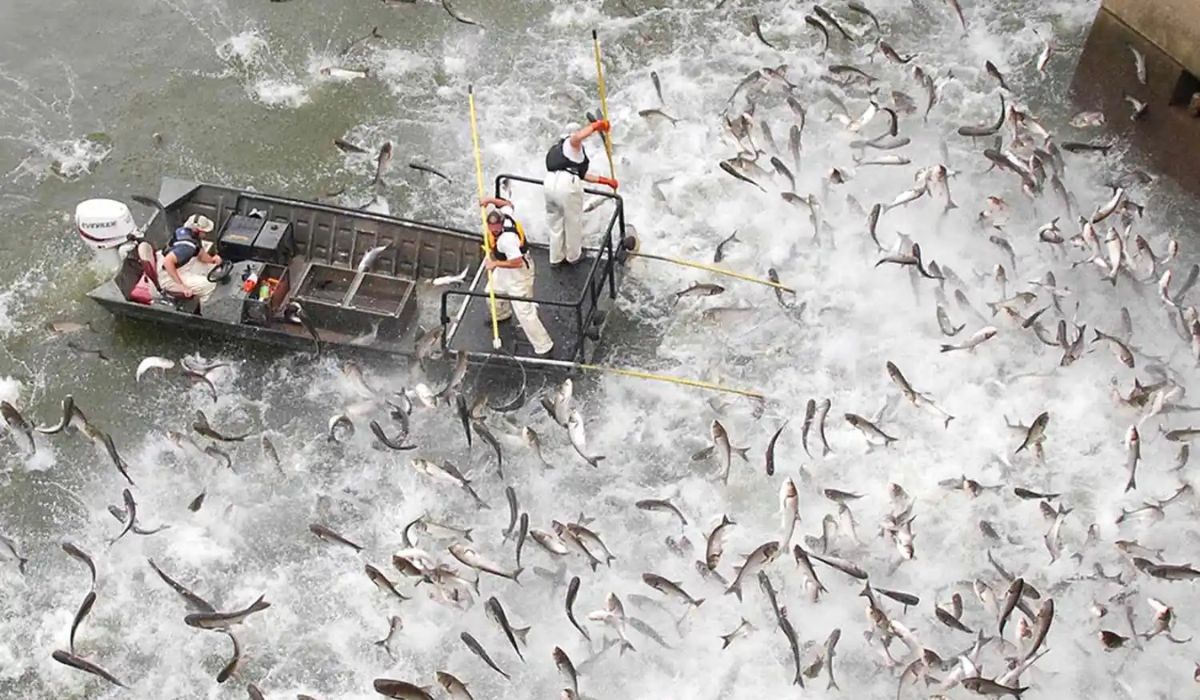


Environmental Operation Mobilizes Public Resources, Specialized Technology, and Cooperation Between Agencies to Contain the Spread of Invasive Species in One of the Major Rivers of the Midwest United States, with Significant Results Recorded in Recent Years.
More than 100,000 pounds of Asian carp, about 45 tons, have already been removed from the Kansas River in the United States as part of a program aimed at controlling invasive species.
The actions have been organized continuously since 2022, under the coordination of the Kansas Department of Wildlife and Parks (KDWP).
In 2025, according to data from the agency, 36,863 pounds were removed, the largest annual volume recorded since the beginning of the initiative.
-
Church from 1888 becomes a mansion of over 330 m² in Canada after a renovation of R$ 3.4 million and is eventually sold for nearly R$ 4.3 million.

-
How an innovative city combines high technology, well-being, and sustainability to become the largest reference in clean energy on the planet.

-
Couple buys 1846 church in ruins for R$ 660,000, invests R$ 3.2 million in renovations, transforms it into a millionaire mansion, and even preserved a historic cemetery with over 300 graves.

-
He started running at 66 years old, broke records at 82, and is now a subject of study for having a metabolic age comparable to that of a 20-year-old, in a case that is intriguing scientists and inspiring the world.


The program aims to reduce the presence of species considered invasive in stretches of the river and limit their spread to other areas.
According to KDWP, the concern involves impacts on native species and on human activities associated with river use, such as fishing and navigation.
Invasive Species Monitored in the Kansas River

The actions focus on three species: silver carp, bighead carp, and black carp.
Information released by KDWP indicates that these fish were imported from Asia in the 1970s and used in aquaculture systems.
Over time, specimens escaped from controlled environments and began to occupy waterways in the Midwest United States.
Environmental agencies point out that the rapid reproduction and high consumption capacity of these species alter the dynamics of river ecosystems by competing for food with native fish.
The fieldwork includes continuous monitoring of the distribution of carp along the Kansas River.
The strategy adopted does not foresee the complete elimination of the species, but population control and containment of the advance to new stretches, as described by the technicians involved in the program.
Environmental Impacts and Security Risks
In addition to ecological effects, invasive carp are associated with risk situations in recreational use areas.
In the case of silver carp, environmental agencies and technical studies report that the fish tend to jump out of the water when exposed to stimuli such as noise and engine vibrations.
This behavior is cited by management agencies as a point of concern for river users, especially in areas with boat traffic.
The presence of carp, in this context, is treated as an environmental management and safety issue, according to official information.


Removal Techniques and Use of Technology
To remove the fish, KDWP employs a combination of techniques adapted to the characteristics of each stretch of the river.
Among the methods used are electrofishing, which causes temporary stunning of the fish, and the use of trawls to capture large volumes.
In recent years, the program has begun using an electrified trawl developed specifically for the removal of carp.
According to the state department, the equipment allows for more efficient targeting of schools, reducing operation time and facilitating fish collection.
In 2025, the capture operations were extended to approximately 15 additional miles of the Kansas River.
This expansion aimed to reach areas considered strategic to prevent the spread of carp along the river’s course.
In this context, the Bowersock Dam is highlighted by KDWP as a relevant element, as it acts as a physical barrier that hinders the migration of species upstream.
The presence of this type of structure is considered in the planning of control operations.
Inclusion of Kansas in a Regional Strategy
The work developed in the Kansas River is part of a broader effort to control invasive carp in the Mississippi River Basin.
In August 2025, the U.S. Fish and Wildlife Service announced nearly US$ 19 million in resources for management actions of these species in 18 states, including Kansas.
The amount of R$ 98.5 million mentioned in the context of the project corresponds to the conversion of this amount in dollars to the Brazilian currency, based on the exchange rate used in the announcement.
Official information indicates that the resources are not exclusively for the Kansas River but for a set of regional initiatives.
The funding package includes activities for removal, monitoring, and prevention, such as early detection of carp in areas where the species is not yet established.
Campaigns are also planned to prevent the transfer of fish between different bodies of water.
Results of 2025 and Ongoing Monitoring
According to the balance released by KDWP, 2025 saw the highest annual removal volume since the structured program started in 2022.
With 36,863 pounds removed during the period, the total accumulated surpassed the mark of 100,000 pounds.
The data is used by the agency as an indicator of the operational capacity of the program and the reach of actions in the Kansas River.
Technicians involved, however, emphasize that extensive and interconnected rivers require ongoing control efforts and monitoring over time.
The use of specific equipment and the expansion of the areas served reflect operational adjustments made based on river monitoring.
Each cycle, the teams reassess priority points and the most appropriate methods to reduce the presence of carp and limit their dispersal.
With available federal resources and ongoing operations in different states, the experience of the Kansas River is now part of the set of references used by environmental agencies.
The discussion now involves which strategies have shown better practical results in controlling invasive carp in large-scale river systems.







Eu gostaria de saber o que e feito com estas carpas retiradas do Rio