





 Portuguese
  English
  Spanish
 5 min of reading
  0 comments


Heated Market Pressures Companies and Expands Competition for Professionals in Santa Catarina, Leading Companies to Review Internal Policies, Invest in Benefits and Reorganize Work Routines to Reduce Turnover and Maintain Qualified Teams in Regions with High Generation of Formal Jobs.
The competition for qualified professionals has intensified in Santa Catarina, especially in regions with a heated job market.
In Itajaí, which posted a positive balance of 918 formal jobs in August, according to data from the General Register of Employees and Unemployed (Caged), companies report greater difficulty in hiring and, above all, retaining experienced workers.
In this environment, retention policies have become central to corporate strategies.
-
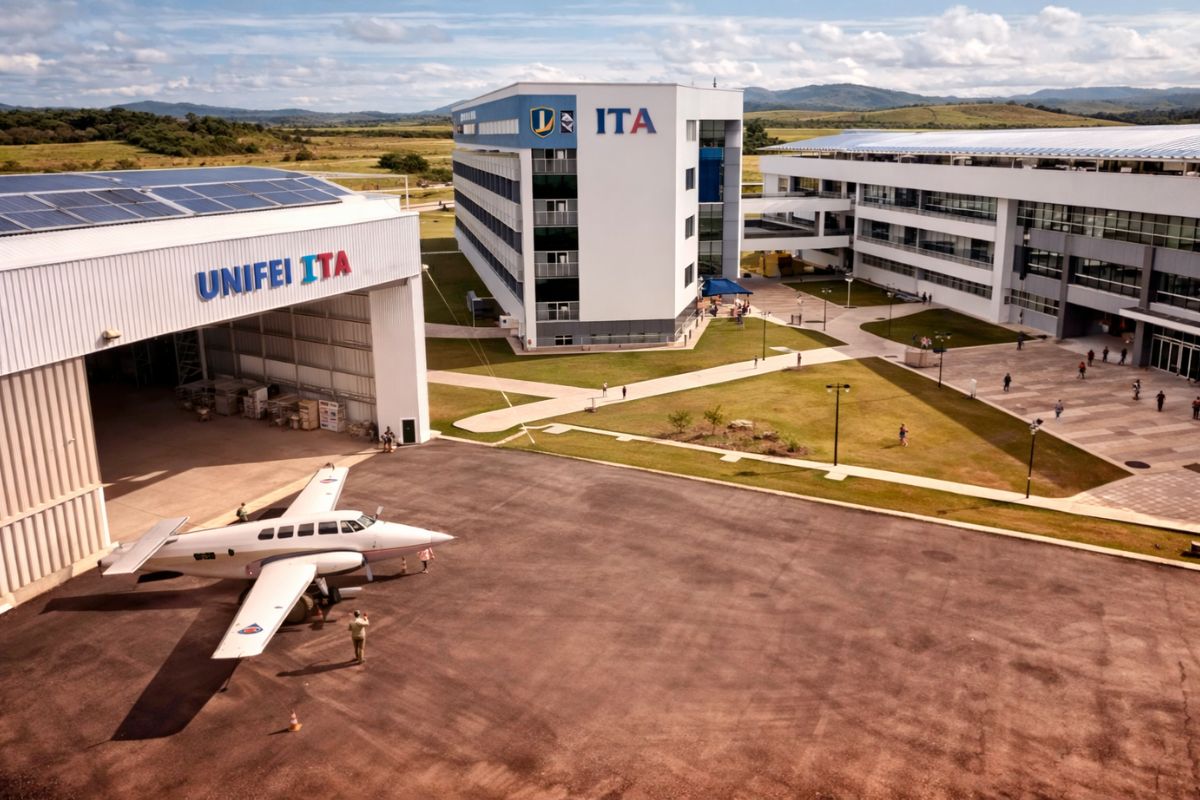
The institute that trained the greatest aerospace engineers in Brazil has just opened its first campus outside São Paulo after 75 years: ITA Ceará will have R$ 445 million, new courses in energy and systems, and classes are expected to start in 2027.
-
Luciano Hang, owner of Havan, goes to Juiz de Fora after the tragedy in February, brings R$ 1 million, hands out R$ 2,000 cards, and donates up to R$ 15,000 to victims in the region.

-
The Brazilian passport allows legal residence in dozens of countries without the need for a prior visa, and most Brazilians are unaware that they can apply for residency directly upon arriving in nations in South America, Africa, and even Europe.

-
Petrobras sends a message to Brazilian truck drivers after fuel collapse and reveals plan to have 100% domestic diesel.


It is in this context that Heli Brasil, the forklift division of Group KMR, reports achieving 96.8% employee retention, with turnover of 3.2%.
According to the company, the current workforce consists of 230 employees, predominantly located at the corporate headquarters in Itajaí (SC), along with teams in São Paulo and regional leaders distributed throughout the country.
With the increase in competition for labor, companies located in industrial hubs have revised internal practices to reduce turnover.
According to the group’s information, the results attributed to Heli Brasil are not linked to a one-time action, but rather to a set of measures adopted over time, involving benefits, work organization, and support policies for employees.
Heated Job Market Pressures Companies for Retention
The growth of formal employment in municipalities in the Vale do Itajaí has reinforced the region’s position as one of the main economic hubs in the State.
The positive balance recorded in Itajaí, the leader in job creation in August, has increased the demand for professionals in technical and operational areas, while simultaneously reducing the supply of workers with consolidated experience.
In this context, companies operating in industrial segments report an increase in the time required to fill positions and greater movement among competing companies.
This dynamic tends to affect hiring, training, and adaptation costs for new employees, factors that directly impact operations.

According to Group KMR, retention has begun to be treated as a relevant indicator of operational efficiency.
In an institutional statement, the founder and president of the group, Kelly Rech, states that the adopted strategy is related to a management model that associates performance and attention to working conditions.
“What many people see as ‘naive kindness’ is, in practice, a management method focused on people and results.”
For her, investing in qualified professionals is part of the company’s operational planning, especially in a labor scarcity environment.
Benefits Package Structures Attraction and Retention Policies
According to information released by the company, Heli Brasil has structured a package of 20 benefits, distributed across different areas, focusing on health, professional development, and routine organization.
Part of these initiatives, according to the company, is extended to employees’ family members.
In the area of health and well-being, the group reports offering a health plan for employees and dependents, regardless of the position held, along with a dental plan.
The package includes assistance for chiropractic care, partnerships with the Totalpass program, and support from an ergonomics specialist, with the stated aim of reducing absences and physical problems related to work.
In the support and development axis, the company claims to adopt flexible working hours, maintain a results participation program (PPR), and provide educational assistance.
This educational support includes English courses aimed at the corporate environment.
There are also specific initiatives aimed at pregnant employees, described by the company as part of a support policy during pregnancy and the return to professional activities.
By organizing benefits by areas, companies often seek greater financial predictability and alignment between costs and internal impact.
In the reported case, the group claims that the combination of measures meets both immediate demands, such as access to healthcare, and medium-term goals, such as training and retention of professionals.
Work Environment and Flexibility as Management Tools
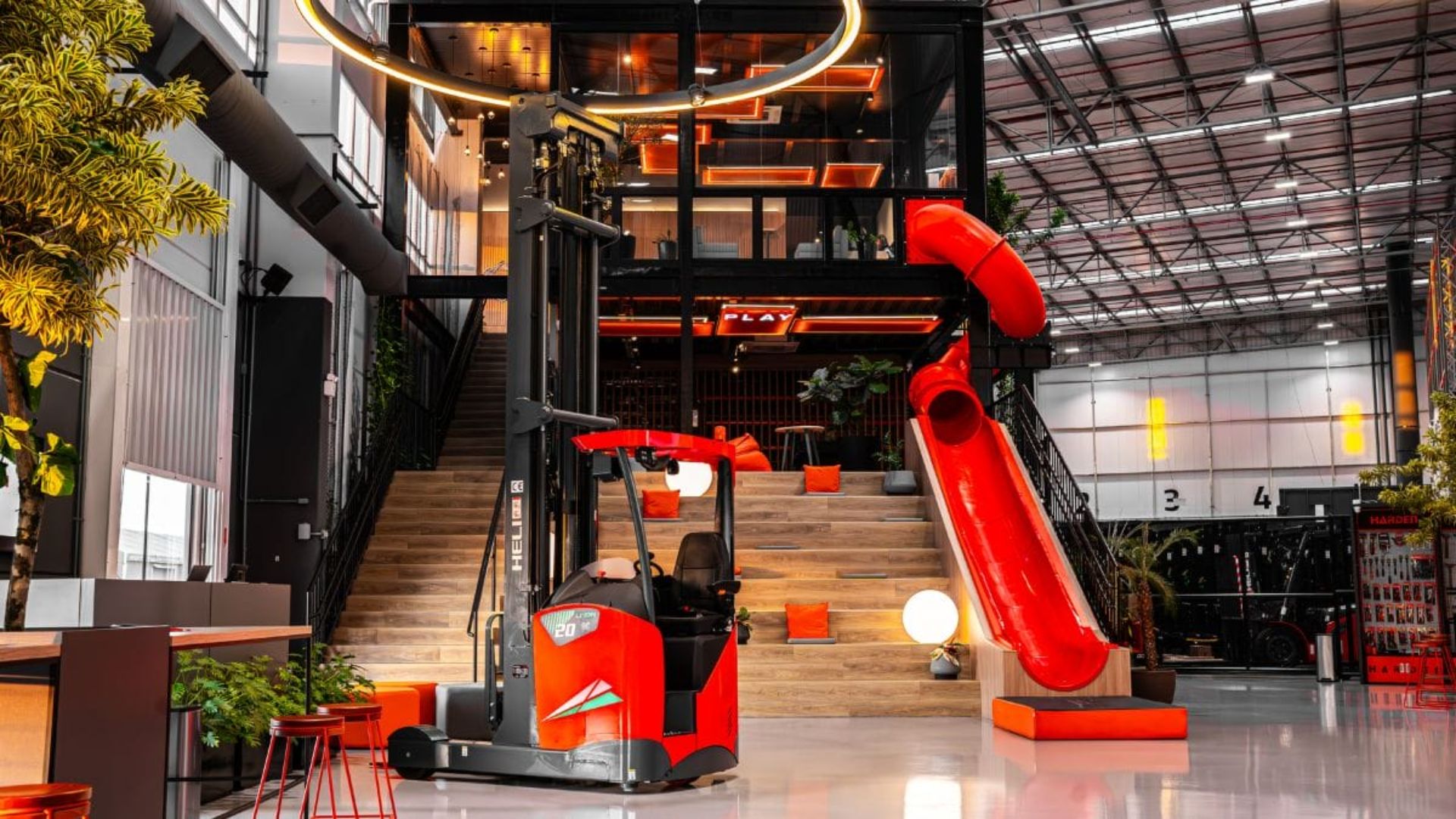
In addition to traditional benefits, the company reports having invested in changes to the physical environment of its headquarters.
Among the cited actions are the installation of a micro market (OKEO) and the creation of spaces aimed at decompression during working hours.
According to the group, the proposal is to offer more convenience and reduce the need for travel during breaks throughout the day.
One of the mentioned elements is the presence of a slide in the corporate headquarters, noted by the company as part of its organizational culture.
The initiative is presented as a symbolic resource, associated with the attempt to make the work environment lighter, without altering goals or responsibilities.
People management specialists often point out that initiatives related to the physical space tend to have limited effects when not accompanied by clear management policies, communication, and objective evaluation criteria.
For this reason, benefits of this type are often analyzed in conjunction with broader work organization practices.
Research Indicates Impact of Benefits on Retention Decision
The emphasis on benefits and flexibility finds support in recent surveys about the job market.
A study by MIT Sloan Management Review Brazil, conducted in partnership with Unico Skill, indicates that about 70% of Brazilian professionals consider the benefits package a decisive factor for staying with a company.
The same study indicates that, despite the relevance of the topic, workers critically assess the adequacy of the benefits offered to their needs.
Rigid or poorly adaptable models tend to lose effectiveness, even when involving high costs for companies.
In this scenario, measures such as flexible hours and educational support frequently appear among the most valued, as they meet distinct professional profiles.
While early-career workers tend to prioritize training, those with families usually place greater weight on benefits related to health and routine predictability.
Nevertheless, the adoption of broader packages does not eliminate the challenges posed by highly heated markets.
In regions like Itajaí, where there is a constant supply of vacancies, retention depends on the continuity of the adopted policies and the uniform application of the rules across different areas of the company.
With competition for qualified professionals becoming increasingly fierce, what type of benefit weighs most in a worker’s decision to stay with a company rather than accept a new offer?









-

Uma pessoa reagiu a isso.