





 Portuguese
  English
  Spanish
  5 min of reading
  0 comments



Nearly New Luxury Model Becomes Headache Due to Detail in Windshield VIN
Imagine acquiring a super SUV like the Lamborghini Urus, practically brand new, with a powerful engine, impeccable looks, and everything an automotive enthusiast could dream of — but with one detail capable of turning the dream into a nightmare: the absence of the windshield VIN. This is the case of a Urus Performante that will be auctioned in the United States, classified as a total loss with only 83 km driven.
The story has drawn attention from collectors and bold buyers: the car is virtually new, with only 52 miles (about 83 km) recorded on the odometer. Equipped with a 657 horsepower twin-turbo V8 engine, all-wheel drive, and all the aerodynamic elements characteristic of the Performante version, the Italian brand SUV displays an impeccable finish and no structural damage. Still, it was classified as “salvage,” or total loss, simply because the windscreen VIN was removed.
Absence of Windshield VIN Makes Lamborghini Urus Legally Infeasible in Some States
In the United States, just like in Brazil, the Vehicle Identification Number (VIN) — known here as the chassis number — must be visible at strategic points on the car, the most important being the area near the windshield. This standard facilitates verification by traffic authorities and prevents fraud or alterations.
-
Six diseases that seem common but can prevent the renewal of the driver’s license for the elderly throughout Brazil and surprise experienced drivers — could any of them affect you without showing clear signs?

-
With 122 hp, fuel consumption of up to 17.7 km/l, and a trunk capacity of 440 liters, this hybrid SUV impresses even though it costs up to R$ 47,000 more than the Yaris — meet the Toyota Corolla Cross.
-
600 km with three Chinese plug-in SUVs, same mode and air conditioning on: Jaecoo 7, BYD Song Plus, and Haval H6 hit the road, and the pump reveals who was truly the most economical.

-
With a price almost R$ 100 thousand lower, the Haval H9 surpasses the SW4 for the first time in March, but Toyota still leads in the accumulated total for 2026; the Chinese SUV bets on technology and premium finishing to compete at the top.


In the case of this Lamborghini Urus, the car did not suffer accidents, was not damaged by floods, and has no mechanical failures. The entire problem lies in the fact that the windscreen VIN was removed, raising suspicions and preventing licensing in several U.S. states. Even if the VIN possibly exists in other parts of the body — such as the engine compartment or the lower chassis — the absence from the windshield is enough to render it legally unfit for circulation.
As a result, the Lamborghini Urus was declared a total loss with 83 km, even though it is in mechanically and visually near-perfect condition.
Despite Being Complete, Lamborghini Urus Declared Total Loss with 83 km Surprises Buyers
Anyone who sees the images of the vehicle on the auction site might even doubt that there is anything wrong with it. The model comes with the original key, an intact interior, scratch-free yellow paint, and nearly new tires. Still, the classification as “salvage” remains. According to the responsible insurer, the criterion is clear: the lack of a visible VIN in the required location compromises the vehicle’s registration process, as well as opens the door to interpretations about possible theft, cloning, or alteration.
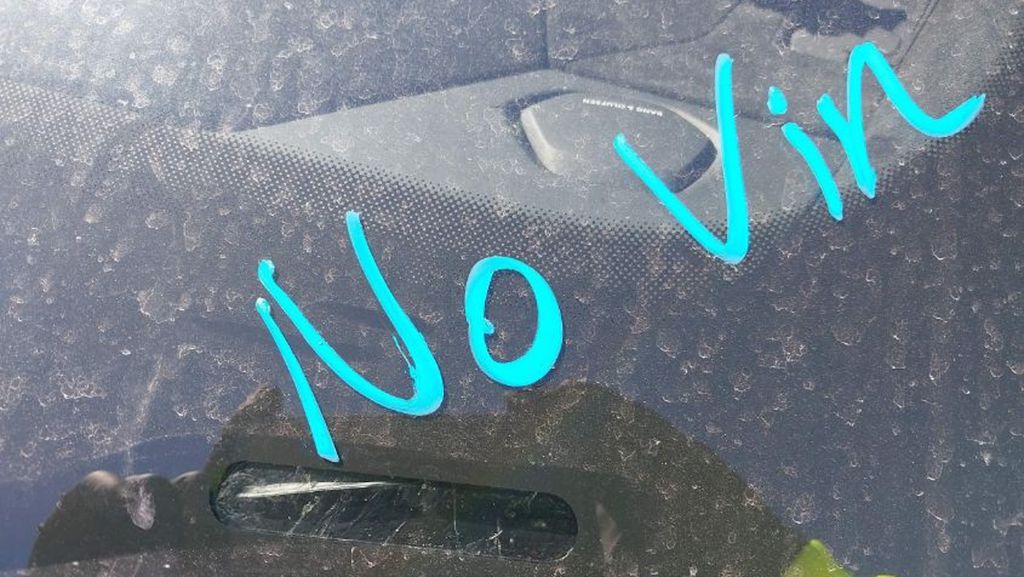
The decision to consider the Lamborghini Urus a total loss with 83 km was made based on local regulations. For some insurers, even a small alteration entails too high a legal risk to allow the vehicle’s legal circulation. In such cases, loss is inevitable — not due to the physical condition of the car, but due to its documentation status.
Insurer Confirms Absence of Windshield VIN Causes Million-Dollar Loss
Experts point out that this Lamborghini Urus could easily exceed $250,000 in the conventional market. However, due to its “salvage” classification, its resale value drops drastically. The absence of the windscreen VIN turns the car into a risky asset, and potential buyers already know they will have to face lengthy bureaucratic procedures to try to regularize the situation.
According to the insurer that evaluated the case, the loss is considered “million-dollar” when taking into account the market potential value of the Performante version in factory condition. Even if a buyer manages to restore the VIN with the help of a state Department of Motor Vehicles, the “salvage” history will permanently accompany the vehicle, severely impacting its resale.
Some States Allow VIN Reissuance, but Lamborghini Urus Will Still Have Compromised History
There is a small ray of hope for those willing to buy the car even with the compromised title. Some U.S. states allow the owner to request a new vehicle identification after a physical verification of the car, issuing a new chassis number or even reinstalling a label approved by the authorities. However, this is a complex, time-consuming process and not always guaranteed.
Moreover, even if the process is successful, the Lamborghini Urus will remain registered as a total loss with 83 km, which severely undermines its appeal in the collectors’ market and among buyers who demand clean documentation.
For many, this Urus will become merely an exclusive track project, a car to be used on track days or closed events — where licensing is not required. Still, the raw power and iconic design of the model make it a desirable item.
Lamborghini Urus Declared Total Loss with 83 km Exposes Limits Between Aesthetics and Vehicle Legality
The case also raises an important debate about the criteria used to classify a vehicle as a total loss. After all, can a car that functions perfectly, has never been in an accident and has less than 100 km driven truly be considered unrecoverable just due to a documentation detail?
In the world of luxury vehicles, this line between aesthetics and legality is becoming increasingly thin. The episode of the Lamborghini Urus declared a total loss with 83 km shows that, no matter how perfect the appearance, documentation remains sovereign.
The absence of the windscreen VIN is, in this case, more serious than any physical damage — and this should serve as a warning for those negotiating supercars, whether in the U.S. or Brazil.
At the end of this saga, it becomes clear that owning a supercar does not mean peace of mind. Even a Lamborghini Urus with 83 km can turn into a legal and financial nightmare. The absence of a simple VIN on the windshield was enough to trigger a million-dollar devaluation process, preventing the use of the car on public roads and pushing away traditional buyers.
Still, the vehicle represents a unique opportunity for anyone seeking an ambitious project — or simply a luxury toy for closed tracks. The case serves as a lesson: in the universe of supercars, an apparently small detail can make all the difference between glory and a total loss.









Seja o primeiro a reagir!