





 Portuguese
  English
  Spanish
  8 min of reading
  1 comment


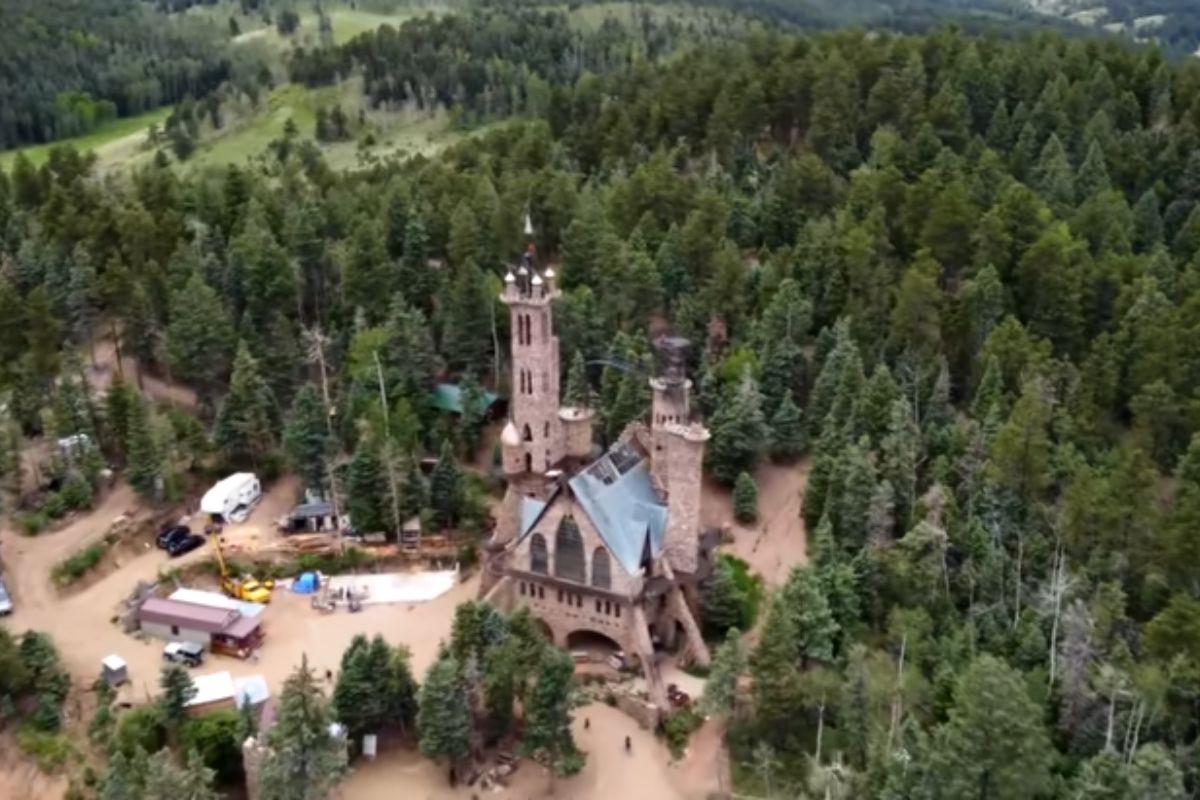


For 53 Years, He Has Raised a Giant Castle Alone: The Bishop Castle, A Stone Castle With A Dragon With 12 Thousand Rivets And A 160-Foot Tower Raised Without Help.
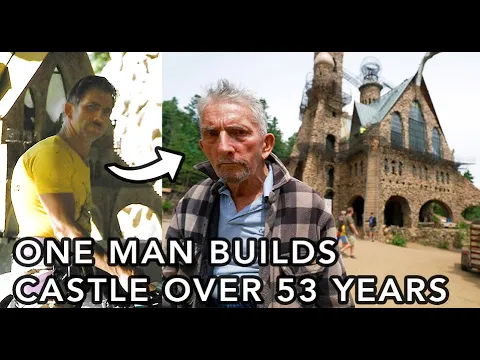
When people see the castle for the first time, the reaction is almost always the same: how does a single man raise a giant castle alone? The answer does not lie in large contractors or modern machinery, but in decades of manual labor, creativity with scrap, and a stubbornness that is almost impossible to understand. While one-third of his life was dedicated to building, the other two-thirds were spent just working to pay for cement, iron, fuel, and everything else the construction required.
Beside this surreal structure, his son, Dan Bishop, proudly presents the place. He points to the towers, to the metal dragon up high, to the corridors and walkways hung in the void and explains that this is the castle that his father, Jim Bishop, built practically alone, day after day, year after year, until he transformed a fixed idea into a real monument.
A Simple Man Who Raises A Giant Castle Alone

Jim Bishop was never a famous architect or a trained engineer. He defines himself as a simple man with a project too big to fit on paper, someone who literally decided to raise a giant castle alone.
-
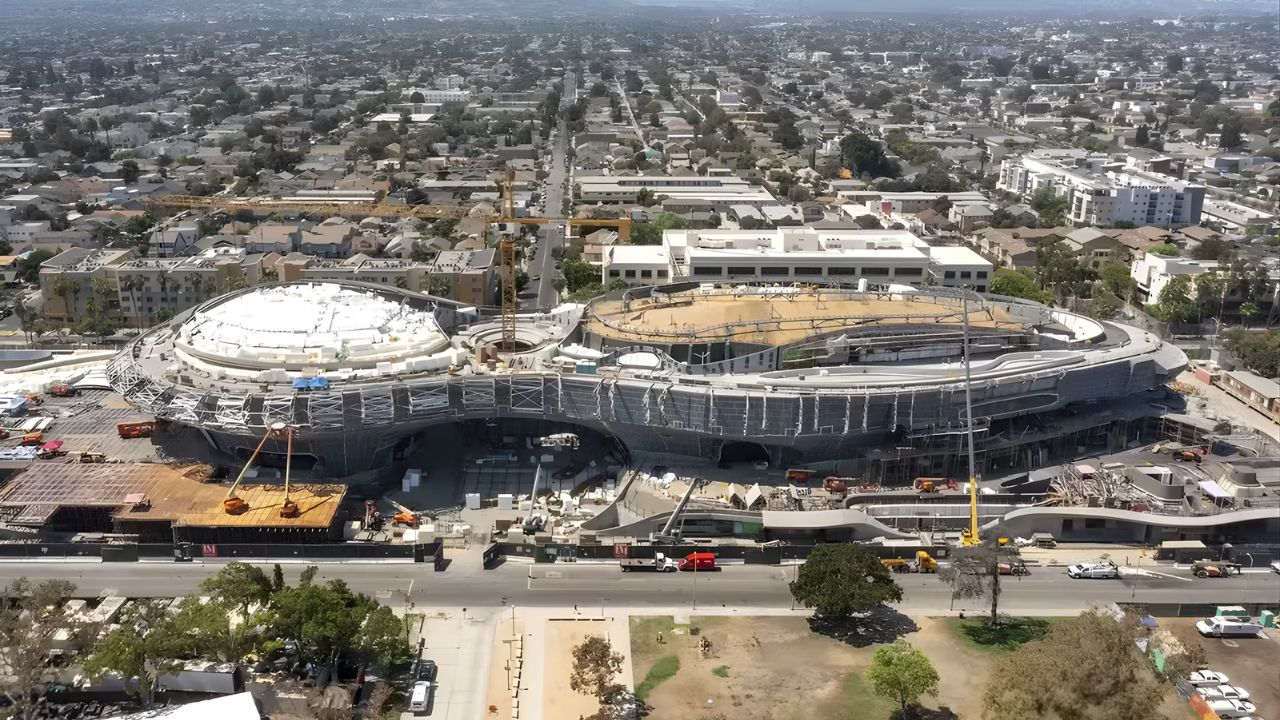
Created by George Lucas with over $1 billion, a futuristic museum in the shape of a spaceship with 1,500 curved panels is about to open in Los Angeles and will house one of the largest private collections of narrative art in the world.
-
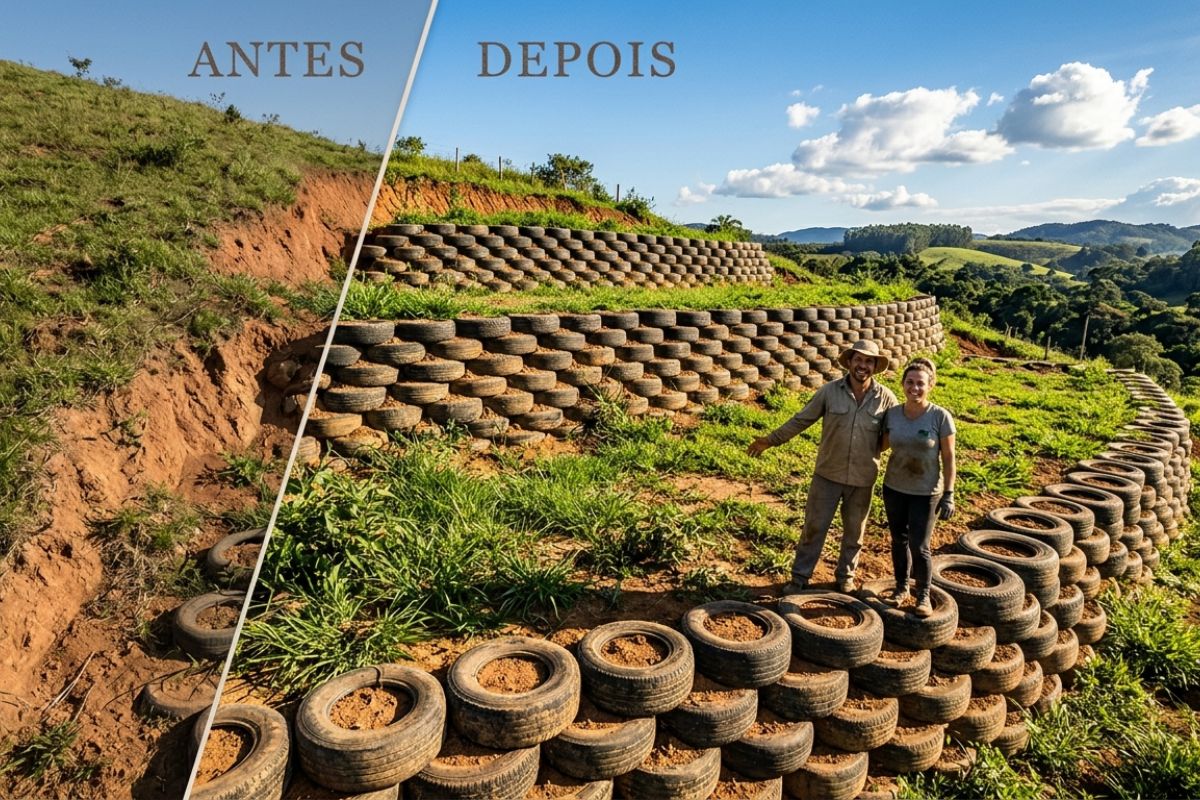
Couple shows how they built a retaining wall on their property using 400 old tires: sloped land turned into plateaus, tires are aligned, filled, and compacted with layers of soil, with grass helping in support and at almost zero cost.
-
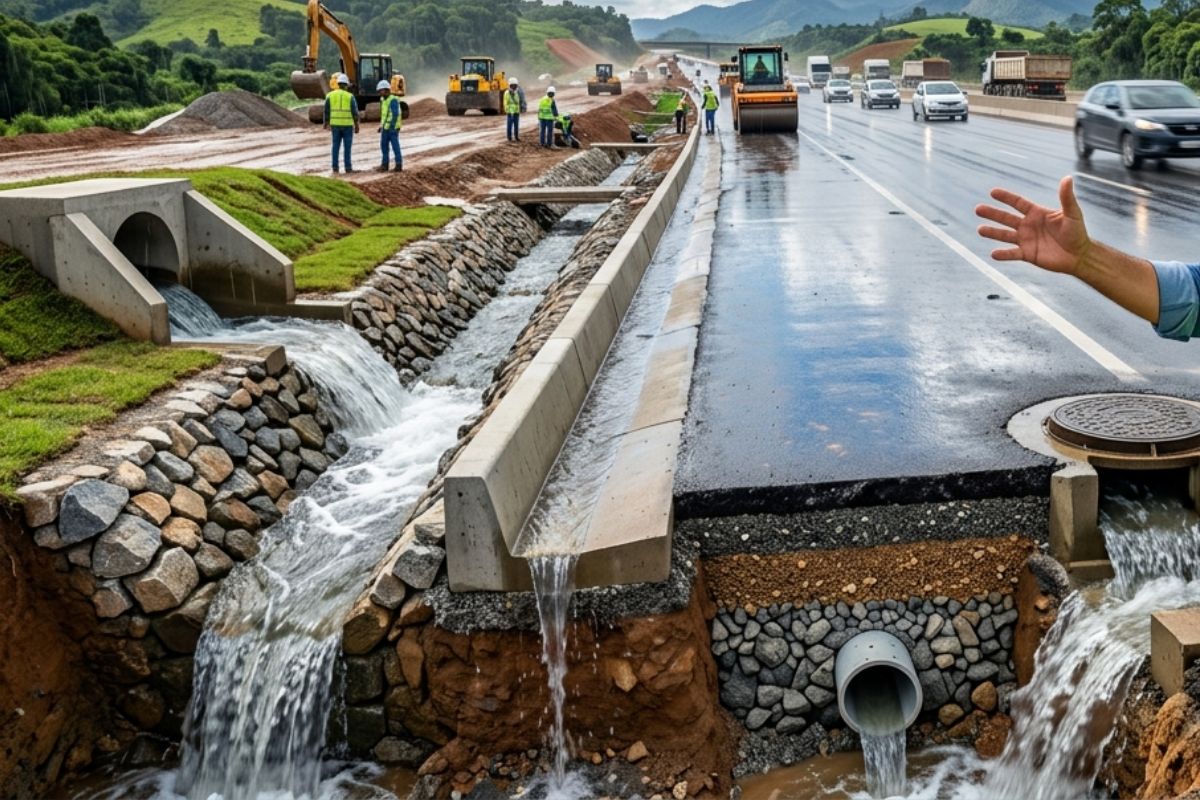
Engineer explains drainage during the rainy season: the difference between surface water and deep water, ditches, gutters, and water outlets on the road, as well as drains and drainage mattresses, to prevent erosion, aquaplaning, and flooding at the construction site today.
-
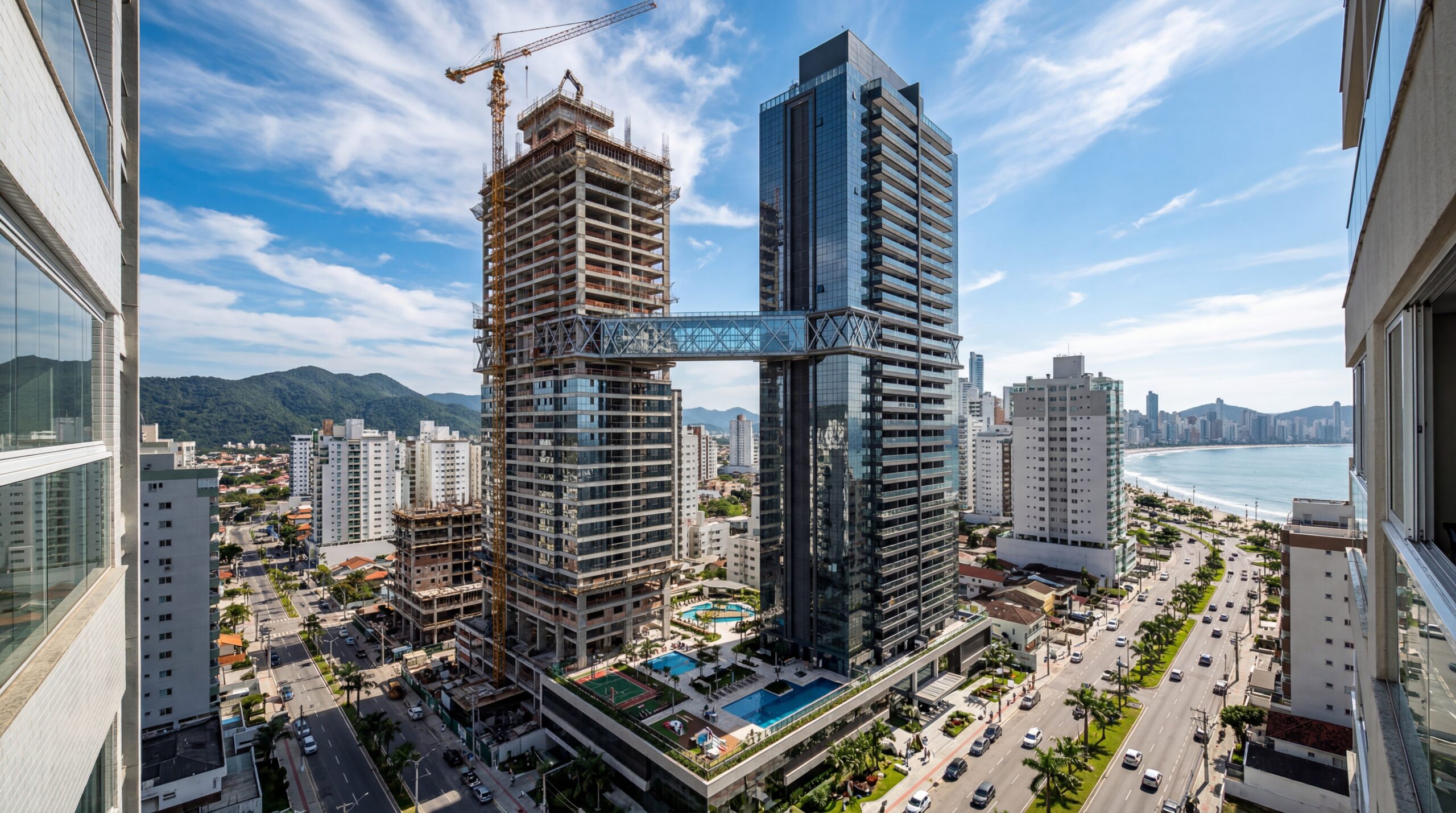
With 55 floors, 177 meters in height, a 15-meter walkway between the twin towers, ventilated facade, and 6,300 m² of leisure space, Ápice Towers already has one tower completed and another nearly at the top.

It all started in 1969 when he raised a first room on top of a large rock, a small cabin around a water tank.
With arched and round windows, the construction began to attract attention from passersby, who said it already looked like a castle.
In 1973, when asked by his father what he was doing, Jim replied that people wanted a castle and that he would build one for them.
From there, what was just a cabin grew in height, complexity, and ambition. The grandfather did not want to get involved, preferred to distance himself from the idea of having a castle attracting people to the mountain. Jim saw this as a sign. If that was the case, then it would be a one-man project.
At a certain point, he decided he had done so much alone that he didn’t want help anymore, not even from his own son, so that no one would take away from him the credit for having built the castle with his own hands.
Stone By Stone, Old Truck, Crane, And Pure Stubbornness

Before buying an old crane, Jim worked in the most rudimentary way possible. He used an old truck, a cable, some pulleys, and a basket.
The process was repetitive, heavy, and almost absurd: pull the stone, drag it across the ground, place it in the basket, hook the cable to the truck, back up to lift the load, then remove each stone from the basket and fit it in place. Then repeat everything again, for years.
Later, the scrap crane became part of the castle’s landscape, but the logic remained the same, always based on physical effort, improvisation, and trial and error.
At certain times, he moved about three tons of stone every two days, installing everything into the structure.
In a single summer, one of the towers rose about 60 feet, an insane advance for someone who woke up with the sun just to carry, cut, fit, and cement stones.
The rocks, for the most part, came from public lands, national forests, road ditches, and stream beds. The most expensive materials were not the stones, but the fuel and cement needed to turn that pile of rocks into walls, buttresses, bridges, and stairs.
Dan estimates that, adding everything up, the total value in materials over the decades probably does not come close to large budgets of traditional construction, precisely because the main raw material, the rock, was free.
Stone Castle With Buttresses, Hidden Basement, And Handmade Roof

Today, looking at the castle, it is easy to forget that it all started with a small construction on top of the rock.
The current structure is a complete stone castle, with thick walls, buttresses, balconies, walkways, and overlapping levels.
At a certain point, Jim realized that the walls were growing so much that he began to fear they would collapse outward.
The solution was to create flying buttresses, which act like stone and metal arms holding the structure.
One of the buttresses descends about 15 feet below the ground, showing that there is a huge part of the castle that visitors cannot see because it is buried in solid rock.
The roof also bears the mark of improvisation and obsession. Each sheet was hand-bent from flat pieces, many of which were worked on during the winter months. Jim shaped the metal sheets and then used cables to hoist them into place.
The stone castle gradually gained a “shell” of metal, welds, patches, and adaptations, in a blend of craftsmanship and intuitive engineering.
Dragon With 12 Thousand Rivets And A 160-Foot Tower

Among all the details, two immediately catch the attention of those who arrive: the 160-foot-high tower and the giant metal dragon that watches over the castle.
The tower is not tall by chance. At a certain point on the slope, Jim simply could not back the truck up any further without falling off the cliff.
So the solution was to grow upwards. Thus, the 160-foot tower became a physical proof of how far stubbornness and the human body can go when someone decides to raise a giant castle alone.
As for the dragon, it was explicitly designed to grab media attention. Jim was tired of being ignored by the local press.
The piece was built from discarded stainless steel heating trays from a hospital. Each tray was cut into eight “D”-shaped scales, which were then riveted onto the metal frame.
In total, about 12 thousand hand-activated pressure rivets were used just to create the dragon’s skin. Afterwards, the creature was hoisted with pulleys and fixed at the top of the castle. From then on, no one could ignore that fantastic sight.
Around, balconies hanging on the sides of the walls, a bridge connecting towers, and a metal structure in the shape of a geodesic dome show that the builder’s imagination did not stop at the idea of a medieval castle.
In his vision, the dome would have one-way mirrors and would rotate with the moonlight, like a giant disco ball capable of attracting even “otherworldly” visitors.
From Makeshift Courtyard To A Major Tourist Attraction
Over time, Bishop’s castle ceased to be just a personal project and transformed into a major tourist attraction.
People from all over the world arrive at the stone castle out of curiosity, drawn by the story of someone who raises a giant castle alone and by the experience of walking through a structure that seems to defy all the norms of a traditional park.
All kinds of events have taken place there, from weddings to shows and electronic parties. At one point, weekend raves took over the great hall.
There were nights when dozens of people simply passed out on the floor, sleeping in any corner, until the first “normal” visitors appeared on Sunday morning and stumbled upon that surreal scene.
The fame grew through word of mouth, on international TV channels, in family conversations. The castle became a backdrop for photos, travel stories, and even local legends.
Even without a large commercial structure, Bishop’s castle found its place as a tourist attraction, sustained by the very force of the story that originated it.
Total Freedom, Few Rules, And One Of The Last Places Without Filters
Unlike many tourist destinations surrounded by signs, rules, and contracts, the castle is guided by a radical philosophy of freedom. Jim Bishop and his son repeat the idea that this is one of the last places of real freedom in the world.
Visitors climbing edges, swinging on ropes, and doing things that would require liability waivers, certified equipment, and security teams anywhere else are seen as personal choices here. Those who enter do so at their own risk, and that is the basic rule of the place. If a person doesn’t agree, they simply shouldn’t enter.
Jim grew up with the feeling that, in “official” places, poor people pay dearly to enter and are still watched all the time.
When he was young, during a visit to the Seven Falls waterfalls, he was reprimanded over the loudspeaker for simply climbing on some rocks.
That deeply marked him. He then decided that he would do something for poor people, a place where someone could have fun without spending much and without being treated as a problem.
At the same time, he sees many rules as excesses that mask danger instead of confronting it. In the castle, real fear makes people take more care, hold on tight, and think twice before taking risks.
The result is that, despite the risky aspect of some areas, Dan says that no one has really been seriously hurt there, and that the goal is to keep the place open in the most faithful way possible to his father’s original spirit.
Jim’s Health, Dan’s Role, And The Future Of The Castle
In recent years, Jim Bishop’s health has complicated with the advancement of Parkinson’s, making physical work difficult.
Dan, his son, has taken on most of the responsibility for maintaining the structure and taking care of the most urgent renovations, such as reinforcing floors and stairs that are heavily used by visitors.
Even with his limitations, Jim wants to remain there. He prefers to sit, tell stories to those who arrive, show what he has done, and hear people’s reactions, rather than envisioning himself in a nursing home.
For Dan, his father’s desire is clear and simple, and everything indicates that the future of Bishop’s castle revolves around trying to keep it there, at the center of the creation he dedicated his whole life to raise.
In the end, the castle is more than stone, iron, and rivets. It is a manifesto of a man who raises a giant castle alone, who rejects rules he considers senseless, and who believes that freedom, responsibility, and risk go hand in hand.
And you, would you dare to visit and wander around such a place, with this feeling of total freedom, or do you think a castle like Bishop’s castle should have many more rules and limitations?








Where is the castle?