





 Portuguese
  English
  Spanish
  6 min of reading
  0 comments


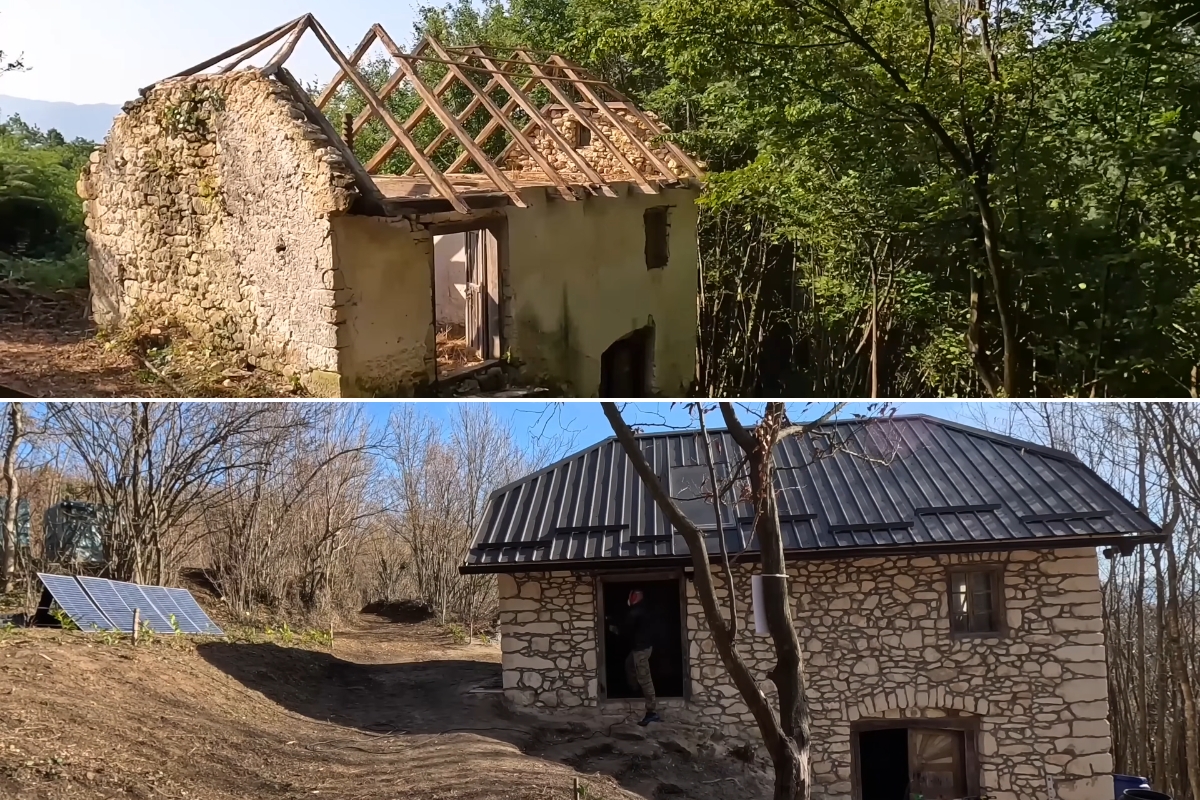
The Process Shows a Complete Change from Abandonment to Internal Finishing with Wood, Installed Floor, and Organized External Area for Use
On a 2.5-hectare lot, a house built in 1957 appears at the beginning almost swallowed by vegetation, with difficult access, exposed structure, and a dark interior filled with accumulated material. The volume is standing, but the set shows clear signs of wear, with open sections at the top and old walls marked by time.
The central decision is to recover what exists, without demolishing the main body. The work progresses in fitting stages, starting with the clearing of the perimeter, followed by internal cleaning and reinforcement, until reaching the assembly of the roof and complete closure of the interior.
After months of continuous work, what was a ruin turns into usable shelter. The result matters because the transformation does not stop at the roof; it continues to floor, sealing, internal wood finishing, ceiling, and organization of the surroundings, delivering a space ready for real use.
-
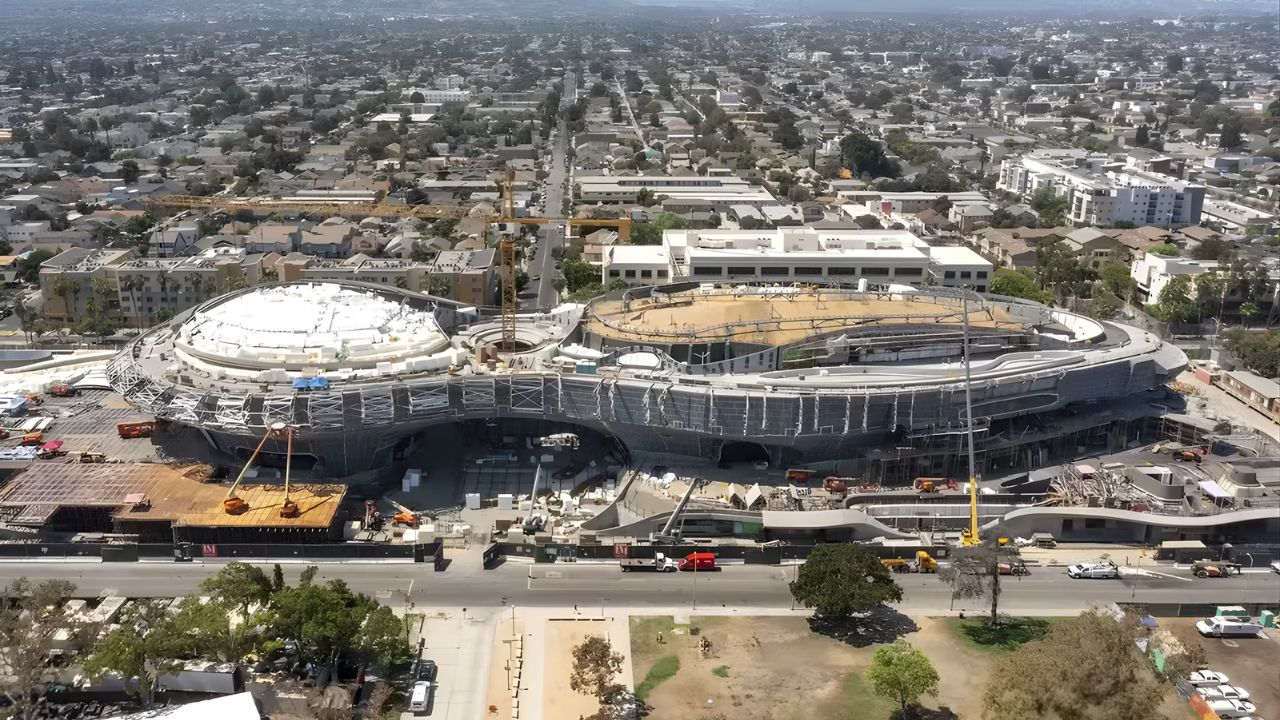
Created by George Lucas with over $1 billion, a futuristic museum in the shape of a spaceship with 1,500 curved panels is about to open in Los Angeles and will house one of the largest private collections of narrative art in the world.
-
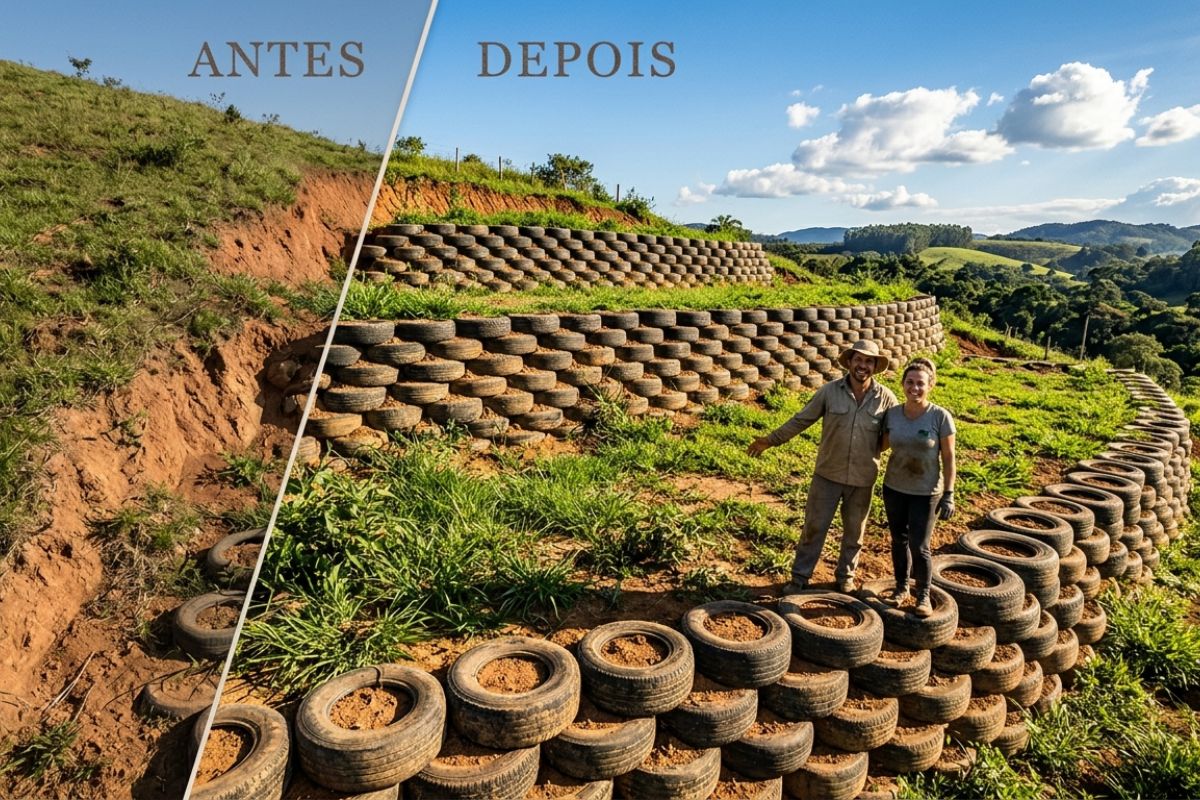
Couple shows how they built a retaining wall on their property using 400 old tires: sloped land turned into plateaus, tires are aligned, filled, and compacted with layers of soil, with grass helping in support and at almost zero cost.
-
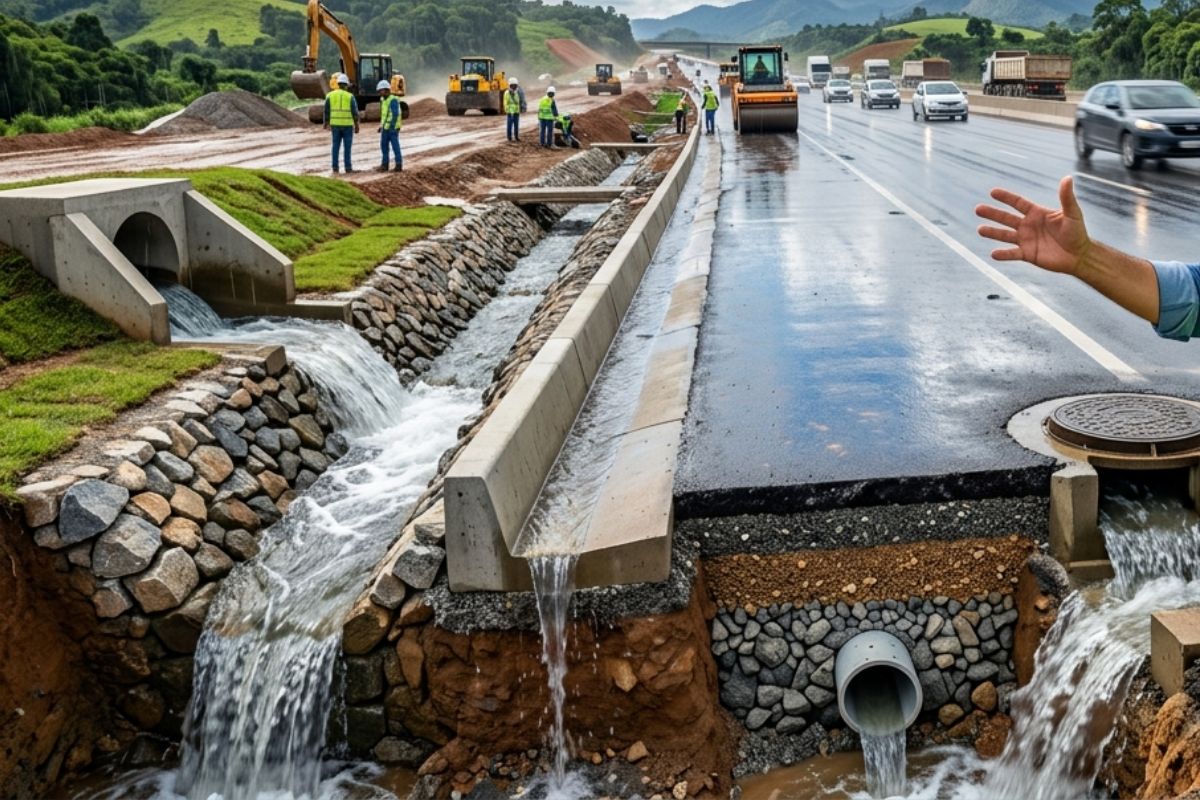
Engineer explains drainage during the rainy season: the difference between surface water and deep water, ditches, gutters, and water outlets on the road, as well as drains and drainage mattresses, to prevent erosion, aquaplaning, and flooding at the construction site today.
-
With 55 floors, 177 meters in height, a 15-meter walkway between the twin towers, ventilated facade, and 6,300 m² of leisure space, Ápice Towers already has one tower completed and another nearly at the top.


Removal of Vegetation Opens the Way and Exposes What Still Supports

The first impact comes from the tall grass around the house, covering part of the walls and blocking entrances. The construction seems hidden, and circulation around it is limited, with branches and leaves touching the stone.
The work begins with repeated cutting of vegetation and manual removal of the material. Slowly, the perimeter becomes accessible, the base of the walls appears, and the path to the door is defined with space to transport tools and debris.
The direct consequence is the real reading of the state of the structure. With the stone exposed, irregular areas, open joints, and points that require care before receiving load or heavier movement become visible.
A detail that reinforces this stage is the rhythm of repetition, with cleaning in short strips and progress by sectors, avoiding pushing weight against still fragile sections.
Empty Interior Reveals Old Floor and Allows Reorganization of the Space

Upon entering, the environment appears dark, with an aging wooden door and a floor covered in fragments, dirt, and accumulated debris. Circulation is blocked, and the interior needs to be cleared before any more technical intervention.
The execution occurs with manual removal of debris, separating larger pieces from smaller waste. The material is taken outside in cycles, opening up a central area and making the walls more accessible for inspection and adjustment.
The practical effect is immediate; the interior stops being a dumping ground and starts functioning as a workspace. With the floor visible, it becomes possible to level, plan the passage of elements, and prepare for the next closure.
Space organization is evident in how waste is removed without mixing with reusable pieces, keeping wood and stone separate for future use.
Reconstructed Roof Closes the Top and Changes the Internal Condition

With the interior cleared, the exposed top becomes a priority. The old structure at the top shows darkened wood and open parts, creating a direct entry of light and dirt, as well as risks in pieces resting irregularly.
The execution progresses with the dismantling of what is unstable and the assembly of new wood beams, forming a roof design with regular slopes. At points high up, new panels and surfaces are attached, with visible screws and alignment done with fine adjustments.
The consequence is the change in the house’s status. When the top is closed, the interior stops receiving loose material and begins to behave like a controlled environment, allowing for steps towards flooring, sealing, and finishing.
A striking detail is the presence of smooth, dark elements in part of the closure and a transparent panel at the top, indicating planned closure in layers and not just by loose tiles.
Prepared Floor and Dark Layer on the Floor Indicate Base Stage

With the house progressing in its closure, the floor appears with a cleaner and leveled surface. In one internal section, a dark layer extends across the floor, forming a continuous rectangle along the walls.
The execution shows the placement of this layer on the floor, with adjustments at the edges and seating to eliminate folds and faults. The application occurs next to stone walls, suggesting care in maintaining continuity to the corners.
The direct effect is a more organized floor to receive the next stage. The surface ceases to be irregular and begins to offer a stable base, reducing loose dust and facilitating the movement of tools and materials.
A detail that reinforces credibility is the work in the corners, with manual adjustments to bring the layer in contact with the wall without leaving open spaces.
Internal Sealing and Panels Transform the Ruin into a Usable Environment

After the structural closure, the interior changes appearance with the entry of fabrics and light surfaces fixed to walls and partitions. The area near the entrance receives a straight structure, with more defined lines and cleaner finishing.
The execution includes the positioning of panels, attachment to wooden structures, and the use of measuring and alignment tools. The door remains as a reference for access, but now the internal surroundings gain a more regular shape.
The consequence is the transition to a phase of habitability. The environment becomes more organized, with a clear transition between old stone and new closure elements, allowing progress to the final finishing and installation of internal items.
A strong detail is the presence of an old window with glass and wooden frame, indicating the preservation of part of the set and integration with the new closure.
Wood Finishing, Ready Ceiling, and Outdoor Area Finalize the Transformation

In the final phase, the interior appears fully covered with wood planks on the walls and ceiling, with exposed beams and a floor with a uniform appearance. The environment ceases to have the raw work aspect and begins to have continuous finishing.
The execution shows the installation of wooden pieces with electric tools, sequential fastening, and adjustments along the beams. Above, the surfaces of the internal covering appear along with a vertical metal tube, indicating the passage of an exhaust or heating element without completing the function beyond what is visible.
The effect is a completed space, with aligned walls, closed ceiling, and ready floor for circulation. Outside the house, the surroundings also change, with leveled ground, steps, and an organized outdoor area with wood structure and countertop.
The final detail that delivers the conclusion is the external view with exposed stone walls and finished roof, in addition to an area with a hammock and the presence of animals on the lot, a clear signal of daily use of the space.
The transformation shows that months of work can be divided into stages that support each other; cleaning opens access, emptying releases the interior, roofing changes the environmental condition, and internal closure creates a surface for finishing. The most decisive technical factor is the sequence, without skipping phases and without forcing load before reinforcement.
In the end, the house built in 1957 ceases to be a ruin overtaken by vegetation and becomes a ready shelter, with preserved stone, installed wood, and a functional outdoor area. The case reveals how discipline in work and detailed decisions can lead an old structure to a level of finishing that goes far beyond the roof.






Seja o primeiro a reagir!