





 Portuguese
  English
  Spanish
  4 min of reading
  0 comments


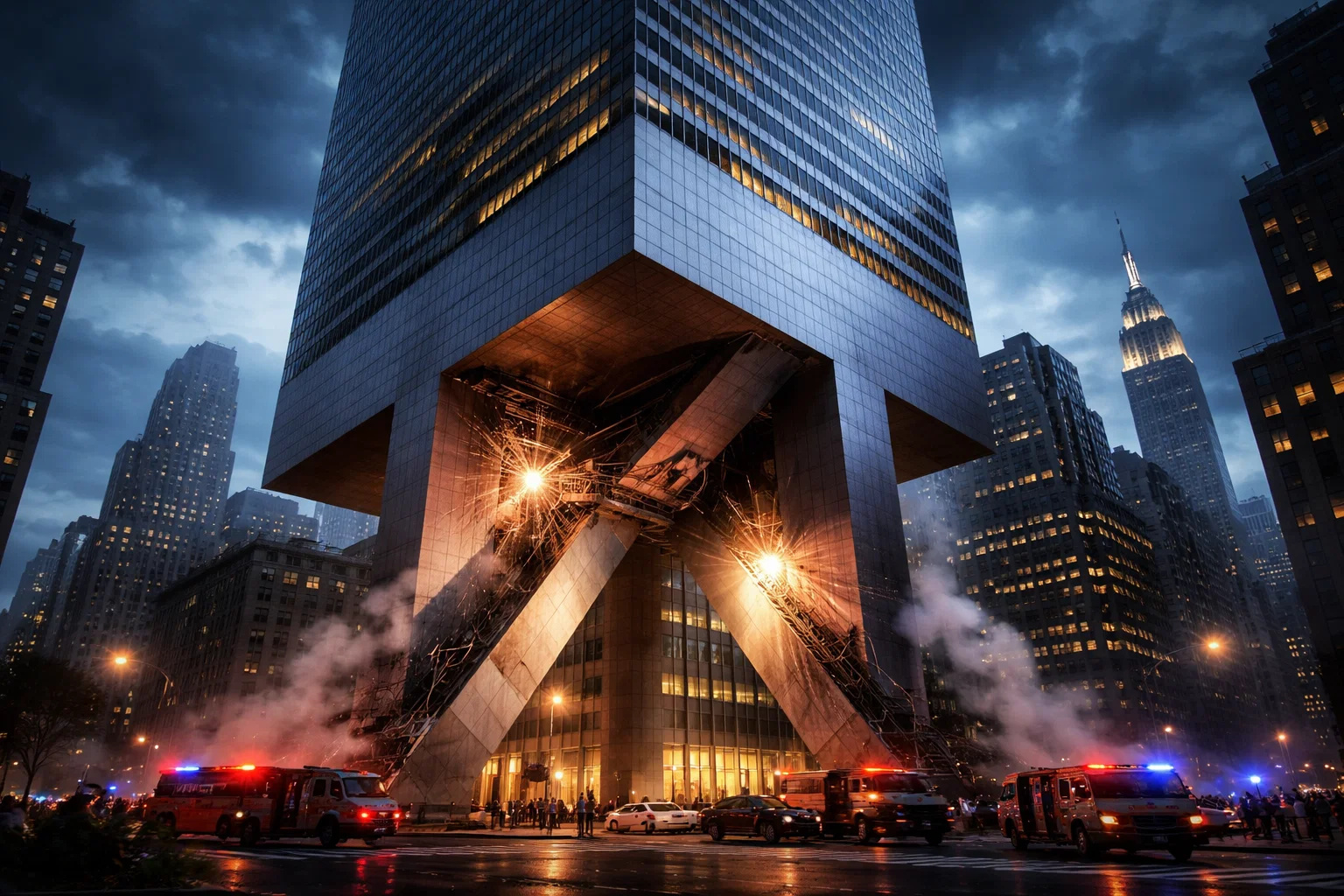
Inaugurated in 1977 and considered a milestone in modern engineering, the Citigroup Center hid a critical error in the structural joints, discovered by the engineer responsible, who had to discreetly reinforce the building at night to prevent a tragedy in Manhattan
One of the most famous skyscrapers in Manhattan almost made history for a very different reason than expected. Few people know, but an engineering error identified after the inauguration placed the Citigroup Center in New York at serious structural risk that could result in collapse.
The building was inaugurated in 1977, celebrated as a bold work of modern engineering. Its structure elevated on large pillars allowed for an innovative architectural solution for the city’s financial center.
What no one imagined was that, months after the opening, a seemingly minor technical detail would reveal a serious problem. A problem that would only be recognized thanks to an unexpected review of the structural calculations.
-
Family buys mansion destroyed by fire for $1.5 million, faces over 500 days of construction, transforms loss into high-end property, and leaves neighbors in awe.
-
The world consumes 50 billion tons of sand per year and no one is monitoring it: the UN warns that the second most used resource on the planet after water is running out and has even created an international mafia.

-
With a length of 211 meters, a double iron hull, and propulsion by sails, paddles, and a screw propeller simultaneously, the Great Eastern was the largest ship on the planet and ultimately laid the first successful transatlantic telegraph cable.

-
A truck driver spent 21 years building a 15-meter replica of New York using balsa wood, cardboard, and regular glue; the work, featuring hundreds of thousands of buildings, has become an attraction in a museum in the city itself.

The Innovative Skyscraper That Caught the Attention of World Engineering When It Emerged on the Horizon of Manhattan
When the Citigroup Center was completed, it quickly became one of the most iconic buildings in the New York skyline.
The structure had unusual characteristics for its time. The building did not rest directly on the four traditional corners, a common feature in skyscrapers. Instead, its base was positioned on giant pillars installed in the middle of each side of the construction.
This solution allowed for the preservation of an existing church on the site while also enabling the architectural design of the building.
The tower stands approximately 279 meters tall and has more than fifty floors. To withstand the strong winds that hit Manhattan, the design also incorporated an advanced structural system with internal damping.
The work was seen as an example of technological boldness in urban engineering.
A Reviewed Calculation Revealed That the Steel Giant Could Fail Under Relatively Common Winds
Some time after the inauguration, the structural engineer responsible for the project, William LeMessurier, decided to review some calculations related to the building’s behavior under different wind directions.
During this review, a <strong troubling discovery emerged.
The original design mainly considered winds hitting the building head-on. However, when analyzing the effects of diagonal winds, LeMessurier realized that the structure could experience much greater stresses than anticipated.
The problem lay in the structural connections.
The original design called for welds at the main joints of the structure. However, during construction, these connections were executed with bolts, a change considered common in construction projects for cost and speed reasons.
When the new calculations were redone, an alarming scenario appeared. Under winds of about 112 kilometers per hour, some of these joints could fail.
In a city where occasional storms and hurricanes hit the coast, ignoring the risk would not be an option.
The Secret Kept Out of the Newspapers While Engineers Reinforced the Building During the Middle of the Night
Upon realizing the problem, LeMessurier informed those responsible for the building and initiated an emergency operation.
The solution required reinforcing several structural connections inside the building. The work had to be done without attracting public attention.
For weeks, teams of engineers and workers labored at night, discreetly reinforcing the internal joints of the structure.
According to experts who analyzed the case years later, the intervention included the addition of steel plates and extra welds to increase the strength of the connections.
The goal was to ensure that the building could withstand the wind forces predicted in the new calculations.
The operation was completed before a major storm hit the city.
Throughout this process, most of New York’s residents had no idea that one of the city’s most emblematic buildings was undergoing an urgent structural intervention.
The Episode That Changed Structural Engineering Protocols in Skyscrapers Around the World
After the case became public years later, the episode began to be studied in universities and civil engineering courses.
The story of the Citigroup Center became a classic example of design review and professional responsibility.
Experts point out that the case helped reinforce the importance of considering different load scenarios in tall structures, especially in cities exposed to strong winds.
The episode also fueled important discussions about communication between designers, construction companies, and technical reviewers during the execution of large projects.
Today, the building remains standing and operates normally in downtown Manhattan, but the story that nearly led to its collapse remains one of the most impressive backstories in modern engineering.
The case draws attention because it reveals something not often discussed outside the technical field. Even projects considered exemplary can hide vulnerabilities that only appear when someone decides to review every detail.
And it was exactly this review that prevented an entire skyscraper from becoming one of the greatest urban tragedies in New York’s history.
If you enjoy little-known stories of engineering, leave your thoughts in the comments. Had you heard about this case that almost changed the fate of Manhattan?









-

Uma pessoa reagiu a isso.