





 Portuguese
  English
  Spanish
  4 min of reading
  0 comments


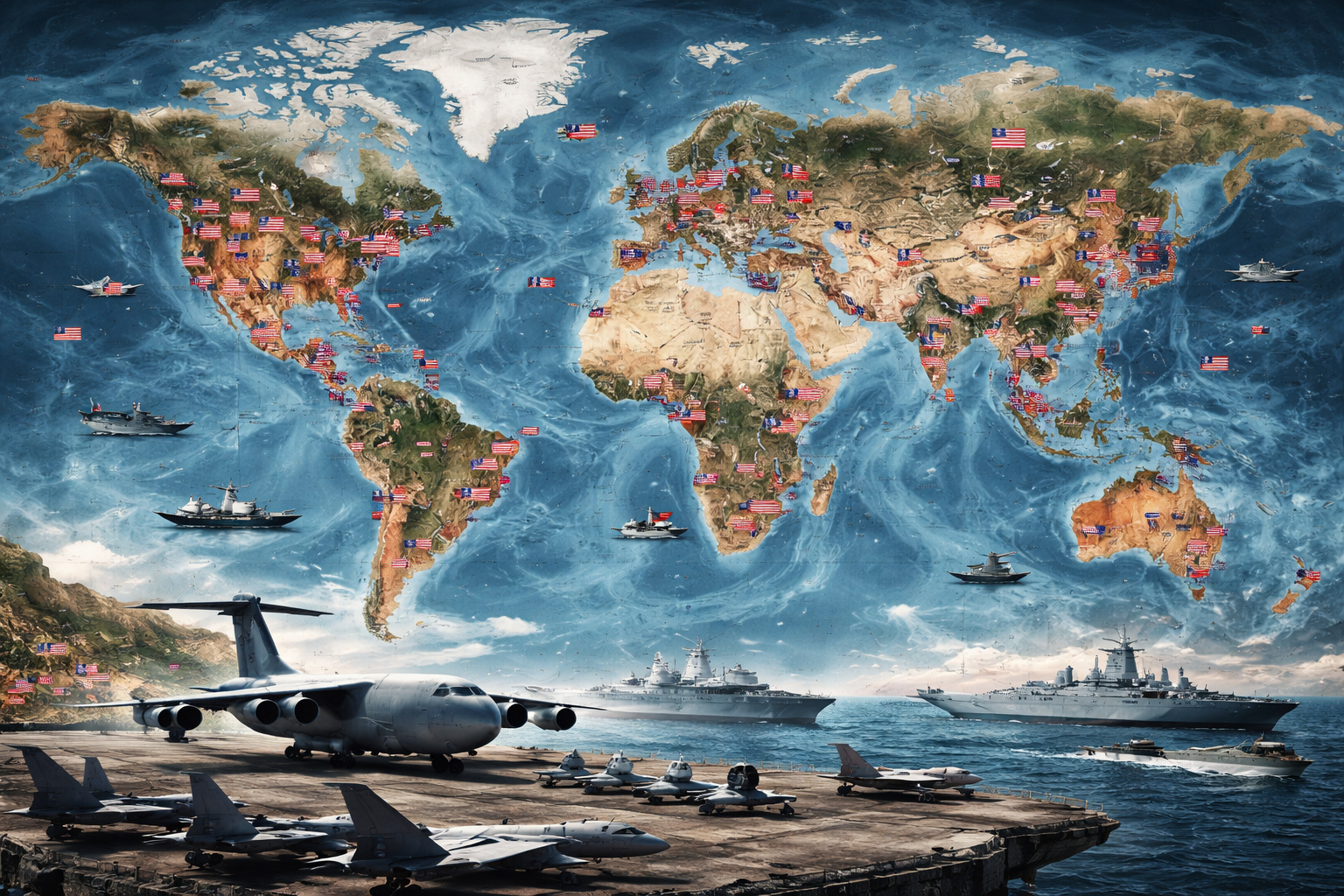
Global Map Shows How the U.S. Network of Military Bases Supports Its Rapid Response Capability and Global Strategic Presence
The United States maintains a vast network of military bases spread across the planet, forming a structure that supports its global operational capability.
According to data released by the U.S. Congress in 2024, the country has 128 official military bases distributed in 51 countries.
Additionally, when all military facilities are taken into account, the number exceeds 800 active structures around the world.
-
The Ukraine war exposes the strength of the M113 armored vehicle amid modern warfare with military drones.

-
Maritime geopolitics: China and the USA compete for strategic ports in Peru.
-
Iran shoots down two US aircraft: F-15 fighter crashes in mountainous area, one crew member is rescued and another is still missing; second crash in the Persian Gulf exposes still active air defense, says US intelligence.
-
USA and China compete for Brazil over resources that could be worth trillions — rare earths put the country at the center of a global dispute

Thus, this international network consolidates the American military presence in almost every continent.
Consequently, the global military system allows American forces to be quickly mobilized in different strategic regions.
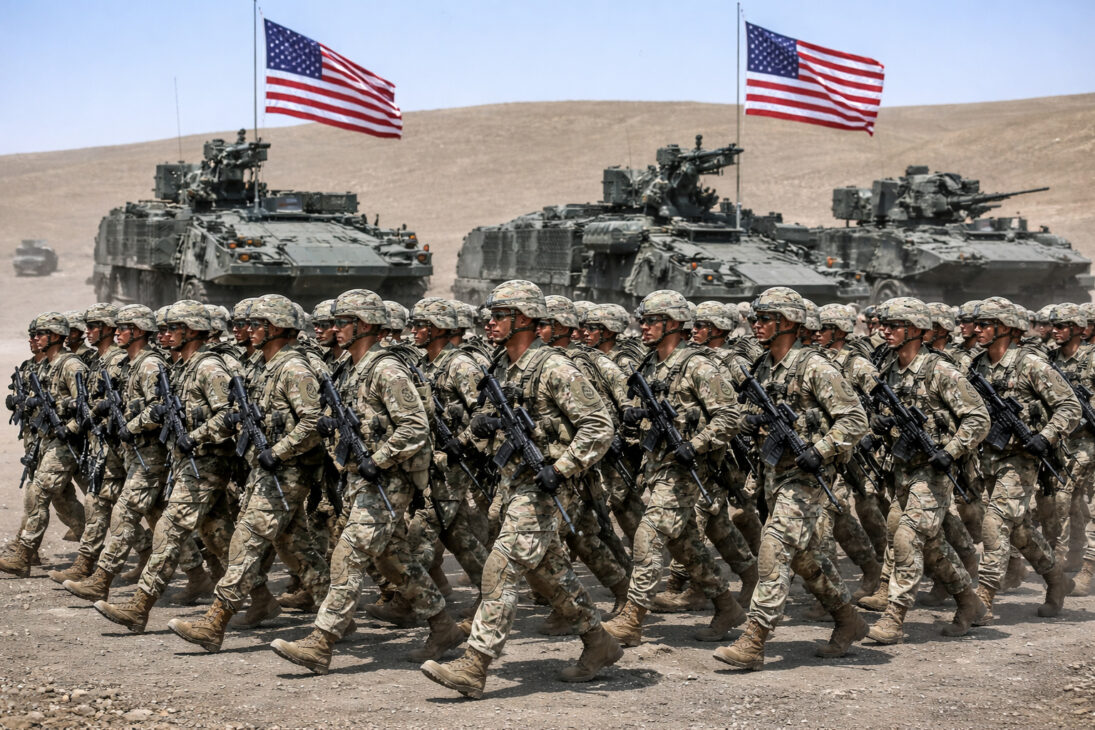
American Military Presence Covers the Planet
In addition to infrastructure, the military presence also involves a large human contingent spread across the globe.
According to data released by the U.S. Department of Defense in October 2025, about 230,000 military personnel and civilians are stationed outside U.S. territory.
Of this total, approximately 170,000 are active-duty troops.
Meanwhile, maintaining this international military structure requires significant investments.
According to official estimates from the Department of Defense, the annual cost to sustain this network exceeds US$ 70 billion, equivalent to approximately R$ 364 billion.
At the same time, military installations vary in complexity.
Some operate merely as logistical or operational support posts.
Others, however, function as complete military complexes, with airstrips, communication centers, and weapons depots.
According to the official justification from the U.S. government, these bases exist to respond quickly to crises, deter adversaries, and protect strategic allies.
Distribution of U.S. Military Bases
According to a survey released by the U.S. Congress in 2024, the distribution of bases follows a geographic and strategic logic.
America
In the Americas region, the United States maintains bases in several territories.
These include:
• Curaçao — 1 base
• Aruba — 1 base
• Honduras — 1 base
• El Salvador — 1 base
• Cuba — 1 base
• Bahamas — 1 base
Middle East
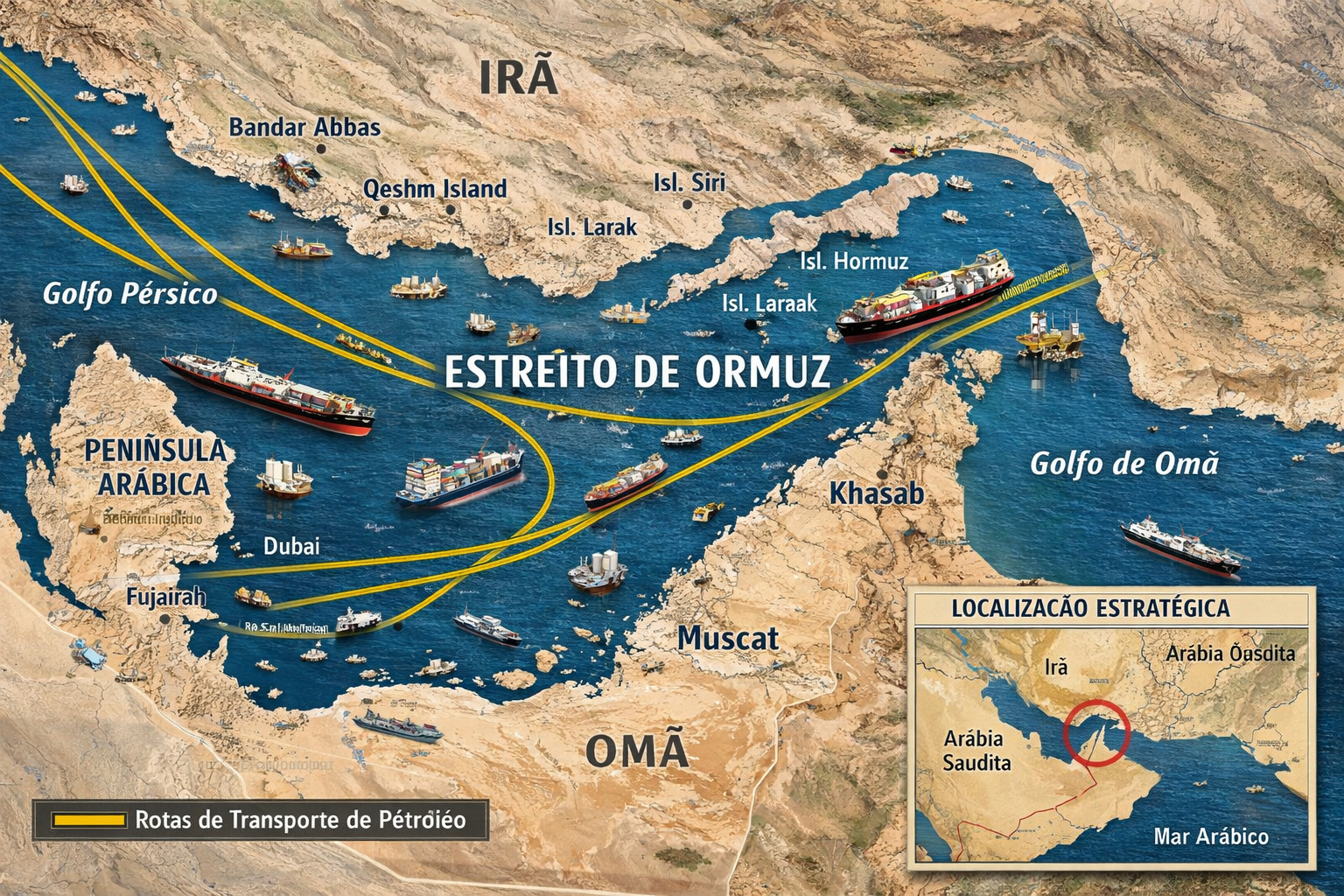
In the Middle East, a region considered strategic for security and energy, the military presence is greater.
Among the recorded bases are:
• Kuwait — 5 bases
• Bahrain — 2 bases
• United Arab Emirates — 2 bases
• Iraq — 2 bases
• Saudi Arabia — 2 bases
• Syria — 2 bases
• Egypt — 1 base
• Jordan — 1 base
• Oman — 1 base
• Qatar — 1 base
Europe
In Europe, the American military presence is also significant.
Among the countries with installations are:
• Italy — 7 bases
• Germany — 6 bases
• United Kingdom — 5 bases
• Poland — 5 bases
• Belgium — 3 bases
• Greece — 3 bases
• Romania — 3 bases
• Bulgaria — 2 bases
• Spain — 2 bases
• Hungary — 2 bases
• Lithuania — 2 bases
• Turkey — 2 bases
Additionally, there are smaller bases in:
• Cyprus
• Estonia
• Greenland
• Iceland
• Latvia
• Norway
• Portugal (Azores)
• Kosovo
Each of these locations has one American military base.
Asia
In Asia, some of the largest concentrations of bases are also present.
Among the main countries are:
• Japan — 14 bases
• Philippines — 9 bases
• South Korea — 8 bases
• Singapore — 1 base
Oceania
In Oceania, military installations are also part of the global strategic network.
These include:
• Papua New Guinea — 6 bases
• Australia — 4 bases
• Marshall Islands — 1 base
Africa
On the African continent, the recorded bases include:
• Somalia — 3 bases
• Djibouti — 2 bases
• Kenya — 2 bases
Additionally, there are further bases in:
• Chad — 1 base
• Saint Helena — 1 base
• Chagos Islands — 1 base
Geopolitical Strategy Behind the Military Network
According to Professor Vitelio Brustolin from Fluminense Federal University (UFF) and researcher at Harvard University, this military distribution follows a clear geopolitical logic.
According to the expert, the bases were strategically positioned to allow immediate reaction capability in different regions of the planet.
Thus, by maintaining bases spread across multiple continents, the United States can mobilize forces and respond quickly to international crises.
This model of international military presence, therefore, functions as one of the pillars of American strategic projection.
In light of this global scenario, an inevitable question arises: to what extent will this vast network of military bases continue to be the primary instrument of international influence for the United States?









Seja o primeiro a reagir!