





 Portuguese
  English
  Spanish
  5 min of reading
  0 comments


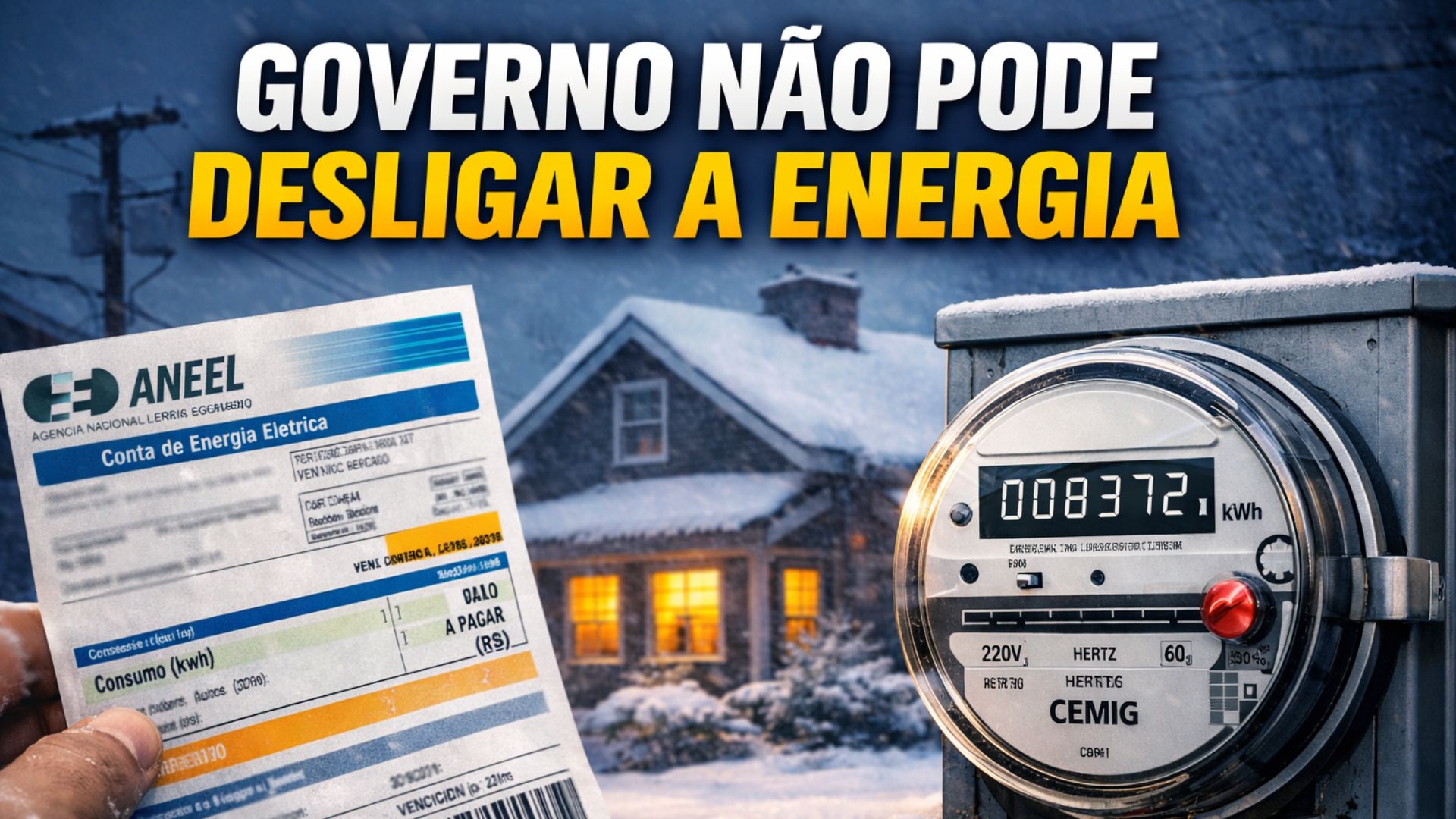
State Rule Prevents Late Bills From Resulting in Power Cuts Used for Heating During the Most Critical Cold Period in Massachusetts, Creating a Seasonal Moratorium Linked to “Financial Hardship” and Requiring Utilities to Maintain Supply While Billing Continues Through Standard Legal Channels.
In Massachusetts, in the United States, there is legal protection that changes the weight of a late bill when the temperature drops.
Electric and gas services used to heat the home cannot be interrupted for non-payment if the household is in a state of “financial hardship.”
In practice, the rule creates a seasonal moratorium on shutoffs to prevent families from losing heating precisely during the period when the cold makes the health risk more immediate.
-
“No one will make us change the Pix,” says Lula after the US report.

-
Lula responds directly to Trump and says that Pix is from Brazil and will not change under pressure from anyone, after a report from the United States pointed out the Brazilian payment system as an American trade barrier.

-
Amazon has just announced a new fee on all deliveries, and your online purchases will become more expensive starting April 17, including for those buying from the United States here in Brazil.

-
He sold his share for R$ 4 thousand, saw the company become a giant worth R$ 19 trillion, and missed the opportunity of a lifetime.

Shutoff Moratorium and Protection for Residential Heating
The block does not function as a debt forgiveness and does not prevent billing through regular means.
The difference lies in what the utility can do during that interval.
Instead of cutting off the supply that sustains home heating, it must maintain the service and follow the intended billing routes, including communication with the consumer, renegotiation, and assistance programs when applicable.
The protection is linked to the use of the service for heating.
In a state where many heating systems directly depend on natural gas or electricity to operate equipment, fans, controls, and thermostats, interruption of supply can mean not only discomfort but the loss of minimum livability conditions.
Thus, the state regulation treats heating as central during the cold season and establishes a barrier to shutoffs when there is proof of economic vulnerability.
Department of Public Utilities and Rules for Utilities
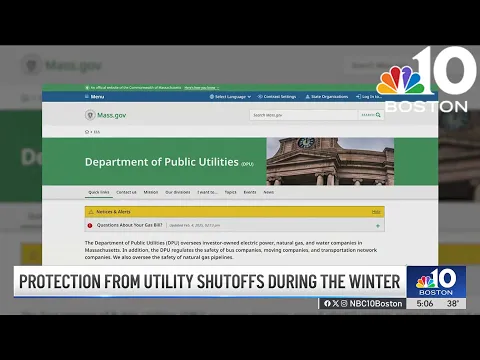

The machinery of this mechanism goes through the Department of Public Utilities, DPU, which regulates part of the energy companies in the state and establishes the shutoff rules.
The framework includes consumer protection norms and formal procedures for the utility, focused on preventing shutoffs from being used as an automatic response to overdue bills, especially when the service is essential for keeping the home heated.
The term “financial hardship” plays an operational role because it triggers the protection.
It is not enough to be behind on bills; the moratorium depends on verification.
In general, the consumer must show that they fall under the condition of hardship, which can occur through participation in low-income energy assistance programs or by presenting a specific financial hardship form provided by the company itself.
The documentation is relevant because the protection is not automatic for all cases, and the proof guides both the maintenance of service and referrals to payment options and support.
Billing Continues, But Cutoff Is Limited During Critical Period
This design creates a dynamic that draws attention outside the United States.
Even though billing continues to exist, the cold season imposes an objective limit on the shutoff of electricity or gas when these services are used to heat the home.
The state preserves supply in the name of public safety and health, without turning debt into amnesty.
For those in debt, the obligation remains; for those providing the service, the cutoff ceases to be the immediate tool during the protected period.
In addition to the moratorium linked to heating, Massachusetts also recognizes additional protections that can prevent shutoffs in specific circumstances, even outside the cold interval.
There are rules directed at groups considered more vulnerable, such as households with elderly individuals and situations that require more careful regulatory evaluation before any interruption.
In some cases, shutoff may depend on authorization from the regulatory body, which reinforces that public policy does not view supply merely as a contractual relationship but as a component of domestic security in sensitive contexts.
Calendar of Cold Season and Regulatory Adjustments
The delimitation of the protected period is an essential part of the system’s operation, as it defines when the barrier against shutoffs comes into effect and when it ends.
Although the rule has a seasonal cutoff established in regulation, the calendar can undergo adjustments by regulatory decision in specific situations, such as administrative contingencies or emergency measures.
In recent seasons, the DPU has indicated an extended interval compared to the standard, aimed at ensuring that vulnerable families are not affected by interruptions when they need heating and stable supply the most.
In this type of expansion, the logic remains: protect residential use for heating during the critical period.
What changes is the outline of the calendar, which may start earlier and end later than usual, always associated with formalized administrative decisions communicated to the public.
For the consumer, this means that the protection window is not just a bureaucratic detail; it determines whether the risk of shutoff exists at that moment or if the company needs to adopt alternative billing and negotiation methods.
Payment Plans, Energy Assistance, and Debt Management
From the perspective of utilities and regulatory authorities, the moratorium shifts the focus to debt management.
Instead of interrupting the service, companies tend to concentrate efforts on formal notices, payment plans, referrals for low-income discounts, and energy assistance programs.
The rule, therefore, does not eliminate the pressure for regularization, but imposes a specific path: maintain the necessary supply for heating while debt is handled through permitted means.
This characteristic helps explain why the policy sparks global curiosity.
In many countries, shutting off power for non-payment is a central tool for revenue recovery.
Yet in Massachusetts, the cold season creates a significant exception when energy is directly linked to home heating and when there is recognition of financial hardship.
It is a regulatory choice that places a temporary limit on the power to interrupt service and prioritizes domestic safety during a period of greater risk.
In practice, the effectiveness of this mechanism depends on information and procedure.
As the protection may require proof, the consumer needs to know that the condition of hardship exists, that there are accepted forms and criteria, and that the regulator establishes the rules of the game.
Without this bridge, the moratorium may exist on paper and still not be activated in time in individual situations.
On the other hand, when the system works as intended, it creates a buffer of time for families to seek assistance, negotiate debts, and get through the harshest cold period without losing heating due to service shutoff.
By transforming the cold season into a regulatory milestone for the continuity of energy used for heating, Massachusetts adopts a model in which debt continues to be charged, but the risk of losing essential service is controlled by public rules, and not just by unilateral decision of the provider.








-

-

-

7 pessoas reagiram a isso.