





 Portuguese
  English
  Spanish
 5 min of reading
  5 comments


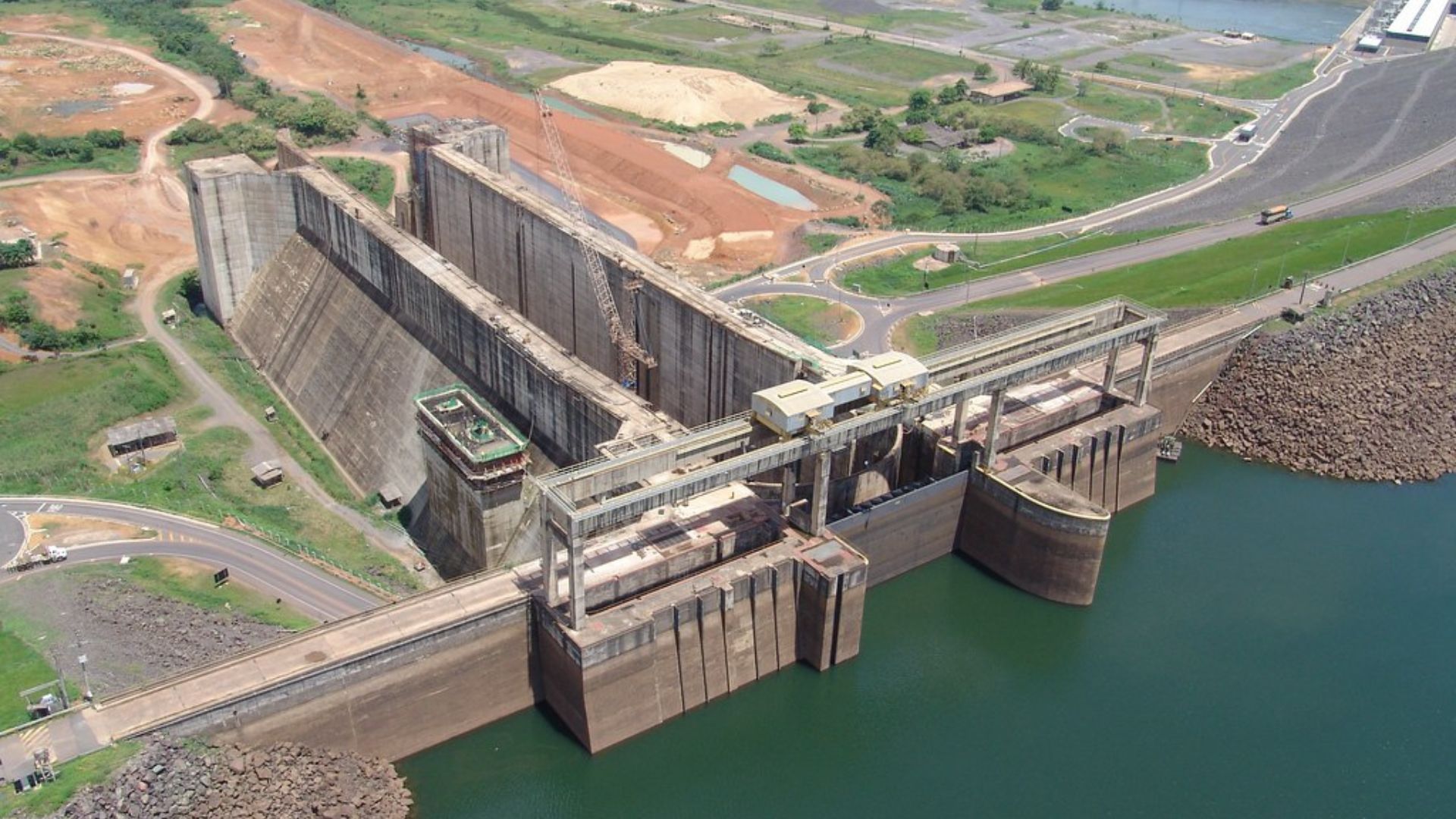


Engineering That Makes Vessels “Rise” and “Fall” Without Leaving the Water, with Giant Chambers Capable of Transposing a Vertical Drop Comparable to a Tall Building on the Tocantins River. The System Operates Like a Hydraulic Elevator, Connecting Sections of Inland Navigation and Revealing How Little Visible Infrastructure Sustains Strategic Fluvial Routes.
On the Tocantins River, in Pará, an engineering structure allows vessels to “rise” and “fall” a vertical drop equivalent to the height of a tall building, without needing to leave the water.
The Tucuruí Locks form a system for overcoming vertical drops that functions like an elevator for river convoys, enabling the continuity of navigation where the dam of the Tucuruí Hydroelectric Plant has created a level difference that would interrupt the waterway.
Tucuruí Locks and the Impressive Dimensions
Gigantism is evident in the numbers.
-
With a cost per shot close to zero, the DragonFire laser could change naval warfare in 2027 and provide British ships with nearly unlimited defense against drones.

-
A British startup creates tires that generate electricity in electric vehicles when passing over potholes, speed bumps, and cracks.

-
Scientists have created robots made with living cells that have their own nervous system, swim on their own, explore the environment, and self-organize without any genetic engineering, and now they want to do the same with human cells.

-
Students create a solar-powered ambulance that operates without a plug, without fuel, and still keeps medical equipment running in remote areas.


According to the National Department of Transport Infrastructure (DNIT), each lock has a chamber that is 210 meters long and 33 meters wide, dimensions associated with large-scale works in inland navigation.
The same source describes a total vertical drop of about 72 meters to be overcome by the system, distributed between two stages, and also informs a permissible draft of 5 meters in the chamber, a parameter that determines the compatible navigation depth for operation.
How the “Ship Elevator” Works on the Tocantins River

The logic behind this infrastructure is simple to understand and complex to execute: when the water level changes abruptly along a watercourse, it creates an invisible “wall” for navigation.
Instead of requiring cargo transshipment by land or preventing the passage of vessels, the locks create a controlled route where the vessel enters a chamber, the gates are closed, and then it is raised or lowered by varying the internal water level until it equals the next section of the river.
Two Stages and an Intermediate Canal of 5.5 km
In Tucuruí, this process occurs in two stages.
The DNIT describes the system as composed of two locks and an intermediate canal with a length of 5.5 kilometers, space designed for maneuvering and crossing of convoys, with a minimum width reported of 140 meters.
In practice, this arrangement transforms what would be a definitive blockage to navigation into a corridor with hydraulic and operational control, where the flow of vessels can be accommodated in an organized manner.
Upstream Lock, Downstream Lock, and Independent Operation
The first structure is called the upstream lock, linked to the lake formed by the dam of the hydroelectric plant.
According to DNIT, this stage connects the intermediate canal to the reservoir, overcoming a drop of several meters.
The second, known as the downstream lock, connects the intermediate canal to the bed of the Tocantins River and completes the transposition to the natural watercourse level.

The agency also indicates that the two locks can operate completely independently, an operational design that tends to facilitate traffic management and reduce dependence on a single chamber in case of maintenance or routine adjustments.
Convoys of Up to 200 Meters and Capacity of 19 Thousand Tons
The size of the system reflects the type of navigation for which it was designed.
In the description by DNIT, the system can accommodate convoys of up to 200 meters long, 32 meters wide, and 3 meters draft, with capacity associated with large volume cargo, reaching 19 thousand tons per convoy.
In logistical terms, this is a scale that brings the waterway closer to a competitive corridor for specific flows of bulk and heavy cargo, with the known advantages of water transport in efficiency per ton moved.
Navigation Between Belém and Marabá and the Tocantins-Araguaia Axis
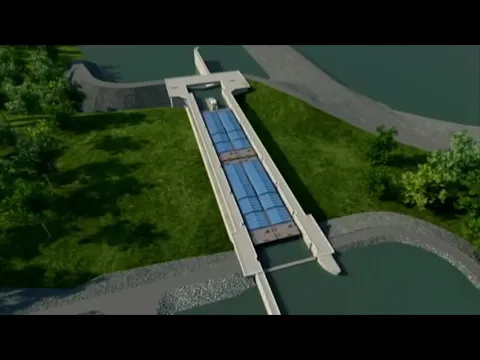

This “ship elevator” was designed to integrate strategic sections of inland navigation.
DNIT points out that the objective of the system is to allow navigation between Belém and Marabá, along the Tocantins River, and promote the use of interior routes that connect to the Tocantins-Araguaia basin.
The reference to a length of over 2,000 kilometers, associated with the connection of the port of Belém to regions further inland, helps to frame the project’s horizon: to expand the continuity of a waterway that, without the transposition, would be segmented by the height difference imposed by the dam.
Monumental Scale Hydraulic Engineering
Although the idea of a lock is old in navigable channels and rivers around the world, its application in Tucuruí demands engineering and operation compatible with the scale of the challenge.
The presence of gates, filling and emptying systems, and safety controls is inherent to the functioning of a chamber of this nature, as the vessel depends on precise, gradual, and coordinated level variation to maintain stability within the confined space.
The dimensions of 210 by 33 meters increase the complexity of each cycle, as the volume of water manipulated in a single lock operation grows with the size of the chamber and with the height difference to be overcome.
Drop of Up to 72 Meters and the “Liquid Staircase” of the Locks

The technical vocabulary itself reveals the central function of the work: to overcome vertical drops without interrupting navigation.
In the case of Tucuruí, DNIT records a maximum drop of about 72 meters, with specific portions assigned to each lock.
The “stair-step” design is not a detail; it is the operational solution that makes it feasible to overcome a significant height difference, fractionating the hydraulic effort and distributing the route in two controlled environments, with the intermediate canal serving as a transition area.
Why the Work Attracts Attention Outside of Brazil
When viewed from the angle of curiosity, the work draws attention for creating an experience that seems paradoxical: instead of a bridge that takes the vehicle over the obstacle, it is the water that changes place to carry the vessel to a new level.
In practice, the system acts as a liquid staircase on a monumental scale, keeping the vessel in the same element the whole time and converting a geographical barrier into a sequence of doors and levels that reorganize around the hull.
In a country with extensive rivers and a vocation for large hydraulic works, structures like the Tucuruí Locks demonstrate how inland navigation can rely on little visible engineering solutions for those far from the riverbed.







Pena que não fizeram eclusas em Itaipu. Na barragem de Três Gargantas na China também tem eclusas.
Mas te falo em encher linguiça num texto hein… Que loucura. Extremamente repetitivo.
Esses investimentos são públicos?
Cargo de quem está a operação e arrecadação pelo uso deste sistema?