





 Portuguese
  English
  Spanish
  4 min of reading
  0 comments


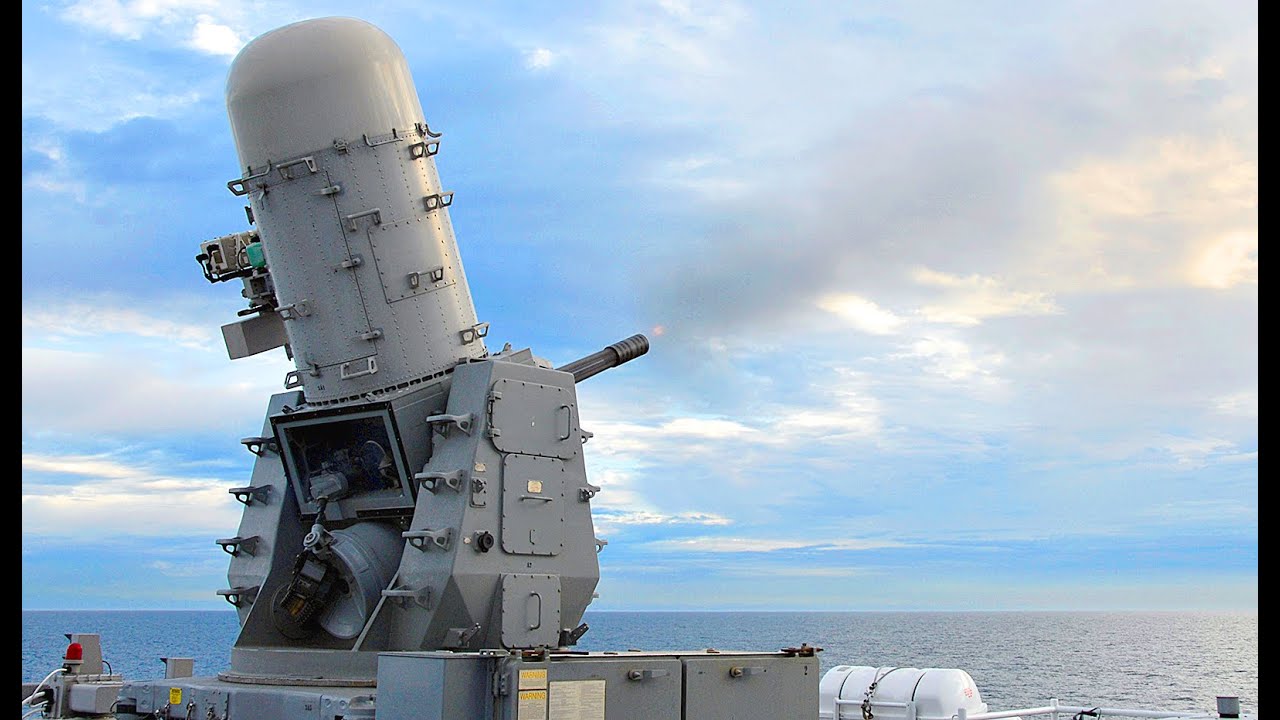
In January 2025, the Phalanx CIWS system destroyed a Houthi missile 1.6 km from the USS Gravely in the Red Sea, saving 300 sailors and proving its effectiveness as the last line of naval defense for the USA.
In January 2025, a Houthi rebel cruise missile was seconds away from hitting the destroyer USS Gravely in the Red Sea when the Phalanx CIWS system automatically sprang into action and saved more than 300 sailors on board. The enemy projectile came within 1.6 km of the ship before being destroyed by a burst of tungsten that lasted only 2 to 3 seconds — but it was enough to avoid a catastrophe. This real incident reveals why the Phalanx Close-In Weapon System (CIWS), pronounced “sea-whiz,” has become the most reliable last line of defense for the United States Navy since 1980. Installed on all classes of American surface combat ships and in the fleets of 24 allied nations, the automated system costs a fraction of traditional interceptor missiles, providing critical protection against threats that penetrate all other layers of defense.
Phalanx CIWS: The Naval Defense System That Fires 4,500 Rounds Per Minute
The Phalanx CIWS was designed by General Dynamics (now Raytheon RTX) in response to the growing threat of Soviet anti-ship missiles in the 1970s.
The heart of the system is the M61A1 Vulcan 20 mm cannon, the same used in aircraft like the F-15 and F-16. With six rotating barrels based on Dr. Gatling’s principle, the system fires up to 4,500 rounds per minute, or 75 projectiles per second.
-
The German “steel monster” weighing 55 tons fires up to 10 projectiles per minute at over 40 km and avoids counterattacks on the battlefield by moving quickly to escape enemy attacks; meet the Panzerhaubitze 2000.

-
USS Gerald R. Ford, the largest aircraft carrier in the world, returns to sea after a fire in the laundry in the Red Sea; repaired in Crete, it resumes missions of Operation Epic Fury against Iran.

-
Military power: South Korea’s new KF-21 fighter jet will be a key component in replacing the aging aircraft of the air force, placing the country on the map of air military powers.
-
With 310 meters, 80 thousand tons, and capable of operating for 45 years, the new nuclear aircraft carrier France Libre will be the largest in France and will enter service in 2038.

Each barrel fires for only one-sixth of the total time, allowing that during a continuous burst of 20 seconds — the time required to empty the magazine of 1,550 rounds — each individual barrel operates for just 3.3 seconds before cooling.
Typical engagements use about 300 projectiles, maintaining a balance between firepower and thermal control.
Automated Defense System That Detects, Tracks, And Destroys Without Human Intervention
The major differentiator of the Phalanx is its full autonomy. The system weighs 6.2 tons and integrates into a single structure:
- Ku-band search radar
- Tracking radar
- Electro-optical and infrared (FLIR) sensors
- Fire control computer
- Six-barrel Gatling gun
In AAW Auto (standalone mode), used in high-risk areas like the Red Sea, the Phalanx operates completely independently: it detects, assesses, tracks, fires, and confirms the destruction of the threat without any human command.
The upper barrel-shaped antenna earned the system the nickname “R2-D2”, due to its resemblance to the robot from the Star Wars franchise.
Military Economy: US$ 46 Per Shot Against Missiles Costing Millions
While interceptor missiles like SM-2 (US$ 2 million each) and ESSM are used against Houthi drones costing a few thousand dollars, the Phalanx presents a drastically more economical solution.

Each Mk 244 Mod 0 20 mm cartridge costs US$ 46. A typical 2-second burst consumes 150 projectiles, costing about US$ 6,900.
The complete Phalanx Block 1B system costs approximately US$ 13 million per unit.
The Mk 244 Enhanced Lethality Cartridge (ELC) is 48% heavier than previous versions, producing greater kinetic energy upon impact. The shot dispersion is 40% smaller, increasing accuracy.
USS Gravely vs Houthis: The Real Case That Proved Phalanx Effectiveness in Combat
The incident of January 30, 2025 became the first confirmed use of the Phalanx against a real cruise missile in naval combat.
The Houthi missile was traveling at approximately 965 km/h and came within 1.6 km of the destroyer before the automatic system activation.
Analysts estimated that the missile was 4 seconds from impact when it was destroyed. Raytheon RTX officially confirmed the use of the system in May 2025.
Short Range, Extreme Lethality: The Last Line of Naval Defense
The effective range of the Phalanx varies between 1.8 and 9 km, depending on the target. The system can intercept:
- Subsonic and supersonic missiles up to Mach 3
- Drones
- Helicopters
- Small boats
- Artillery and mortar projectiles (land-based C-RAM version)
Against ballistic or hypersonic missiles above Mach 3, systems like SM-2 and SM-6 are necessary.
Technological Evolution of the Phalanx: Block 0 to Block 1B
Since 1980, the system has undergone multiple upgrades:
Block 0 (1980) – First generation.
Block 1 (1988) – Improvements in radar and increased magazine capacity to 1,550 projectiles.
Block 1A – New computer system.
Block 1B PSuM (1999) – Inclusion of FLIR sensor and capability against surface targets.
In 2017, Raytheon tested a new electric weapon replacing the pneumatic system, reducing weight and increasing reliability.
In September 2025, the company received a contract for US$ 205 million for continued production and upgrades until 2029.
Global Presence: More Than 850 Systems in Operation
More than 850 Phalanx systems are in service in over two dozen fleets around the world. American aircraft carriers carry three units; destroyers, one or two. Users include:
- Royal Navy
- Royal Australian Navy
- Royal Canadian Navy
- U.S. Coast Guard
Brazil evaluated the acquisition for the PHM Atlântico but considered the cost high.
Phalanx CIWS Remains Essential 45 Years After Its Creation

Even with advances in layered defense and network integration, the Phalanx remains essential for its ability to:
- Operate independently
- Respond in milliseconds
- Act against low-altitude threats
- Protect ships when all other layers fail
The so-called “R2-D2” has proven, four and a half decades after its introduction, that it remains a key component of modern naval doctrine.









-

-

2 pessoas reagiram a isso.