





 Portuguese
  English
  Spanish
  5 min of reading
  0 comments


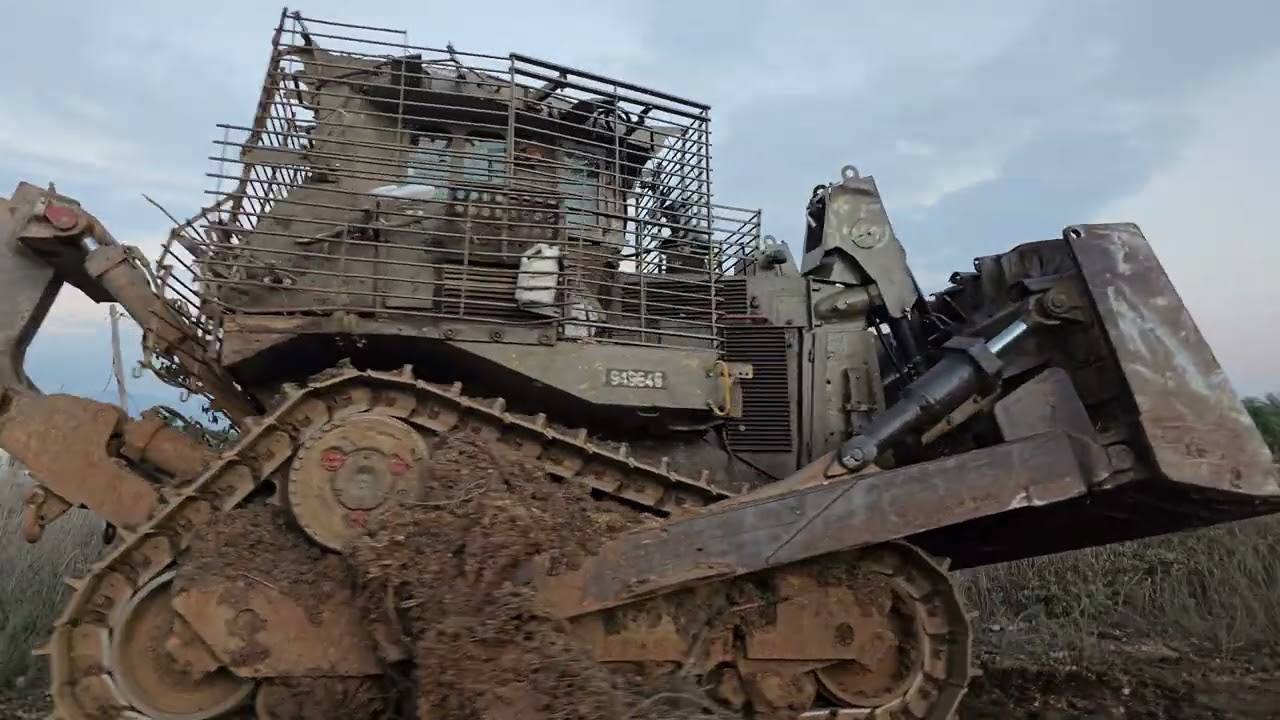
Israel Operates The Militarized Caterpillar D9R, Nicknamed Doobi, With 71.6 Tons, Reinforced Armor, And RPG Protection, Turning A Civilian Tractor Into A Weapon Of War.
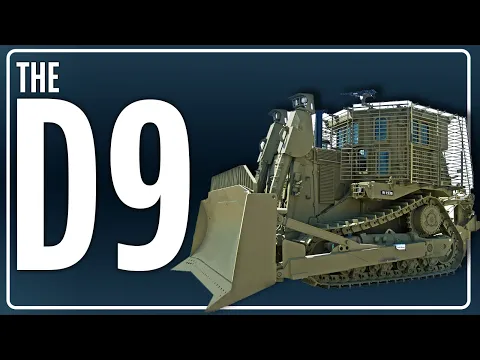
Israel operates the militarized Caterpillar D9R, nicknamed Doobi — “stuffed teddy bear” in Hebrew. The nickname, laden with irony, dramatically contrasts with the lethal nature of this machine transformed into a weapon of war. The D9R is a combat engineering armored tractor operated by the Israel Defense Forces (IDF) and represents one of the most extreme military adaptations of an originally civilian piece of equipment.
The latest model weighs 71.6 tons, generates 405 to 410 horsepower, and develops an impressive 702 kilonewtons of traction force. The original civilian version of the Caterpillar D9 weighs around 50 tons, meaning that the armor adds between 15 and 20 tons of extra ballistic and structural protection.
Advanced Armor Transforms Civilian Tractor Into An Impenetrable Combat Vehicle
The militarization of the Caterpillar D9 was developed in partnership between Israel Military Industries (IMI) and Israel Aerospace Industries (IAI). The armor kit transforms the civilian construction tractor into a true armored engineering vehicle for urban combat.
-
The German “steel monster” weighing 55 tons fires up to 10 projectiles per minute at over 40 km and avoids counterattacks on the battlefield by moving quickly to escape enemy attacks; meet the Panzerhaubitze 2000.
-
USS Gerald R. Ford, the largest aircraft carrier in the world, returns to sea after a fire in the laundry in the Red Sea; repaired in Crete, it resumes missions of Operation Epic Fury against Iran.
-
Military power: South Korea’s new KF-21 fighter jet will be a key component in replacing the aging aircraft of the air force, placing the country on the map of air military powers.
-
With 310 meters, 80 thousand tons, and capable of operating for 45 years, the new nuclear aircraft carrier France Libre will be the largest in France and will enter service in 2038.


The operator and commander cabins are located within a heavily armored cockpit, equipped with bulletproof glass capable of withstanding:
- Bombs
- Machine Guns
- Sniper Fire
In 2005, slat armor (cage armor) was incorporated, designed to neutralize rocket-propelled grenades (RPGs). This system prematurely detonates projectiles before they reach the vehicle’s main structure, saving countless lives.
The evolution of armor has occurred over several generations since the 1980s. The earlier D9L and D9N versions utilized improvised protection during the First Intifada.
In the 2000s, a new generation of armor was developed in collaboration between the IDF, Israel Aerospace Industries, and Caterpillar itself.
In 2006, in response to the growing threat of shaped charge anti-tank missiles, slat armor was massively installed across the D9R fleet. The system received recognition from the IDF Ground Command for its proven effectiveness.
Reduced Crew And Remote-Controlled Versions Raam HaShachar
The militarized Caterpillar D9R is operated by two people: driver and commander, sitting side by side within the fortified cabin. This compact configuration improves communication during intense operations.
There are also remotely controlled versions called Raam HaShachar (“Thunder of Dawn”), which allow for distance operation in extremely dangerous missions, such as:
- Clearing Minefields
- Detonating Improvised Explosive Devices (IEDs)
- Operations Under Heavy Fire
The remote control technology drastically reduces the risk of human casualties while maintaining full operational capability.
16-Cylinder Engine And Extreme Demolition Capability
The 16-cylinder diesel engine generates the power necessary to move the colossal weight of the D9R across devastated terrains, urban rubble, and mined areas.
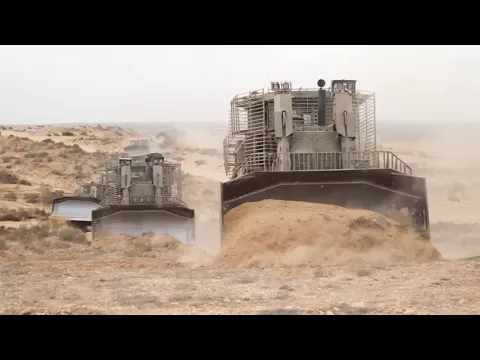
The traction force equivalent to 71.6 metric tons allows for:
- Dragging Massive Obstacles
- Opening Routes Through Collapsed Structures
- Removing Damaged Armored Vehicles
- Pushing Tons of Concrete and Steel Simultaneously
The reinforced front blade transforms the D9R into a powerful military demolition tool.
Role Of The Caterpillar D9R In Gaza And Urban Wars
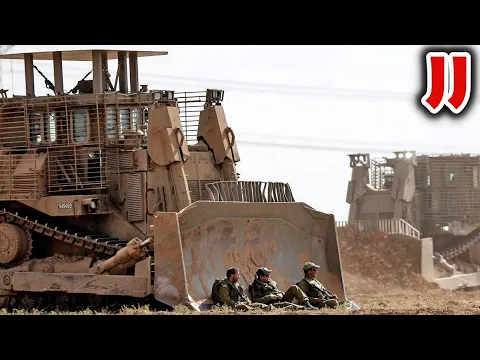
The war in Gaza (2023–2024) highlighted the central role of the Caterpillar D9R in dense urban combat operations.
About 100 units were deployed in the initial phase of the ground offensive. The machines operated alongside:
- Merkava Mk IV Tanks
- Namer Infantry Fighting Vehicles
- Combat Engineering Units
The D9R opens safe routes in destroyed streets filled with explosive traps. One of its primary missions is to expose accesses to tunnels used by Hamas. During Operation Protective Edge (2014), more than 30 tunnels were destroyed with the support of these armored tractors.
On July 27, 2014, a D9 was hit by an anti-tank missile, resulting in the death of the operator and injuries to the commander, demonstrating that, despite the robust armor, the vehicle is not absolutely invulnerable. Subsequently, another D9 demolished the building from which the shot was fired.
Operational History: Intifadas, Lebanon, And Iraq
During the Second Intifada (2000–2005), the armored D9 proved to be highly resistant to available weapons, withstanding attacks from RPGs and explosives ranging from 100 kilograms to half a ton. It was used to remove vegetation and structures that could provide cover for attacks.
The protocol Noal Sir Lachatz (“pressure cooker protocol”) was developed, involving the use of D9 and other engineering vehicles to destroy buildings where militants were entrenched.
In the Lebanon War of 1982, the D9 was used to clear paths through mountains and remove minefields. In the Second Lebanon War (2006), it again played a central role in mine clearance and route opening.
Operational Cost And Technology Export
Each militarized D9R unit costs approximately US$ 2 million, compared to US$ 150,000 for the civilian version.
The additional cost involves:
- Advanced Armor
- Military Electronic Systems
- Communication Equipment
- Structural Reinforcement
- Higher Maintenance Costs Due To Extra Weight
The United States recognized the effectiveness of the armored D9 and acquired protection kits for use in the Iraq War (2003). The U.S. Army produced similar fortified versions.
The U.S. Marine Corps and the Canadian Army also adopted Israeli armor technology.
International Controversy Regarding The Use Of The D9
The use of the D9 for demolitions in Gaza has generated international criticism. The UN High Commissioner for Human Rights advised Caterpillar Inc. on potential legal implications related to supplying tractors to the IDF.
Norwegian pension funds halted investments in Caterpillar in 2024 due to the use of the equipment.
Amnesty International published a report in 2004 on demolitions in Palestinian territories. The case of activist Rachel Corrie in 2003 generated international repercussions.
CNN investigations in 2024 reported the destruction of cemeteries and environmental damage in Gaza.
The militarized Caterpillar D9R represents the pinnacle of transforming a civilian construction tractor into a war urban armored engineering vehicle.
With 71.6 tons, RPG protection, remote-controlled versions, and extreme demolition capability, the “Doobi” symbolizes the technological adaptation of Israeli military engineering for asymmetric conflicts.
Despite international controversies, it remains one of the most strategic and emblematic equipment in IDF operations.









Seja o primeiro a reagir!