





 Portuguese
  English
  Spanish
  4 min of reading
  0 comments


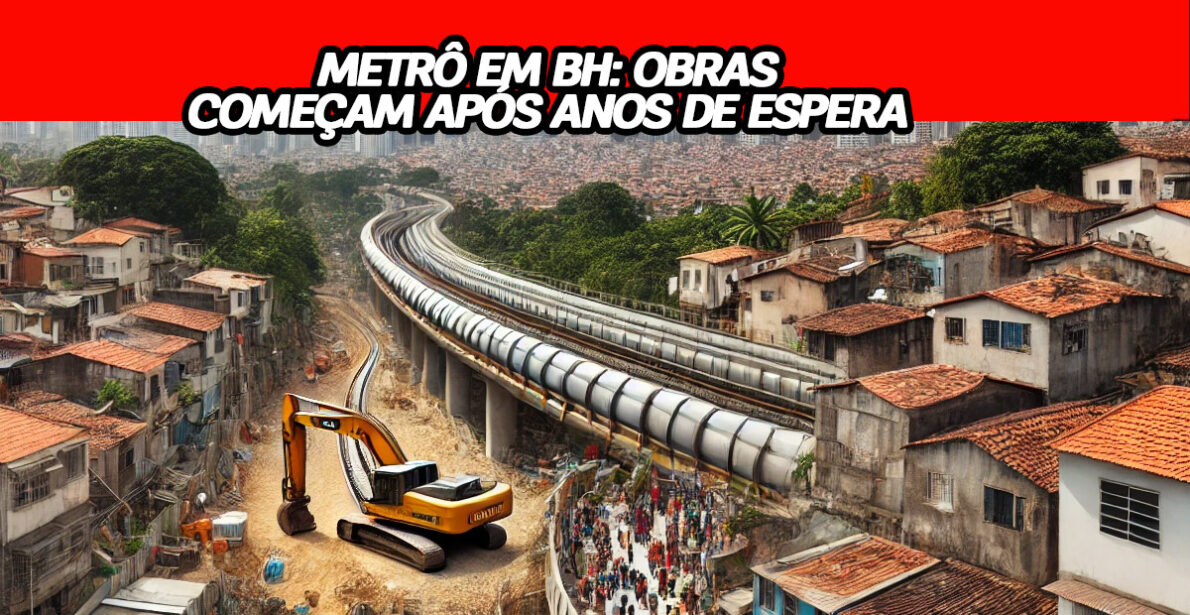
The Expansion of the Metro in Belo Horizonte, with an Investment of R$ 3.2 Billion, Promises to Improve Urban Mobility and Generate Jobs. However, Families in Affected Areas Face Uncertainties Regarding Compensation and Resettlement, Raising Criticism About the Removal Process.
After decades of waiting, the metro expansion works in Belo Horizonte, promising to revolutionize mobility in the city and generate a wave of new jobs, have finally begun.
The population, however, finds itself in a mix of relief and apprehension, not only because of the positive impact the project will bring, but also due to the harsh reality many will face.
As the tracks advance, houses will be demolished, families displaced, and the promises of dignified resettlement still hang in the air as an unknown. The million-dollar figures seem impressive, but the true cost of the expansion may not be reflected in the official budget.
-
“No one will make us change the Pix,” says Lula after the US report.

-
Lula responds directly to Trump and says that Pix is from Brazil and will not change under pressure from anyone, after a report from the United States pointed out the Brazilian payment system as an American trade barrier.

-
Amazon has just announced a new fee on all deliveries, and your online purchases will become more expensive starting April 17, including for those buying from the United States here in Brazil.

-
He sold his share for R$ 4 thousand, saw the company become a giant worth R$ 19 trillion, and missed the opportunity of a lifetime.


Billions in Investments and Ambitious Plans
The metro expansion project in Belo Horizonte, initiated in September 2024, promises to transform urban mobility with the construction of line 2, which will have 10 km of extension and will pass through seven new stations, including Barreiro and Vista Alegre.
With R$ 3.2 billion in investments, the project is expected to be completed by 2028 and also foresees significant improvements in line 1, which will gain a new station and expand its length.
According to the State Secretary of Infrastructure, Pedro Bruno Barros de Souza, the work is crucial for the Metropolitan Region, as it faces chronic traffic problems and public transport overload.
Despite the promises, the expansion process is not just progress. For the tracks to advance, hundreds of families will need to be removed from their homes, especially in the neighborhoods of Nova Gameleira and Vista Alegre, sparking intense reactions and questions about the future of these individuals.
Questionable Compensation and Legal Uncertainties
While the machines operate at a fast pace, residents in the area where line 2 will be built face a dilemma.
Many are being notified that they will have to leave their homes, with the promise of compensations that, according to them, are insufficient to ensure dignified resettlement.
R$ 28.7 million has been allocated for these compensations, a sum that, according to the deputy Bella Gonçalves, would result in only R$ 86 thousand per family. “This amount barely covers the purchase of a dwelling under similar conditions,” the parliamentarian warned.
The low amounts are just part of the problem. According to public defender Cleide Aparecida Nepomuceno, many of these families occupy land irregularly, which exacerbates the situation.
“Compensations cover only the improvements and do not guarantee ownership rights to the land, which violates Federal Law 14.620 of 2023,” she explained. This jeopardizes the right to housing, generating uncertainties about the legal security of the process.
MetrôBH Tries to Calm Nerves
At a public hearing held in September 2024, representatives of Metrô BH, the company responsible for the project, tried to reassure the population.
According to lawyer Victor Marcondes de Albuquerque Lima, the removal process will be conducted with respect and dignity.
“We will not put anyone on the street in an undignified manner. We assure that all rights will be respected,” Lima stated in response to accusations of lack of transparency and dialogue with the affected families.
Izabel Loureiro, social responsibility consultant at MetrôBH, also emphasized that the company is committed to minimizing the social impacts of the works.
Meetings have been held with residents, and communication channels have been opened to clarify doubts. “We have created two points for in-person assistance for the most affected residents. We want the process to be transparent,” said Izabel.
Removal Plan and Deadlines for 2025
According to MetrôBH, the vacating plan has already been developed and provides for the removal process to occur throughout 2025, with the demolition of houses and payment of compensations taking place gradually.
Consultant Izabel Cristina Loureiro stated that the company strictly follows the technical standards of the Brazilian Association of Technical Standards (ABNT) and employs methods that ensure fair evaluations of the buildings. However, the tight schedule and lack of dialogue with some residents raise fears about the efficiency of this process.
Expansion of Line 2: The Promising Side
Although the social and legal challenges are evident, the expansion of the metro in Belo Horizonte is seen as a necessary advancement for the city’s infrastructure.
Line 2 is expected to integrate less-served areas by public transport, connecting strategic regions of the city, such as Barreiro and Amazonas.
Furthermore, the forecast of new direct and indirect jobs generated by the work is a hope for many during an economic recovery.
According to urban mobility experts, this project could drastically reduce travel time between peripheral zones and the center of Belo Horizonte, alleviating traffic and improving the quality of life for thousands of people who rely on public transport daily.
The Future of Mobility in Belo Horizonte
With the works in full swing, the future of mobility in Belo Horizonte looks promising. However, the question remains: will progress come with justice for all, or will the families affected by expropriations continue to be sidelined in the development?
Is the price of progress too high for the families who will be removed from their homes? How can we ensure that these residents are not forgotten in the process of modernizing the city?






-

Uma pessoa reagiu a isso.