





 Portuguese
  English
  Spanish
  4 min of reading
  102 comments


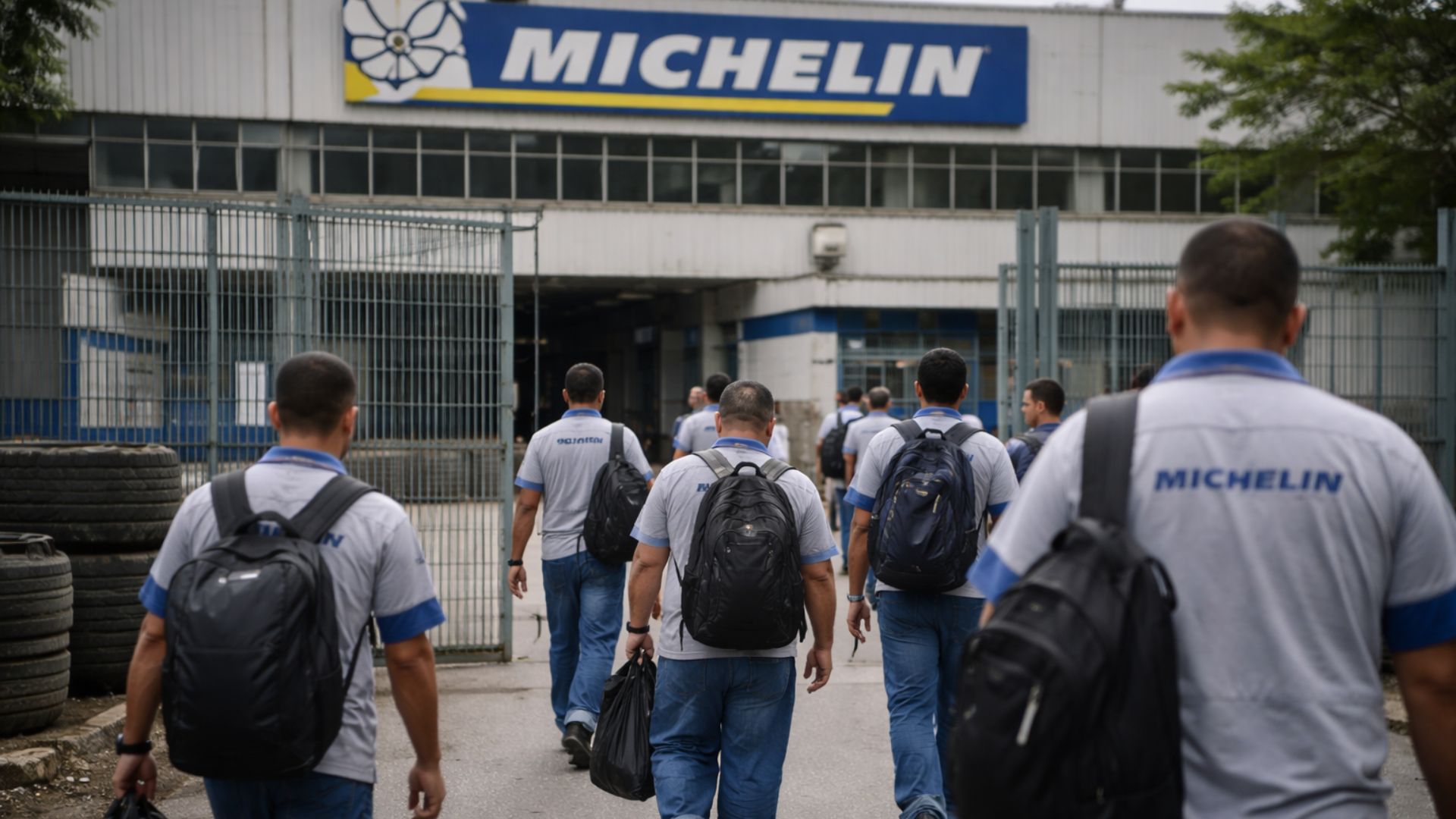


Industrial Closure Reveals Impact of Asian Imports on Jobs, Local Production, and Michelin’s Strategy in Brazil, with Collective Dismissal, Union Negotiation, and Reorganization of the Company’s Industrial Structure in the Country.
Michelin South America confirmed that it will cease industrial activities at its factory in Guarulhos, Greater São Paulo, resulting in the dismissal of approximately 350 workers.
The company stated that the decision was made in the first half of the year and that the closure will occur gradually, with operations maintained during the transitional phase, expected to be completed by December.
According to information released by the company and reported by news outlets, the São Paulo unit is primarily dedicated to the production of inner tubes for motorcycle and bicycle tires.
-
India announces a plan of $3.06 billion to bring aviation to forgotten regions: 100 new airports, $1.07 billion in subsidies, and regional routes guaranteed for 10 years, from 2026 to 2036, away from the centers.
-
Brazil blocked a proposal from the United States at the WTO that would make the exemption from tariffs on digital products like streaming and ebooks permanent, favoring American tech giants at the expense of developing countries.

-
IPTU exemption for seniors in 2026: see how to secure the benefit.

-
The institute that trained the greatest aerospace engineers in Brazil has just opened its first campus outside São Paulo after 75 years: ITA Ceará will have R$ 445 million, new courses in energy and systems, and classes are expected to start in 2027.

The industrial park also manufactures industrial tires and semi-finished items used in other stages of the company’s production chain.
The Guarulhos plant represents a limited share of Michelin’s total employees in the country.
According to the company’s data, the group maintains about 8,000 employees in Brazil, of whom approximately 350 are linked to the unit that will be deactivated.
Asian Imports and Competition in the Brazilian Market
In the announcement regarding the closure, Michelin attributed the decision to the increase in the influx of imported products from Asia into the Brazilian market.
According to the company, these items arrive in large volumes and, in many cases, at prices lower than local production costs, which has created a scenario of oversupply in the sector.
This context, according to the manufacturer, affects the inner tube segment for motorcycles and bicycles more directly, the main line produced in Guarulhos.
The company asserts that price pressure has reduced the unit’s competitiveness and limited alternatives to keep the operation running.

In a statement, Michelin declared that it evaluated different possibilities before deciding on the closure.
According to the announcement, “in this context, unfortunately, none of the analyzed options proved feasible or sustainable for continuing operations,” and the closure was adopted as a last resort.
Dismissals, Union Agreement, and Operational Transition
To facilitate the closure of operations, the company stated that it negotiated with the local union an agreement for the termination of employment contracts.
Michelin did not publicly detail the terms of the agreed package but stated that the process aimed to provide support to employees during the transition.
Commenting on the decision, Michelin South America’s CEO, Hervé Le Gavrian, stated that the closure is not related to the performance of the unit’s teams.
“When we make difficult decisions like this, we reaffirm our value of respect for people,” said the executive in a statement released by the company.
The CEO also emphasized, according to the note, the involvement of workers throughout the transition process.
“At this moment, I would like to highlight the undeniable engagement of the Guarulhos team, in all its functions,” said Le Gavrian.
According to Michelin, the company intends to maintain channels of dialogue and offer internal support to affected employees throughout the process.
The company also stated that it will continue to serve its customers and fulfill contracts while the factory remains in operation.

“We also ensure compliance with our commitments to all our customers during this transition,” added the executive when discussing the continuity of deliveries.
Reorganization of Michelin’s Factories in Brazil
With the closure of the Guarulhos unit, Michelin will operate with three factories in Brazil.
The remaining industrial units are located in Campo Grande, Rio de Janeiro, Resende, also in the state of Rio de Janeiro, and Manaus, Amazonas.
The corporate headquarters of the company in the country remains in Rio de Janeiro.
In addition to industrial operations, Michelin maintains environmental initiatives in Brazil, such as the Michelin Ecological Reserve, located in southern Bahia.
Although the São Paulo plant will continue operating during the transition period, the closure occurs in a context of increased international competition in the segment of components related to the two-wheeled market.
The company did not indicate whether there will be specific production transfers from Guarulhos to other units or whether equipment or production lines will be relocated.
Michelin also did not detail additional impacts on its industrial strategy in the country, stating only that the other factories continue to operate normally.
During the final operational period, workers, suppliers, and customers will monitor the execution of the closure schedule and compliance with the negotiated agreement.







Campo Grande é MS e nao RJ… E No mapa se encontra destacada em Mato Grosso do Sul…. foto acima 👆👆👆
Como competir com a indústria chinesa? E a nossa indústria tendo que suportar uma pesada carga tributária para suprir o buraco negro das contas públicas
Uma correção em relação à arte do mapa: A unidade do bairro Campo Grande, no RJ, deveria ser apontada nesse estado e não no estado do MS ( cuja capital tb se chama Campo Grande).