





 Portuguese
  English
  Spanish
  4 min of reading
  46 comments


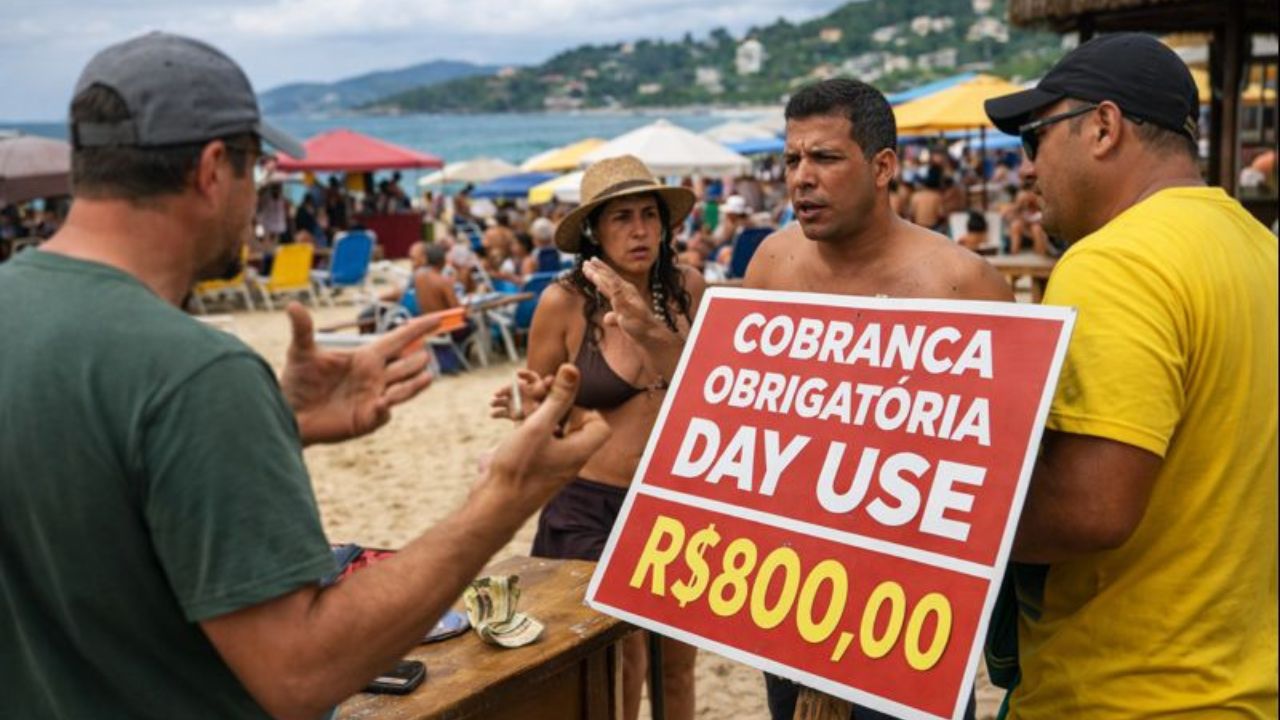


Abusive Practices on Brazilian Beaches Include Minimum Consumption and Irregular Charges Along the Coast, Despite Being Prohibited by Law.
Brazilian beaches that see significant tourist traffic have returned to the center of national debate following the identification of abusive practices against consumers, such as the requirement of minimum consumption, advance charges disguised as “day use,” and irregular occupation of the beach.
The cases were caught along the coast of the country in a report aired last Sunday (04/01/2026) by Fantástico, showing that the situation repeats in different states, despite Brazilian legislation prohibiting such conduct.
The problem occurs in public areas, affects tourists and residents, and raises questions about oversight and consumer rights.
-
The noise law will no longer be in effect at 10 PM starting in June with a new rule valid during the 2026 World Cup.

-
The Chamber opens a debate on driver’s licenses at 16 years old as part of a reform that includes around 270 proposals to change the Brazilian Traffic Code and may redesign rules for licensing, enforcement, and circulation in the country.

-
The new Civil Code could revolutionize marriages in Brazil with “express divorce” and changes that could exclude spouses from inheritance.

-
Banco do Brasil sues famous influencer for million-dollar debt and intensifies debate on delinquency, risks of seizure, and direct impact on Gkay’s credibility.

From the outset, the investigation revealed that, while the rental of chairs, tables, and umbrellas is permitted on beaches, the imposition of minimum consumption values or advance payments has no legal backing.
Nevertheless, the practice remains common on various Brazilian beaches, especially in highly frequented tourist spots during the high season.
Minimum Consumption on Brazilian Beaches Concerns Consumers
In Caraguatatuba, on the northern coast of São Paulo, the team found beach shacks on Praia da Cocanha that require a minimum consumption upon arrival.
According to the attendants, the system works as an advance credit, where the customer pays a previously defined amount to consume throughout the day.
“We pass the amount, and it’s for you to consume throughout the day,” explained an employee justifying the charge.
However, experts warn that this requirement restricts consumers’ freedom of choice, characterizing one of the most recurring abusive practices on Brazilian beaches.
Paulista Coast Repeats Irregularities in Different Cities
The situation is not limited to a single region. In Praia Grande, also on the coast of São Paulo, the report identified shacks that require a minimum consumption of up to R$ 250.
Initially, the charge was confirmed, but later denied when the responsible parties learned it was a television team.
Cases like this reinforce the difficulty of oversight along the coast, especially during peak periods.
Meanwhile, consumers remain vulnerable, often unaware that minimum consumption is illegal, even when presented as a condition for using chairs or umbrellas.
R$ 800 “Day Use” and Irregular Occupation of the Beach
In Rio de Janeiro, the practice goes by another name. At a beach in the South Zone, the charge is recorded as “day use.”
An employee explained that the customer must pay R$ 800 in advance to use the loungers, with the amount converted into consumption.
When asked if it was possible to stay on-site without paying, the answer was direct: no. The city hall of Rio stated that the establishment does not have authorization to occupy that area of the beach, which further aggravates the irregularity.
This type of charge reinforces how abusive practices adapt, changing only the nomenclature but maintaining the same negative impact on those frequenting Brazilian beaches.
What the Law Says About Beaches and Consumer Rights
The legislation is clear in defining that the beach is a public space for free circulation. The rental of tables, chairs, and umbrellas is permitted, as long as the price is clearly disclosed and without additional impositions.
According to the National Consumer Secretary, Paulo Henrique Rodrigues Pereira, minimum consumption is illegal.
“It is understood that the minimum amount restricts the freedom of choice of the consumer and may configure tied selling — and this is absolutely prohibited by law,” he states.
Additionally, the Secretariat of Union Heritage clarifies that reserving areas of the beach with fixed installations is prohibited.
Chairs, tables, and umbrellas can only be set up when the customer requests them, ensuring the democratic use of beaches.
Abusive Pricing and Tied Selling on the Coast
Another central point is the amount charged. Even when rentals are allowed, the price cannot be manifestly abusive.
“The person can rent a chair, but they are not the owners of the beach. The price cannot be manifestly abusive; this is illegal under the Consumer Defense Code,” explains Paulo Henrique.
Therefore, in addition to minimum consumption, excessive charges and the improper occupation of the beach constitute abusive practices that violate the basic rights of those who frequent the Brazilian coast.
How Consumers Can Protect Themselves on Brazilian Beaches
Given this scenario, experts advise consumers to question advance charges, refuse minimum consumption requirements, and report irregularities to consumer protection agencies and local governments.
Knowing one’s rights is essential to ensure that Brazilian beaches remain public, accessible, and democratic spaces.
Meanwhile, the cases revealed show that combating abusive practices along the coast still requires constant oversight and clear information for the population.










Falam tanto do Sul, mas aqui no litoral norte do Rio Grande do Sul não existe isso
Acontece sim. Em Capão da Canoa, por exemplo, a faixa de areia é tomada por guarda sol e barracas dos quiosques. Isso é reserva de vaga em espaço público.
Morei em Armação de Búzios durante 1999 e 2006 na praia da Tartaruga e a consumação mínima ė cobrada escancarada principalmente de turistas estrangeiros. E também na praia da Ferradura. Na Azeda já teve briga de donos de cadeiras pelos clientes que chegam pelos táxi marítimos. A secretária de posturas nada faz certamente por receber propina. De mim nunca cobraram pq levo minha canga e minha cadeira mais ė um absurdo encherem as areias com cadeiras e barracas como se fossem donos da praia.
Isso só pode ser uma piada!! A gente tem que denunciar algo que TODOS, inclusive as autoridades, códigos de defesa do consumidor e etc, estão cansados de saber que acontece?!!!! Por que não colocam fiscalização ativa nas praias especialmente nessa época do ano? Brasil sendo Brasil, infelizmente … E quem paga, como sempre, é o povo!