





 Portuguese
  English
  Spanish
  3 min of reading
  0 comments


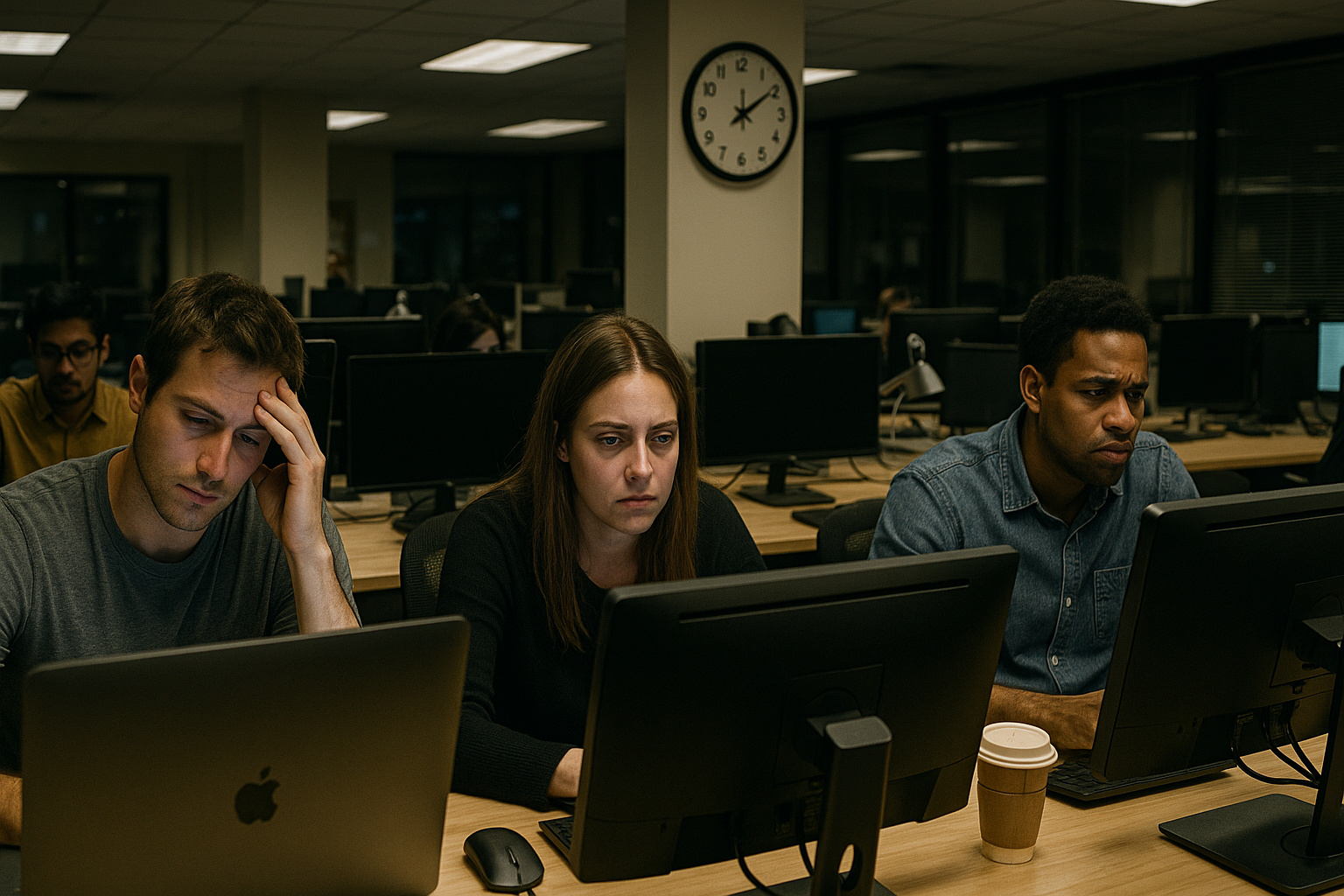
The 996 Work Schedule, Which Requires Working from 9 AM to 9 PM for Six Days a Week, Was Banned in China After Criticism and Deaths, but Is Being Adopted by American Technology Companies.
Startups in the United States are adopting the 996 work model, which establishes 72-hour weekly shifts, inspired by a system popularized in China but later banned by the Chinese government due to allegations of exploitation and cases of employee deaths.
The term 996 emerged in Chinese tech companies, mainly in the early 2010s. The schedule dictates that employees work from 9 AM to 9 PM, six days a week, totaling 72 hours of dedication. The model has been defended by some executives as a symbol of productivity and discipline but has soon faced criticism from worker associations and health organizations.
-
Church from 1888 becomes a mansion of over 330 m² in Canada after a renovation of R$ 3.4 million and is eventually sold for nearly R$ 4.3 million.

-
How an innovative city combines high technology, well-being, and sustainability to become the largest reference in clean energy on the planet.

-
Couple buys 1846 church in ruins for R$ 660,000, invests R$ 3.2 million in renovations, transforms it into a millionaire mansion, and even preserved a historic cemetery with over 300 graves.

-
He started running at 66 years old, broke records at 82, and is now a subject of study for having a metabolic age comparable to that of a 20-year-old, in a case that is intriguing scientists and inspiring the world.


The pressure was so intense that the Chinese Supreme Court formally banned the practice in 2021. The country defined that the limits should be 40 hours per week, with up to 36 extra hours monthly. The measure aimed to reduce the incidence of work-related illnesses and deaths, as well as comply with international conventions on labor conditions.
Cases of physical and mental collapse among young employees marked the debate. One of the most well-known was that of a 25-year-old programmer who suffered a <strongFatal Brain Hemorrhage after months of working under the 996 regime. The incident gained worldwide attention and accelerated the regulation against the practice.


Expansion to the United States
Despite the ban in China, American startups have been experimenting with the adoption of the same model, according to a report published by the British newspaper The Guardian. The justification presented by some companies is that the intense routine would ensure greater competitiveness in the innovation environment.
However, experts warn that importing this work standard also represents the importation of associated risks. The international press itself has drawn attention to the contradiction: while China has tightened labor laws, companies in the United States are trying to replicate practices already considered harmful in the country of origin.
According to the publication, critics classify the model as “modern slavery”, as extreme exhaustion is recognized by the International Labor Organization (ILO) as one of the elements that can characterize work analogous to slavery.
Health Risks and Global Repercussions
In Japan, the expression karoshi (“death from overwork”) has been used for decades to describe deaths linked to prolonged work hours. The situation has parallels with the risks of 996, which can result in heart attacks, strokes, and high suicide rates among workers.
Experts point out that by normalizing intense routines, companies jeopardize not only the physical health but also the psychological well-being of employees. The model has been the subject of international debates, especially in light of the advance of the digital economy and the quest for high performance in the technology sector.
According to information from The Guardian and other international press sources, the discussion regarding work hour limits may expand to different countries, including Brazil, where unions and professional categories are already advocating for a reduction of the 6×1 schedule to shorter working hours.
The adoption of 996 by startups in the United States reinforces a trend of flexibilizing labor laws in the name of competitiveness, but also reopens the global debate on minimum rights, health, and workplace safety. Even though advocates argue that the practice is voluntary, critics remind that market pressure and lack of alternatives can lead young professionals to accept conditions that are harmful in the long run.





-

Uma pessoa reagiu a isso.