





 Portuguese
  English
  Spanish
  3 min of reading
  0 comments


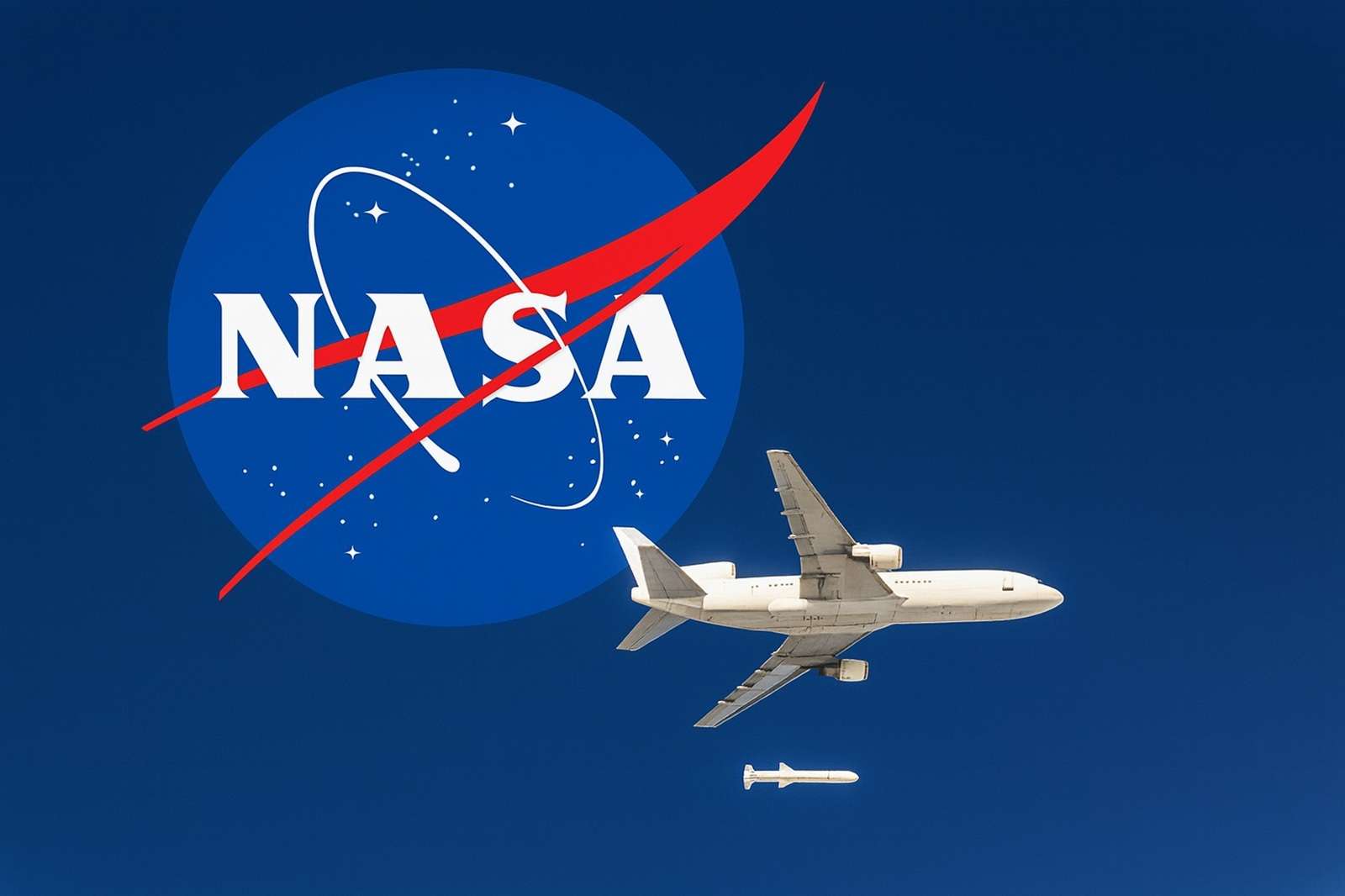
An Urgent And Unprecedented Operation Will Combine Airplane, Pegasus XL Rocket, And A Robotic Spacecraft To Raise The Orbit Of The Swift Telescope, Which Is Rapidly Losing Altitude And Could Re-Enter The Atmosphere As Soon As Next Year
NASA has approved an unusual operation to prevent the Neil Gehrels Swift Observatory from leaving its orbit at the end of 2026. The plan consists of launching a rocket directly from a plane in mid-flight, sending a robotic spacecraft into space responsible for raising the altitude of the telescope, which has been losing height rapidly.
The scenario is critical because the Swift could fall to Earth next year unless it is pushed back up. According to Space.com, the agency is facing exactly that challenge and is betting on an unprecedented maneuver to preserve it.
Airplane, Rocket, And Satellite In The Same Plan
Katalyst Space Technologies, responsible for conducting the mission, has released project details and confirmed the launch for June 2026.
-
Goodbye common refrigerator: essential appliance starts to gain competition with technology that preserves food for longer and reduces waste.

-
Germany discovers how to reuse old window glass without melting anything and can transform 220,000 tons per year into new high-performance panels, using material from nearly 150 million old windows that would be discarded.
-
China creates hypersonic engine that can make planes and missiles fly more than 6 times the speed of sound with less weight, more range, and without system change.

-
Mysterious object on Mars divides NASA and Harvard after Curiosity image reignites suspicions about what was really found on the planet.

The company will use the Northrop Grumman L-1011 Stargazer, an old passenger plane adapted for aerospace missions. The aircraft will carry the Pegasus XL rocket to an altitude of 39,000 feet, at which point the equipment will be released.
During the flight, the Pegasus will activate its boosters and head towards space carrying the Katalyst robotic spacecraft. After reaching the region where the Swift is located, the vehicle will be released to begin its approach to the telescope.
Orbital Rescue On A Tight Schedule
What makes the mission even more unique is the timeline. Typically, similar operations require up to 24 months of planning, but Katalyst has only a few months to execute all the preparations.
According to Kieran Wilson, Vice President of Technology at the company, the June date is being treated as a firm commitment, although adjustments may be made as the orbit of the Swift is continuously assessed.
The mission needs to occur before atmospheric drag makes the rescue unfeasible. Currently, the telescope’s altitude has dropped from 373 miles to about 249 miles, according to Katalyst, since the equipment has no propulsion engines to correct its own trajectory.
Robotic Arms To Capture The Swift
The robotic spacecraft that will be sent into space has been designed with three external mechanical arms. These devices will allow the capture of the Swift in a delicate maneuver, ensuring that neither of the two pieces of equipment is damaged. After capture, the vehicle will guide the telescope back to its original altitude of 373 miles.
A Telescope Essential For The Study Of Cosmic Explosions
Launched in November 2004, the Swift was designed to study gamma-ray bursts. These extreme events occur when massive stars collapse, when two neutron stars collide, or when a neutron star collides with a black hole.
The explosions result in jets of accelerated particles that provide clues about the formation of new black holes and other cosmic phenomena.
The deterioration of its orbit threatens to interrupt essential research, which is why Katalyst and NASA state that the operation is urgent.
Cost Of The Rescue And NASA’s History
The Swift originally cost $500 million, while the rescue mission has a budget of $30 million, an amount considered efficient to preserve the equipment.
Although NASA has conducted similar interventions in the past, such as servicing the Hubble Space Telescope, the current operation differs by being entirely remote, with no crew involved.
The combination of airplane, rocket, and robotic satellite in a unique sequence places the mission among the most daring ever authorized by the agency, reflecting the effort to keep one of the most important observatories in the study of high-energy phenomena in the universe active.








Seja o primeiro a reagir!