





 Portuguese
  English
  Spanish
  4 min of reading
  0 comments



Asteroid 16 Psyche, Composed of Valuable Metals, Attracts International Interest and May Reveal Secrets About the Formation of Planets, Driving Debates About Space Mining and the Future of Exploration Beyond Earth.
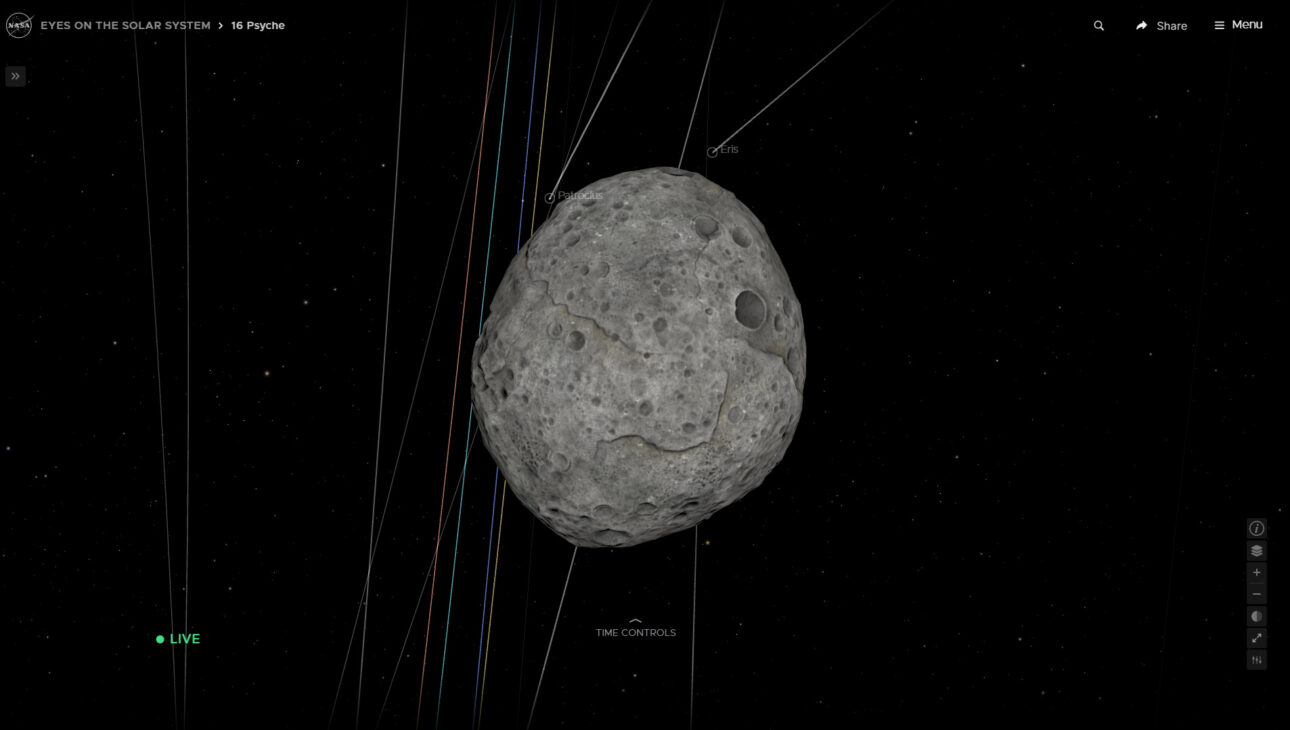
The NASA (National Aeronautics and Space Administration) is closely monitoring asteroid 16 Psyche, considered one of the most valuable celestial bodies ever identified.
Scientists estimate that the economic value of its metals surpasses the global Gross Domestic Product (GDP) by several orders of magnitude, drawing global attention to its composition and potential.
The space object, discovered in 1852 by Italian astronomer Annibale de Gasparis, measures approximately 226 kilometers in diameter and is situated about 370 million kilometers from planet Earth.
-
Home environment can influence the brain, mood, and well-being: studies indicate an increase of up to 15% in productivity, a reduction of 12% in stress with plants, and a direct impact of the circadian rhythm on the 24 hours of the day.

-
A Brazilian millionaire couple restores a farm over 150 years old in the interior of São Paulo and transforms the historic property with Portuguese tiles, antique furniture, and new spaces into a refuge that blends tradition, comfort, and sophistication.

-
Submerged city in a lake in Minas reveals intact streets, preserved vehicles, and houses after more than 60 years, impressing divers.

-
Yellowstone has started to rise again in an area of the caldera, and the movement rekindles fears surrounding the U.S. supervolcano, as scientists monitor the deformation and try to understand what is happening underground.


In July 2025, the space agency is keeping 16 Psyche under intense scrutiny, after new images captured by the Hubble Space Telescope revealed unprecedented details of its metallic surface.
The asteroid is part of the so-called asteroid belt, a vast region of the Solar System located between the orbits of Mars and Jupiter, composed of thousands of rocky objects of various sizes and origins.
Metallic Composition and Astronomical Value
The interest of NASA and SpaceX, the space exploration company founded by Elon Musk, in investigating 16 Psyche is justified not only by the astronomical value attributed to the rock, but also by its scientific potential to unveil fundamental planetary formation processes.
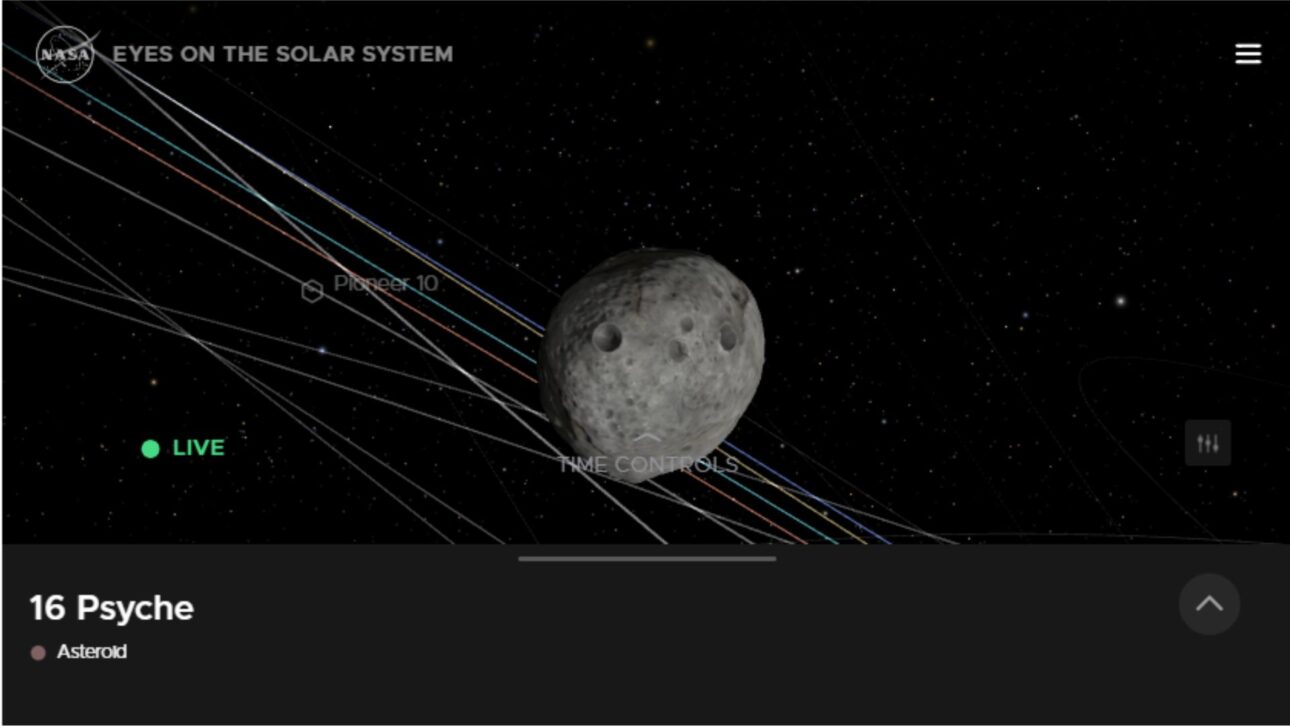
According to researcher Tracy Becker from the Southwest Research Institute in Texas, “we have seen other meteorites that are mostly metallic, but what makes Psyche unique is that it may be made entirely of iron and nickel“.
Spectroscopic analyses indicate that 16 Psyche is primarily composed of iron and nickel, elements present in the core of Earth and other planets.
Experts also suggest the possible presence of rare and highly valuable metals, such as platinum and gold.
According to widely circulated estimates from research centers in 2023, the total value of these minerals could exceed 10,000 quadrillion dollars, an amount about 70,000 times higher than the value of the global economy, which reached US$ 142 trillion in 2019, according to the statistics portal Statista.
These figures reinforce the popular nickname of the celestial body: the “golden asteroid”.
NASA’s Unique Mission to Explore the Golden Asteroid
The scientific mission of NASA, scheduled to launch in partnership with SpaceX, involves sending an unmanned spacecraft to 16 Psyche.
The goal is to conduct a detailed exploration of the celestial body starting in 2026.
This will be the first time a space agency investigates an asteroid of predominantly metallic mass, unlike previous missions focused on rocky bodies or those composed of ice.
The project is seen as a unique opportunity to study the deep structures of the Solar System.
Origin and Planetary Formation
The scientific community believes that 16 Psyche may be the remnant of an exposed core of a protoplanet — a planet in formation that did not complete its development.
This scenario, if confirmed, would allow researchers to closely examine primordial materials, contributing to understanding the origin of terrestrial planets, such as Earth, Mars, Venus, and Mercury.
Tracy Becker highlights: “What makes Psyche and other asteroids so interesting is that they are considered building blocks of the solar system. When we get there, we will understand if that is the case, and if not, it will be just as exciting“.
The scientist is part of the team responsible for the study that detailed, in 2024, the physical and chemical properties of the surface of the asteroid, using data from Hubble and ground-based observatories.
Space Mining and Future Challenges
In addition to the scientific and mineral value, the NASA-SpaceX mission has the potential to revolutionize understanding of space mining, a topic that has gained momentum in recent years due to the increasing global demand for strategic metals.
Private companies and government agencies are exploring the possibilities of extracting resources beyond Earth, considering future industrial, technological, and environmental challenges.
However, even in the face of impressive figures, the exploration and potential extraction of metals from 16 Psyche face considerable technical and legal obstacles.
Currently, there is no technology available to transport large quantities of material from the asteroid belt to the planet.
Furthermore, international legislation, based on the Outer Space Treaty of 1967, imposes restrictions on the appropriation of celestial bodies by nations or companies.
Economic Impacts and Global Expectation
The debate over the monetization of space resources has gained traction following the publication of studies on 16 Psyche.
Various experts emphasize that even if it were possible to bring all the mineral wealth of the asteroid to Earth, the massive supply of metals could devalue these materials in the global market.
Therefore, the economic impacts of large-scale exploration are still uncertain and are the subject of academic and economic research.
The NASA exploration mission, which remains confirmed for 2026, seeks answers to fundamental questions about the origin of planets and the internal structure of asteroids.
A detailed study of 16 Psyche could reveal secrets preserved for billions of years in the Solar System, as well as pave the way for new technologies and debates about the future of humanity beyond Earth.
Meanwhile, the expectation surrounding the “golden asteroid” continues to fuel debates and speculation.
Will it be possible in the future to transform the riches of space into benefits for society?
Or will technological and legal challenges prevent this wealth from becoming a reality?
Stay tuned for the upcoming discoveries to see how the race for 16 Psyche may redefine the role of space mining and Solar System exploration.








-

-

2 pessoas reagiram a isso.