





 Portuguese
  English
  Spanish
  5 min of reading
  8 comments


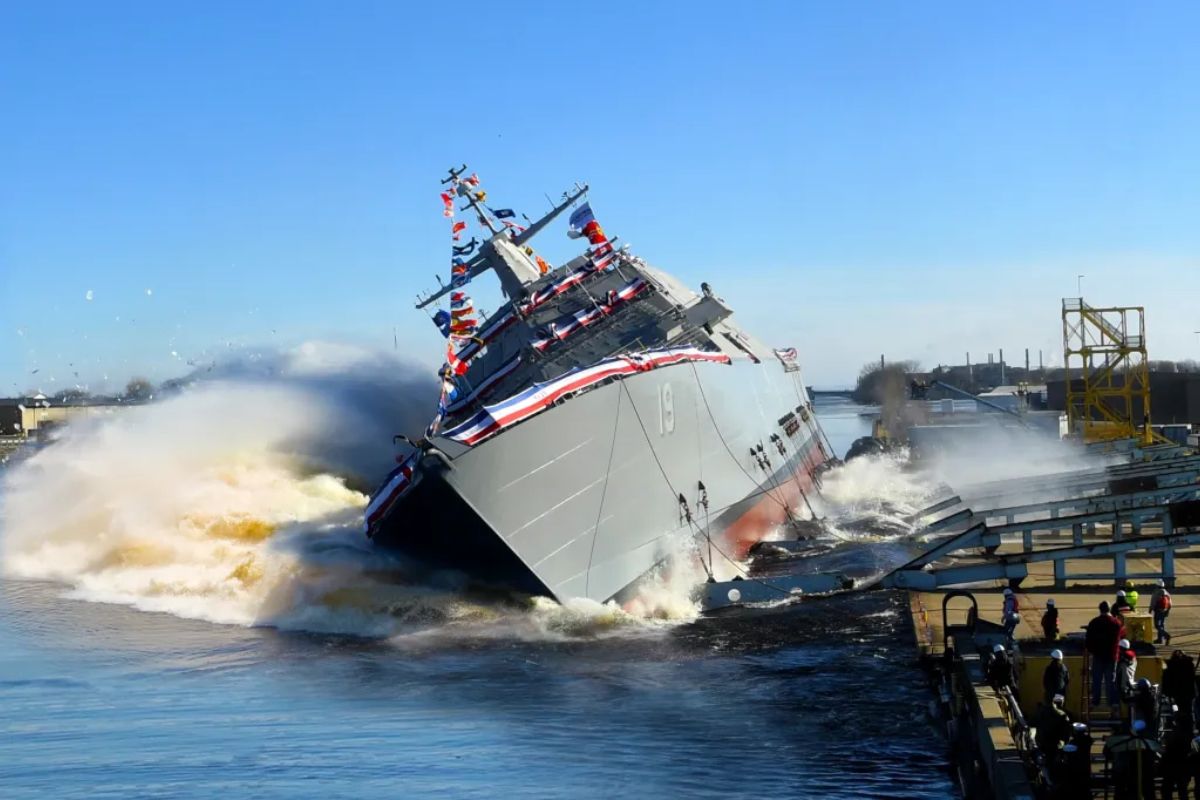


The Littoral Combat Ship Was Conceived as a Cheap, Agile, and Versatile Solution for Coastal Missions, but Unrealistic Technical Requirements, Politicized Industrial Choices, Integration Failures, Incompatible Systems, Undersized Crews, and Rising Costs Turned the Program into One of the Most Controversial Projects of the United States Navy
The assessment that the Navy erred with the Littoral Combat Ship was made by retired Rear Admiral Ted LeClair, former deputy commander of the Pacific Surface Forces and former director of the LCS Task Force, a position created precisely to address problems accumulated over two decades. With direct experience in the design, operation, and attempted recovery of the program, LeClair details a sequence of technical, political, and cultural decisions that compromised the project’s effectiveness.
According to him, the Littoral Combat Ship did not fail due to a single isolated mistake, but rather due to a buildup of erroneous choices made at critical moments. These choices ranged from the original concept to the way the Navy attempted to operate, maintain, and employ the ships in real-world scenarios, generating lasting consequences for the fleet and the sailors themselves.
The Original Conception and the Promise of Naval Transformation

The Littoral Combat Ship emerged in the early 2000s during Admiral Vern Clark’s tenure as Chief of Naval Operations. The central idea was to respond to emerging threats in coastal waters, such as maritime terrorism, naval mines, and silent diesel submarines operating near the coast.
-
At the bottom of the sea, scientists have found a true underwater cathedral measuring 62 meters at the base, 31 meters at the top, and 1,347 square meters of giant coral in the Maug Islands, estimated to be 2,050 years old.

-
Surrounded by the sea, the airport will have a system to prevent airplanes from falling into the water; technology will be installed in Ilhéus (BA), with an investment of R$ 70 million.
-
With a cost per shot close to zero, the DragonFire laser could change naval warfare in 2027 and provide British ships with nearly unlimited defense against drones.

-
A British startup creates tires that generate electricity in electric vehicles when passing over potholes, speed bumps, and cracks.


The Navy sought a fast vessel with a shallow draft, capable of operating in narrow channels and areas where destroyers, cruisers, and amphibious ships would be vulnerable. The concept envisioned replacing fast frigates and expanding naval presence with smaller, more numerous, and theoretically cheaper platforms.
Initially, it was estimated that each Littoral Combat Ship would cost around 200 million dollars, allowing for a ratio of five ships of this type for each one-billion-dollar destroyer. This economic logic was decisive for the political approval of the program and its rapid expansion.
Two Simultaneous Classes and Structural Fragmentation

One of the central errors pointed out by LeClair was the decision to develop two completely different variants of the Littoral Combat Ship. The Freedom class, built in Marinette, Wisconsin, adopted a monohull structure with an aluminum superstructure. The Independence class, built in Mississippi, used an aluminum trimaran hull.
The initial proposal was simple: build both, test them, and choose the winner. However, this decision was never made. Both classes were maintained, creating two fleets with very few systems in common, from propulsion to internal architecture.
According to LeClair, this choice was strongly influenced by political and industrial factors. Keeping shipyards active in politically strategic states became a priority, even at the expense of operational standardization. The result was a fragmented fleet, with high training, maintenance, spare parts, and logistics costs over more than twenty years.
The Forty-Knot Requirement and Its Impact on Engineering

Another problematic pillar of the Littoral Combat Ship was the requirement to reach a minimum speed of forty knots. To achieve this performance, the Navy adopted a complex combination of diesel engines, responsible for endurance, and gas turbines, necessary for speed peaks.
This solution significantly increased the complexity of the propulsion system. The turbines consume fuel at a high rate, while the integration with diesel engines raised mechanical wear and maintenance difficulties.
LeClair states that this technical requirement was unnecessary for most real missions. Slightly lower speeds would have reduced costs, increased reliability, and simplified operations, without significant detriment to operational capability.
Promised Modularity and Practical Limitations
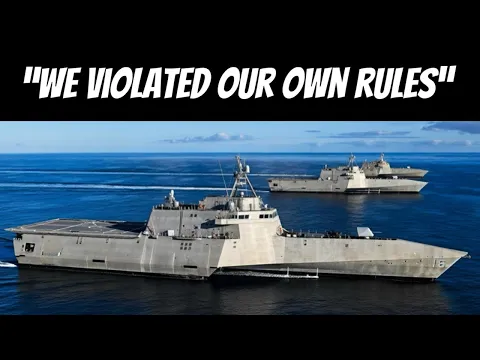

Modularity was presented as the great differentiator of the Littoral Combat Ship. The promise was that the same hull could quickly switch between anti-submarine warfare, mine countermeasures, and maritime security missions, simply by changing mission modules.
In practice, this did not happen. The anti-submarine systems did not reach technological maturity. The mine countermeasure modules took years to become operational, despite recent advances with unmanned surface vessels launched from the ship.
The idea of swapping modules from one day to the next proved unfeasible. Modularity was limited to discourse, while the ships began to operate with fixed configurations for long periods.
Reduced Crew and Shock to Naval Culture
Another strategic error of the Littoral Combat Ship was the reliance on extremely reduced crews. The concept envisioned that sailors would only operate the ship, while maintenance would be performed by contractors on land.
This approach violated historical principles of the United States Navy’s culture, where the crew is responsible for their own ship. Over time, it became clear that small teams could not maintain continuous vigilance, comply with anti-terrorism protection rules, and perform adequate maintenance.
The result was a gradual increase in crews to around 102 sailors, plus 8 to 12 officers, including supply officers who originally did not exist in the design. The impact on morale was severe, with exhausting schedules and decreased quality of life for sailors.
Early Deactivations and Waste of Capacity
The original plan called for up to 55 units of the Littoral Combat Ship. This number was reduced to 35 and, later, to about 27 to 28 active ships. Several vessels were deactivated just a few years after commissioning, including units that had just completed missions.
Cases like that of the Freedom variant, with multiple ships deactivated in succession, exemplify the program’s instability. According to LeClair, political and budgetary decisions accelerated these deactivations, even with billions already invested.
The Political and Operational Cost of the Error
LeClair estimates that around 30 billion dollars were invested in the Littoral Combat Ship. For him, the error was not only financial but strategic. The Navy took a long time to recognize failures, hesitated to make tough decisions, and allowed unrealistic promises to shape the program.
Nevertheless, the rear admiral rejects the idea that the ships are useless. He argues that if they float and can fight, they have value. The problem was trying to do too much with a limited platform, instead of accepting it as a light fighter with well-defined functions.
A Lasting Lesson for the Navy
In Ted LeClair’s view, the Littoral Combat Ship became a case study on the tyranny of requirements, the risks of industrial politicization, and the importance of realistic technical decisions. The Navy learned, according to him, that one should not abandon established truths about training, crew, and maintenance in exchange for promises of immediate efficiency.
The program left deep scars, but also valuable lessons. With about 27 hulls still available, the challenge now is to employ these ships pragmatically, aligning expectations with operational reality.
In light of this detailed history, do you believe the Navy should insist on recovering the Littoral Combat Ship or definitively accept that the structural error was too great to be corrected?








Não desistam de aprimorar. Vocês são o EUA e nós precisamos de vocês. Não deixem russos e chineses no comando. Vamos vencer esses caras. Com fé em Deus.
KKKKK! É muita sabujice!
Sim, a Marinha deve insistir no aprimoramento e sanar as falhas possíveis uma vez que o navio tem flutuabilidade, descartá-lo seria um erro de fraqueza e também de desperdício de dinheiro.
Uma nação poderosa nos seus limites de fraqueza, não pode descartar o que já foi investido e sim utilizar o seu meio flutuante como como um escudo de proteção para os seus marinheiros enquanto ainda flutuar.
Um falcão machucado, não desiste da luta, é valente mesmo mesmo estando ferido, assim tem que ser os E.U.A.
A US NAVY deve insistir na recuperação do navio de combate litorâneo pois os americanos têm capacidade para isso!