





 Portuguese
  English
  Spanish
  4 min of reading
  0 comments


Billion-Dollar Deal Unites Historical Catalogs, But Expands Risks of Creative Standardization, Market Concentration, and Loss of Space for Diverse Narratives
A movement of great symbolic and economic impact began to reshape the global audiovisual sector starting in 2025. The confirmation of the purchase of Warner Bros. Discovery by Netflix, valued at around US$ 82.7 billion, reorganized expectations, provoked immediate reactions in the market, and reignited deep debates about the concentration of creative power. Since then, the deal has been interpreted not just as a financial transaction, but as a structural milestone in the entertainment industry.
In this scenario, the assessment by Brazilian filmmaker and editor Fernanda Schein, who has worked in Los Angeles for over ten years and has been involved in major productions for Netflix, has gained relevance. According to her, it is difficult to see the merger as something positive. Therefore, she asserts that hoping for the blocking of the deal becomes understandable, especially in light of the structural effects that the operation may generate.
Creative Standardization Emerges as the Main Warning of the Merger
The main concern, as Fernanda explains, is not limited to the generic discourse against monopolies. In practice, the merger tends to eliminate historical differences between catalogs that have always operated with their own identities. Thus, brands like HBO, Warner Bros. Pictures, and Discovery will begin to respond to the same operational logic, which, consequently, favors aesthetic and narrative standardization.
-
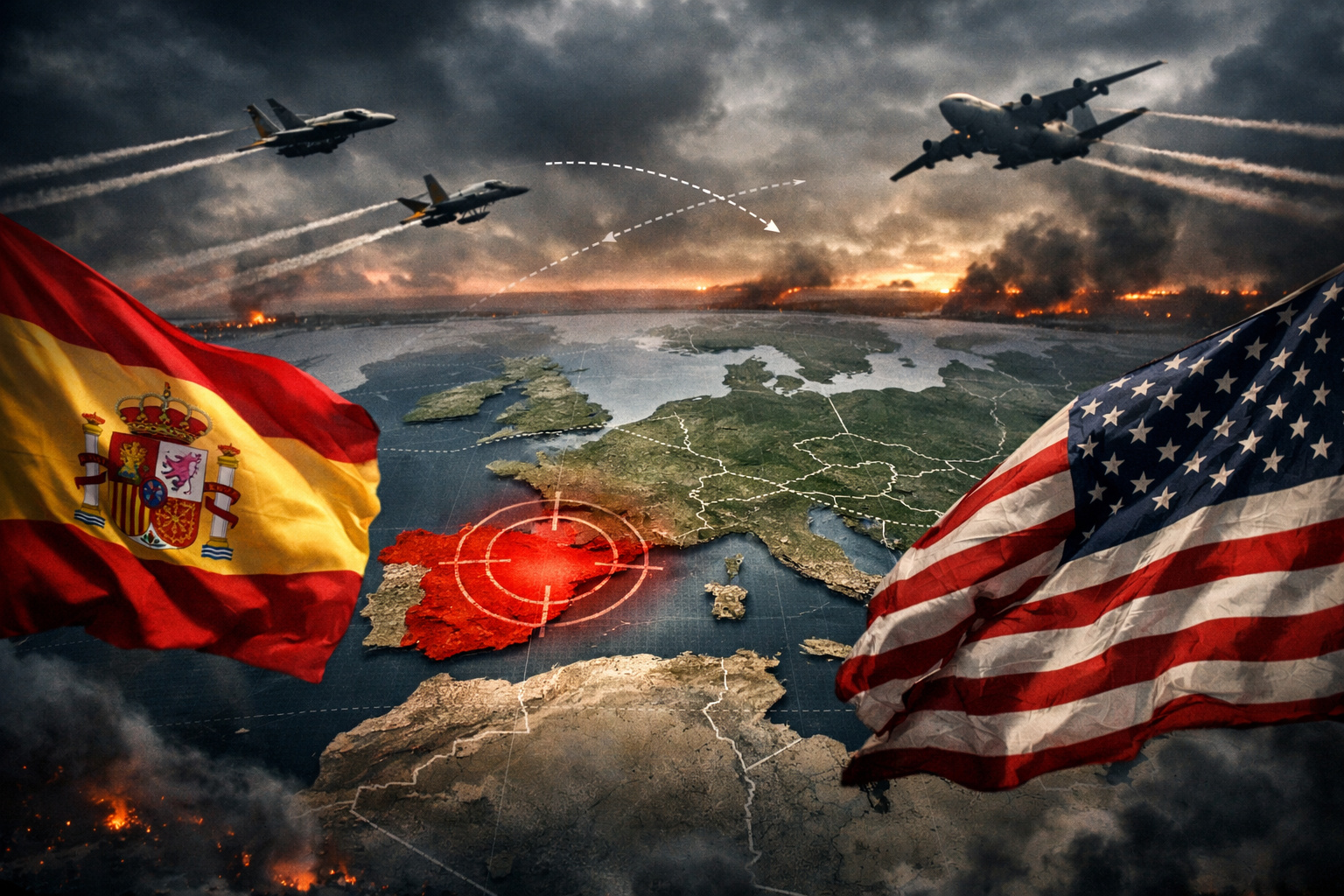
Spain challenges the USA and closes its airspace for operations against Iran, raising global tension and provoking the threat of a trade rupture.
-
While no other country manufactures tanks in Latin America, Argentina activates the TAM 2C-A2 and raises a curiosity about the technological lag in the region.

-
A Russian ship with 730,000 barrels of oil has just arrived in Cuba while Mexico negotiates fuel sales through private companies: the communist island is desperately seeking alternatives after losing its supply from Venezuela due to American military action.

-
Iranian drones and missiles destroyed a 270 million dollar American spy plane in Saudi Arabia, splitting the E-3 Sentry aircraft in half and injuring 12 military personnel in an attack that exposes the vulnerability of U.S. bases in the Persian Gulf.


In this context, the direct risk falls on creative diversity. According to the filmmaker, when everything starts to obey the same production and decision-making model, consumers tend to pay more for less diverse and less daring content. Consequently, artistic plurality gradually diminishes, even if the volume of releases remains high.
Giant Catalogs Expand Power But Reduce Creative Autonomy
The size of the portfolio involved intensifies the warnings. Among the properties are Harry Potter, DC, Matrix, Mad Max, Blade Runner, The Exorcist, and The Goonies, as well as series like Game of Thrones, Sopranos, Succession, Euphoria, and True Detective. As a result, creative universes that once operated relatively independently now coexist under the same strategic command.
According to Fernanda, the most predictable effect of this process is the proliferation of spin-offs, franchise extensions, and products with increasingly generic identities. Thus, artistic freedom tends to lose ground, while creative decisions begin to prioritize metrics, scalability, and commercial security.
Concentration Affects Independent Producers and Redefines the Market
At the same time, the concentration of power directly impacts those outside the top of the chain. Independent producers, for example, lose bargaining power. This occurs because, upon reaching this level of dominance, Netflix stops merely competing in the market and effectively begins to define it.
In this scenario, asymmetry deepens. As the filmmaker explains, when one player becomes too large, the possibility of facing or negotiating on equal terms practically disappears. Thus, smaller projects face increasing barriers to exist outside the rules imposed by the dominant conglomerate.
Impacts Are Amplified in Unregulated Markets like Brazil
In countries like Brazil, where until 2025 there is no specific regulation for streaming, the effects may be even more profound. Global platforms can capture local resources, launch productions with the “originals” label, and yet not structurally strengthen the national market.
According to Fernanda, the content gains international visibility, but the local sector does not develop at the same rate. Thus, professional training, creative autonomy, and strengthening of the production chain remain limited, even with the apparent increase in production.
Industry Experiences a Phase of Creative Saturation and Risk Aversion
This movement occurs at a delicate moment for the audiovisual sector. The industry is going through a phase marked by remakes, reboots, and prolonged franchises, which highlights a growing aversion to risk. Following the sector strike, which ended before 2025, studios and platforms are still searching for a new strategic direction.
In this vacuum, independent cinema is gaining historical importance once again. Similar situations, such as at the end of the 1970s, opened up space for deep reinventions. Therefore, Fernanda has directed her career outside the traditional circuit, where, according to her, there is still real room for experimentation.
The Merger and the Future of Stories to Be Told
In the end, the merger between Netflix and Warner Bros. Discovery does not only define who controls the largest catalogs in the world. It primarily influences which stories will be told, which creative risks will be taken, and what artistic diversity will reach the public in the coming years.
In light of this scenario, questioning the operation ceases to be an ideological gesture and becomes a legitimate reflection on the future of global cinema.










Seja o primeiro a reagir!