





 Portuguese
  English
  Spanish
  4 min of reading
  0 comments



New Anti-Immigration Law in Portugal Tightens Rules and Affects Brazilians. Understand the Impacts and Know How to Act in Light of the Changes.
Portugal Tightens Immigration Rules and Directly Affects Brazilians
The European geopolitics enters a new chapter with the approval of the anti-immigration project in Portugal, signed by President Marcelo Rebelo de Sousa last Thursday (16).
The changes to the Foreigners Law tighten the migration process and especially affect Brazilians, who until now benefited from facilities guaranteed by the Mobility Agreement of the Community of Portuguese Language Countries (CPLP).
The new legislation, seen by many as a harshening of Portuguese immigration policy, promises to have a profound impact on relations between Portugal and Brazil. Now, entering the country as a tourist and regularizing the situation later — something common among Brazilians — is no longer allowed.
-
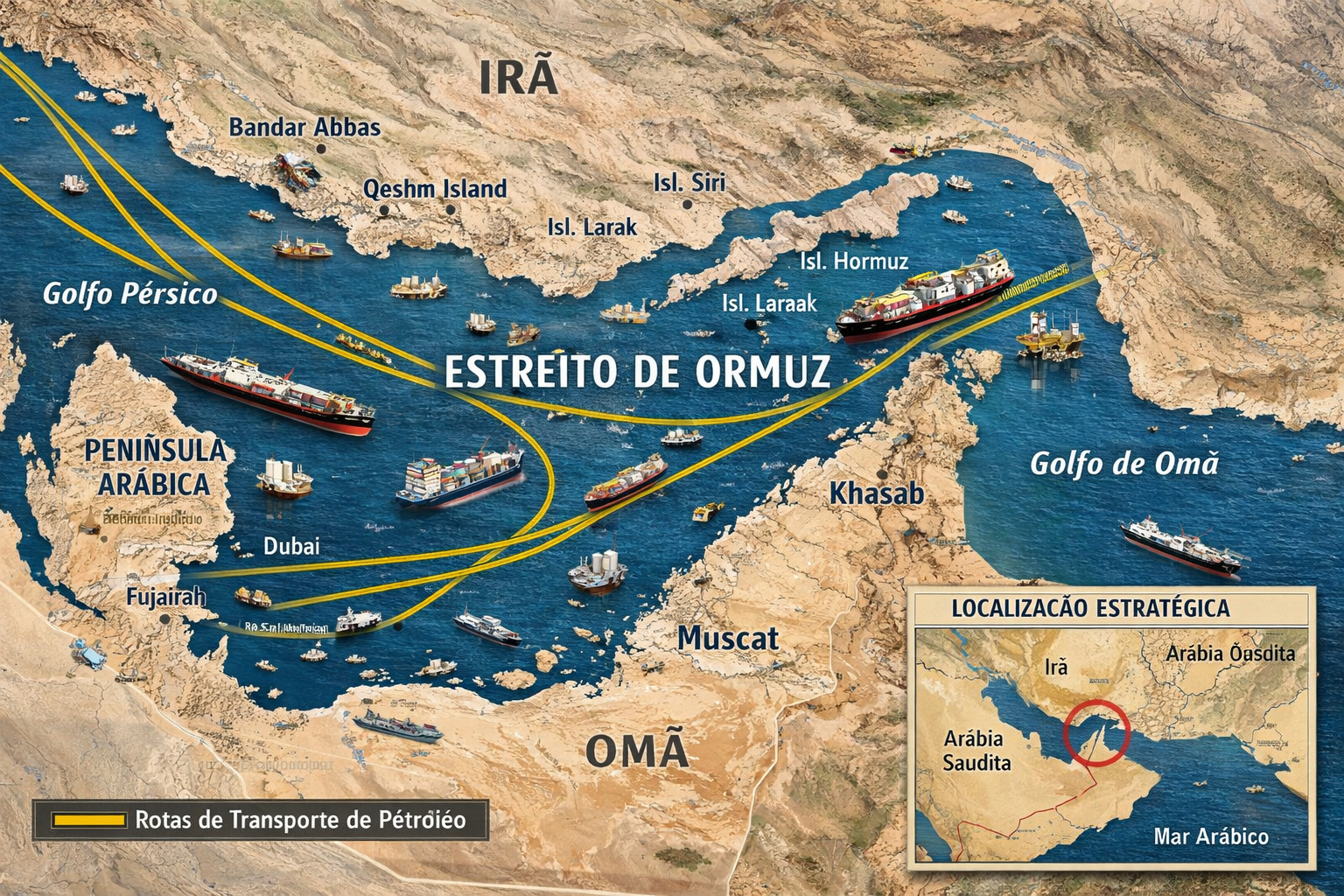
Global summit with over 40 countries pressures Iran for a blockade in the Strait of Hormuz and warns of direct impact on oil, food, and the global economy.
-
Russia has broken the U.S. maritime blockade to send oil to Cuba and is now loading a second ship while Trump says that “Cuba is next” in a possible military action against the island.

-
Spain challenges the USA and closes its airspace for operations against Iran, raising global tension and provoking the threat of a trade rupture.

-
While no other country manufactures tanks in Latin America, Argentina activates the TAM 2C-A2 and raises a curiosity about the technological lag in the region.


The End of “Privileges” for Brazilians in Portugal
According to attorney Amina Welten Guerra, president of the International Relations Commission of OAB-MG, “Brazilians are beginning to be treated similarly to citizens of other third countries, except for residual benefits under the CPLP statute.”
In practice, this means that the legalization process in Portuguese territory will become more bureaucratic and require prior planning.
The consular visa based on the CPLP Agreement will need to be obtained before entering the country, completely ending the possibility of regularization after arrival.
In addition, the new text adds security requirements and stricter administrative opinions, creating extra barriers for those wishing to live or work in Portugal.
Direct Impact on Families and the Job Market
The anti-immigration project also restricts family reunification, one of the main forms of legalization used by immigrants.
Now, a resident in Portugal will need to wait two years to apply for the arrival of family members, with exceptions only for children under 18 years old, dependent individuals with disabilities, and spouses responsible for minors.
“However, there is a provision for reunification for older children, provided that they study at a Portuguese institution and that the holder has authorization under art. 90-A,” Amina Guerra detailed. According to her, this change “basically eliminates the frequent resource of legalizing adult family members in the country.”
In the job market, the amendment to the law also brings consequences. The safest option now is to apply for specific visas, such as the D1 (qualified work) or the D7 (self-sufficient), before traveling to Portugal. This will require more careful migratory and financial planning on the part of Brazilians.
Geopolitics and the New Scenario Between Portugal and Brazil
Portugal’s decision reflects an adjustment in European migration policy, marked by tensions surrounding the anti-immigration issue.
In recent years, the country has become one of the preferred destinations for Brazilians seeking a better quality of life, which has increased pressure on public services and demand for housing.
The measure has a strong geopolitical impact. By tightening the rules, the Portuguese government seeks to balance internal policies and control immigration, but it affects historical relations with Brazil.
Specialist Amina Guerra emphasizes that the ideal is for those interested in migrating to adopt a preventive stance.
“The best alternative is to carry out thorough migratory planning, adjust the employment contract according to regulations, and organize around deadlines and documentation,” she explained.
Planning Is Essential to Avoid Problems
The new law requires those wishing to move to Portugal to adopt a more structured strategy. Improvisation, common among Brazilian immigrants, can lead to legal and financial losses.
“It’s about thinking of a legal and financial organization so that the changes are successful,” the attorney highlighted.
In addition, those planning to study or bring family members should carefully analyze the new visa requirements, as well as the tax and property implications of living in another country.
Conclusion: A New Era in Luso-Brazilian Immigration
The anti-immigration law in Portugal marks a profound change in how the country deals with foreigners, especially Brazilians.
What once symbolized the closeness between Portugal and Brazil now reveals a scenario where bureaucratic demands and harsher rules define the relationship between the two nations.
Nonetheless, with planning, correct documentation, and legal guidance, it is possible to migrate safely.
The moment requires caution, but also reinforces the importance of understanding the geopolitical context and the new dynamics between Portugal and Brazil.









Seja o primeiro a reagir!