





 Portuguese
  English
  Spanish
  6 min of reading
  0 comments


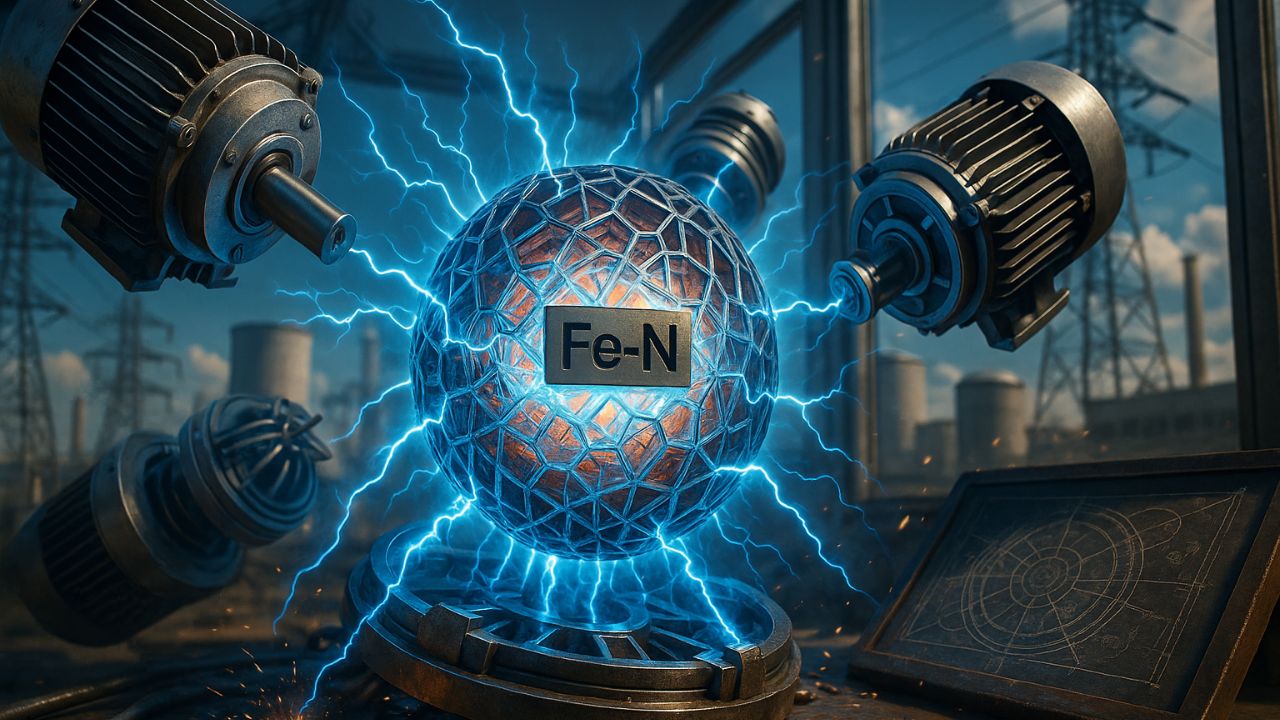
A Super Magnet Of Iron And Nitrogen Promises More Compact Engines, Cheaper Energy, And Reignites Old Theories About “Impossible” Machines
What once seemed like science fiction is now starting to take shape in the laboratory. Scientists at Nyron Magnetics claim to have created a super magnet capable of generating a magnetic field up to ten times stronger than the magnets used today in the industry, using only iron and nitrogen—abundant and inexpensive materials. If this technology delivers on its promise, it could revolutionize everything from electric motors to the way we produce and distribute energy across the planet.
The discovery shakes the foundation of our technological civilization. Magnets are the invisible laborers of the modern world, found in cell phones, cars, computers, wind turbines, magnetic resonances, and in virtually every system that transforms or controls energy. However, current powerful magnets depend on expensive rare earth materials that are difficult to extract and concentrated in a few countries. Now, with a super magnet made of common elements, the promise is simple and frightening at the same time: more strength, more efficiency, and lower cost, making room for machines that were once considered impossible.
The Super Magnet Of Iron And Nitrogen And The End Of Reliance On Rare Earth Materials

For decades, the industry has relied on rare earth magnets, such as those using neodymium and other complex elements. They are strong, but have clear drawbacks: they lose strength over time, suffer from high temperatures, wear out with use, and depend on fragile and concentrated supply chains. In other words, the magnetic foundation of our technology is powerful, yet limited and vulnerable.
-
The coldest region of Brazil will experience very hot weather in the first days of April, with maximum temperatures reaching up to 35 degrees in Rio Grande do Sul, and only in the last week of the month an intense cold front is expected to finally lower the temperatures in the South and Southeast.

-
Goodbye common refrigerator: essential appliance starts to gain competition with technology that preserves food for longer and reduces waste.

-
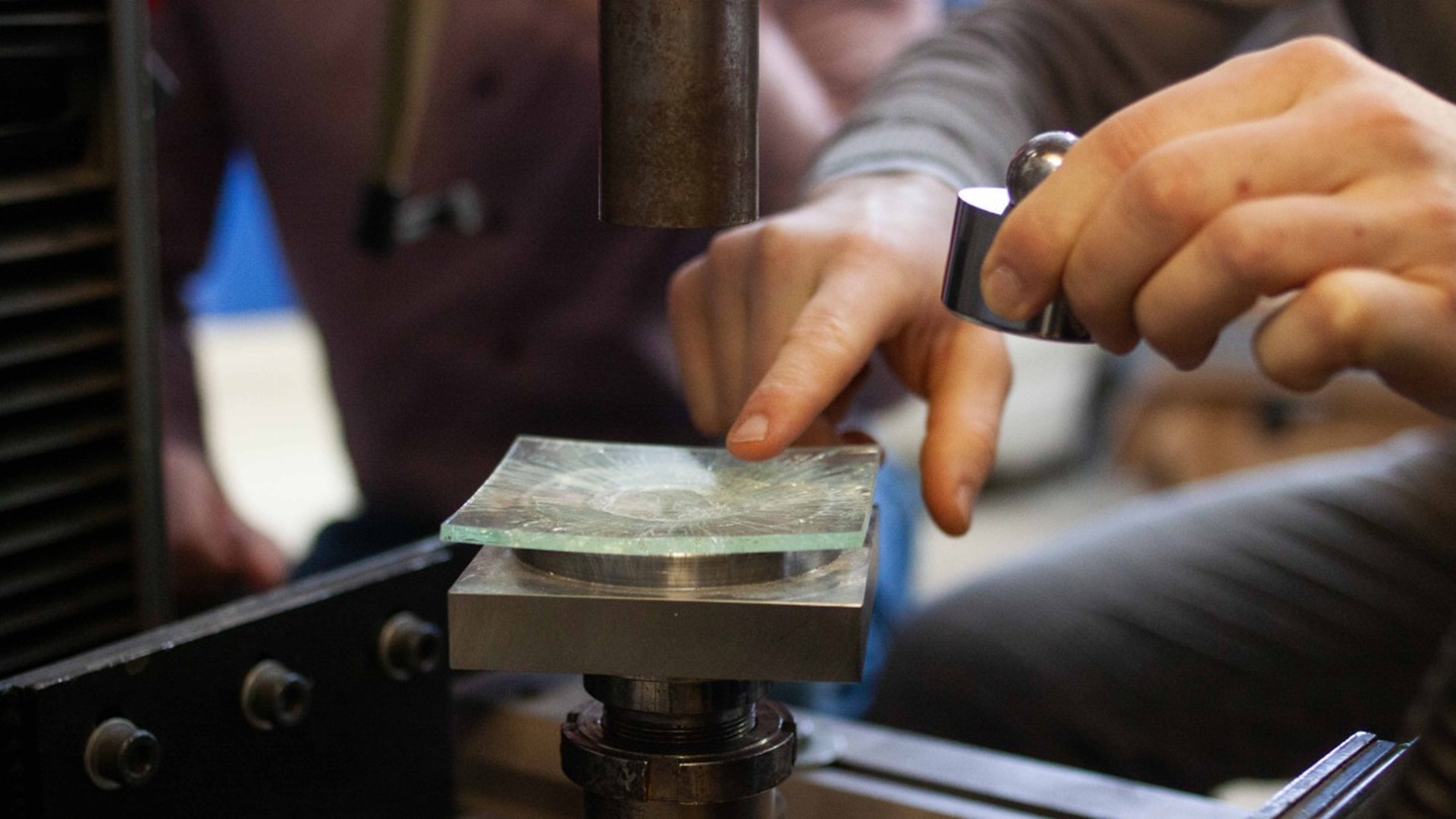
Germany discovers how to reuse old window glass without melting anything and can transform 220,000 tons per year into new high-performance panels, using material from nearly 150 million old windows that would be discarded.
-
China creates hypersonic engine that can make planes and missiles fly more than 6 times the speed of sound with less weight, more range, and without system change.


It was in this context that a group of researchers in a little-known laboratory at the University of Minnesota decided to attempt something many considered impossible. The mission was to create a magnet that was stronger, more stable, and more accessible without relying on rare earths. The result was this new super magnet of iron with nitrogen, developed by Nyron Magnetics, combining materials engineering, nanofabrication, and precise control over atomic structure. By rearranging the atoms in the alloy, they achieved a material with the potential to deliver a magnetic field up to ten times more intense than the best conventional magnets.
Ten Times More Strength, Less Waste, And Engines On Another Level
In practice, what does it mean to have a super magnet this strong? It means more torque, more speed, and less energy loss in virtually any machine that relies on electric motors or magnetic conversion. With more efficient magnets, motors can be smaller, lighter, generate less heat, and operate with less friction. This translates into more performance using less raw material and less energy.
Imagine lighter and more powerful electric cars, capable of traveling more kilometers with the same battery. Imagine wind turbines that generate more energy with less wind, reducing the cost per kilowatt and making previously unviable projects in regions with moderate winds feasible. Think of more durable electronic devices, more robust industrial motors, and more compact distributed generation systems. With such a super magnet, it’s not just one part that improves. It’s the entire logic of machine design that needs to be rethought from scratch.
The “Impossible” Machines That Could Get A Second Chance
The most curious part of this story begins when this super magnet encounters a past full of strange ideas, abandoned prototypes, and inventors labeled as crazy. For decades, many people tried to create machines that would generate more energy than they consumed, or motors that would spin almost on their own, using only clever arrangements of magnets. Most of these projects were swept into the realm of pseudoscience, and in many cases, rightly so.
In the 1980s, Joseph Newman presented a motor that, according to him, delivered more energy than it received. He made demonstrations, went to court, and made headlines, but ultimately was rejected by the scientific community, accused of violating the first law of thermodynamics. The magnets of that time were weak, there were huge losses, and the story ended in discredit. Today, the question takes a different tone: what if such a motor were rebuilt with a super magnet ten times more powerful, more stable, and with less internal losses?
Before him, in the 1970s, Howard Johnson appeared with a magnetic motor that promised to spin without a battery, without wires, and without fuel, just with the arrangement of magnetic fields. The concept was elegant: organize magnets to create continuous motion. However, it lacked strength and stability. Friction, misalignment, and the limitations of the materials of the time prevented lasting operation. With stronger and more precise super magnets, this idea stops being mere delirium and enters the category of “needs to be tested properly”.
John Bedini, also in the 80s, took a different path. Instead of seeking infinite movement, he tried to create systems that used the energy from one battery to efficiently recharge another, suggesting almost self-sufficient storage cycles. Torque was lacking to turn that into practical machines. Weak magnets, high losses, engineering limitations. With modern super magnets, this class of design could resurge as a solution for remote areas, off-grid homes, and local energy systems, without relying on large power grids.
And perhaps the most intriguing case is that of the so-called CLOW effect generator, attributed to John Clo, which supposedly combined magnetic rollers in a central ring to produce electrical, magnetic, and even gravitational anomalies. There are reports of levitation, with some calling it delirium. The fact is that none of this has been seriously tested with materials at the level of this new super magnet.
Between Serious Science and Pseudoscience: What Really Changed
For a long time, terms like “free energy” and “perpetual motion machine” were associated with fraud, measurement errors, and conspiracy theories. Science has learned to protect itself from these miraculous promises with rigorous skepticism, and that is healthy. However, today’s scenario is different from the one 50 years ago. The tools have changed, the materials have changed, and the very technological level of testing and measurements is different.
Nyron Magnetics’ super magnets do not break the laws of physics. They play the same game, only with much more intensity and precision. This opens an interesting window: to seriously revisit experiments that were previously discarded not because the idea was necessarily impossible, but because the resources of the time were too limited. Newman’s motor may still not work. Clo’s generator may remain a historical curiosity. But now it’s possible to repeat everything with reliable data, modern sensors, and cutting-edge materials.
Ultimately, good science is not one that rejects strange questions, but one that knows how to formulate and test those questions methodically. Many discoveries we consider obvious today were born as absurdities: the Earth revolving around the Sun, the use of radiation to treat diseases, devices that send messages through the air until they become the cell phone in your pocket. The super magnet enters this board as a new element capable of transforming old craziness into testable hypotheses.
An Energy Future That Begins With A Super Magnet
While governments discuss fossil fuels, subsidies, and climate goals, a silent revolution may be born in discreet laboratories and workshops of forgotten inventors. This revolution does not start with an explosion, but with a magnet. With a super magnet that allows the redesign of machines, turbines, generators, and motors from scratch, without repeating the same limitations as before.
Imagine isolated villages powered by small magnetic machines, without needing kilometers of cables or fuel being transported every day. Imagine self-sufficient homes with systems based on super magnets that reduce losses and increase efficiency to unprecedented levels. Imagine entire cities with more compact industrial motors, cooler, more durable, and with lower consumption. It’s not magic. It’s engineering pushing the limits of matter.
This world does not yet exist, but the first steps have already been taken. We have the right material, the right technology, and an entire generation accustomed to questioning “absolute truths”. Perhaps many of these impossible machine projects will never go beyond the prototype stage. Perhaps they will continue to be renewed versions of old promises. But for the first time, the debate about the future of energy gains a new small, silent, and extremely powerful protagonist: the super magnet.
And you, do you think this super magnet is just another exaggerated promise or can it really change the future of energy in the world?






-

-

2 pessoas reagiram a isso.