





 Portuguese
  English
  Spanish
  3 min of reading
  2 comments


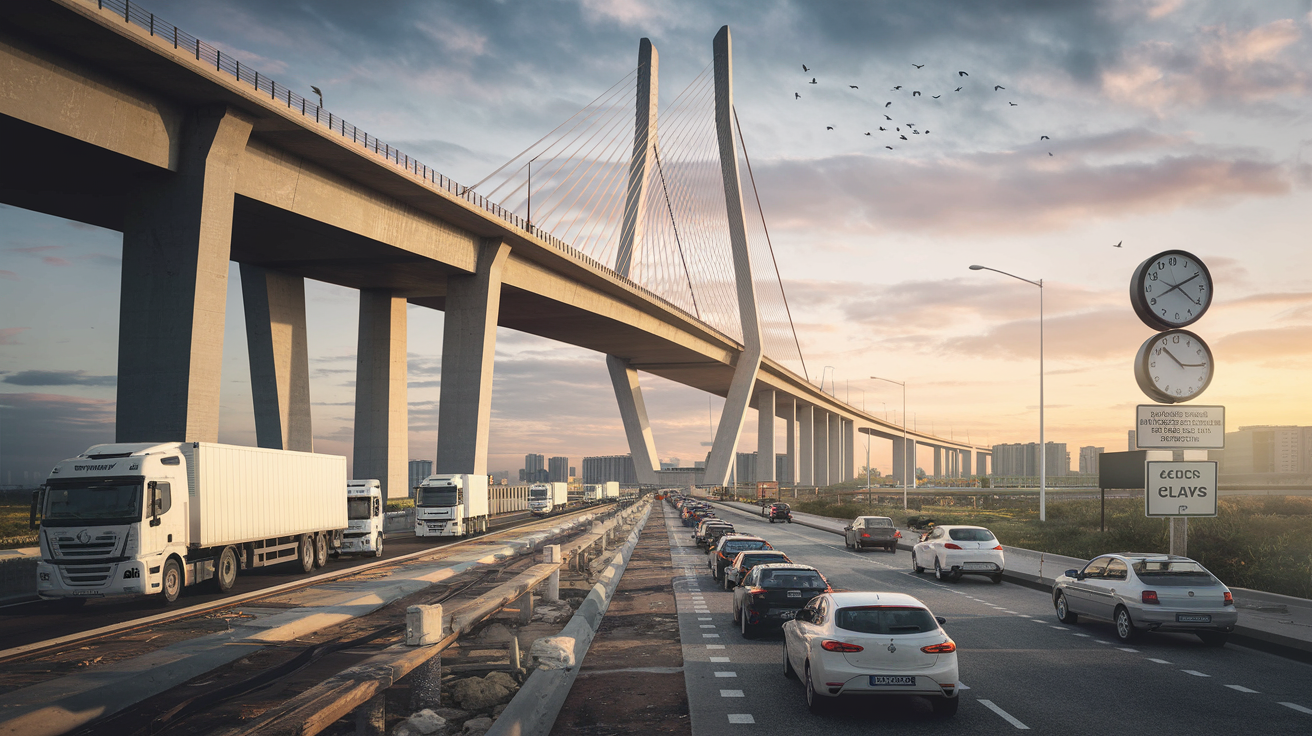


Two Years After Its Completion, Bridge Remains Unused. Promised for 2025, Its Activation Depends on Access and Customs. The Promise Rekindles Hopes, but Deadlines Raise Doubts. With Unquantifiable Economic Impacts, the Trinational Region Awaits a Solution That Could Transform Trade and Mobility.
Crossing the border between Brazil and Paraguay is synonymous with patience. Long lines, endless traffic jams, and hours of waiting mark the daily life of those who depend on the International Friendship Bridge in Foz do Iguaçu.
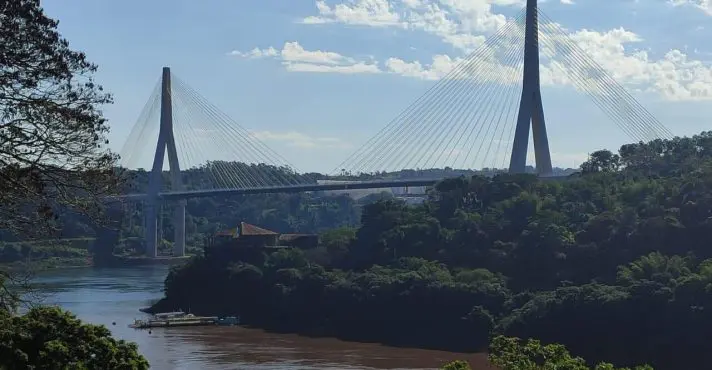
But in the midst of this chaotic scenario, an imposing structure rises that promised solutions: the Integration Bridge.
Two years after its completion, the work remains unused, awaiting the completion of access and customs.
-
“No one will make us change the Pix,” says Lula after the US report.

-
Lula responds directly to Trump and says that Pix is from Brazil and will not change under pressure from anyone, after a report from the United States pointed out the Brazilian payment system as an American trade barrier.

-
Amazon has just announced a new fee on all deliveries, and your online purchases will become more expensive starting April 17, including for those buying from the United States here in Brazil.

-
He sold his share for R$ 4 thousand, saw the company become a giant worth R$ 19 trillion, and missed the opportunity of a lifetime.


But why has this bridge, which carries the hope of relieving the border, not received a single vehicle?
A Promise with a New Date
The Integration Bridge, according to the Ministry of Transport, may finally be activated in December 2025.
The structure, which connects Foz do Iguaçu to Paraguay, was born to be an alternative to the overloaded Friendship Bridge.
However, its opening depends on complementary works, such as the Eastern Perimeter and customs facilities.
Although the promise rekindles hope, many see the deadline as overly optimistic.
Longstanding Demand, Delayed Solutions
For nearly six decades, residents and merchants in the western region of Paraná have been asking for a viable alternative to cross the border.
The International Friendship Bridge, inaugurated in 1965, concentrates intense commercial and tourist traffic between Brazil and Ciudad del Este.
The result? Traffic jams that can exceed three hours of waiting.
The Integration Bridge was designed to alleviate this scenario, but its completion in 2021 did not result in the expected operation.
Complementary Works in Progress
For the bridge to start operating, it is essential to complete the Eastern Perimeter, which connects BR-277 to the new structure.
This highway will also provide access to the Tancredo Neves Bridge, which connects Brazil to Argentina.
As of October 2024, the Perimeter had 46.27% of the works completed, according to the Paraná Infrastructure and Logistics Secretariat (Seil). The expectation is that it will be ready before the end of 2025.
With a layout of 15 km, the Eastern Perimeter will include strategic overpasses, facilitating traffic to points such as the Cataratas Highway (BR-469).
According to Itaipu Binacional, responsible for financing the project, more than R$ 63.3 million has already been invested in the construction of the road.
Customs and Bureaucracy
Another obstacle is the completion of customs facilities, essential for enabling traffic and goods control on the bridge.
As reported by Itaipu Binacional to Gazeta do Povo, the financial contributions for these works are being strictly adhered to, but implementation depends on coordination among multiple agencies.
Impacts of the Delay
The delay in activating the Integration Bridge is a source of frustration for the region.
Roni Temp, president of the Trinational Development Council (Codetri), emphasized that the economic and social impacts of this delay are “immeasurable.”
He told Gazeta do Povo that although the 2025 deadline brings some optimism, the lack of urgency is harming not only local residents but also regional and international trade.
What to Expect from the Future?
With works in progress and renewed promises, the hope that the Integration Bridge will begin operating as early as 2025 is more alive than ever.
However, many question whether the deadlines will be met or if new delays lie ahead.
It remains to be seen if, finally, the trinational region will see the promised benefits of greater integration between Brazil, Paraguay, and Argentina.
And You, What Do You Think?
Will the Integration Bridge finally be delivered in 2025, or will new challenges delay this long-awaited project even further? Share your opinion in the comments!








Está faltando não é nada mais que uma honesta gestão como a do Bolsonaro/Tarcísio!
Eis o retrato da incompetência da gestão pública. Lembrando que é uma (das muitas) obras financiadas por Itaipu Binacional na gestão do ‘****’, antes disso não se sabia para onde ia o dinheiro.