





 Portuguese
  English
  Spanish
  5 min of reading


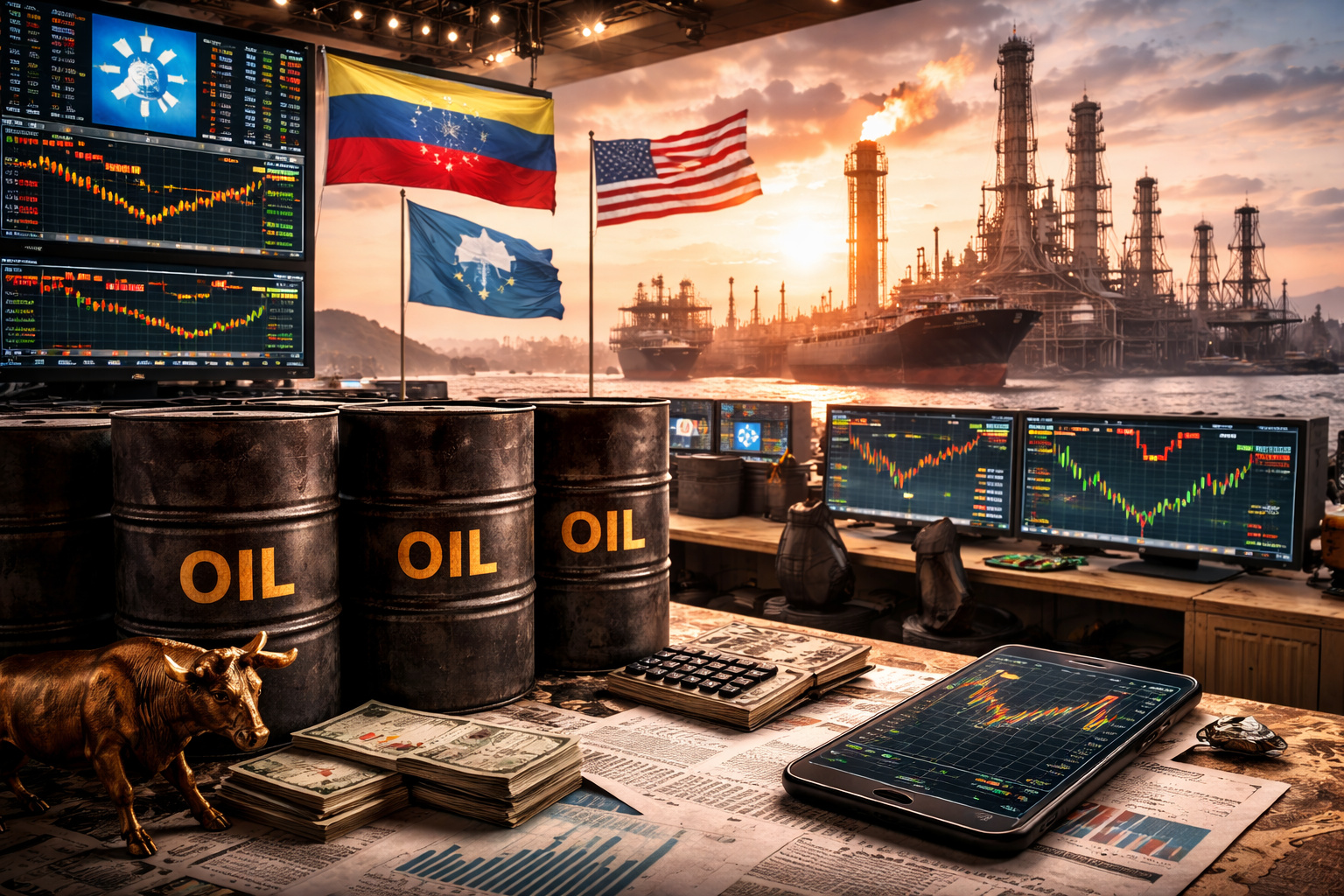
Oil prices closed the day higher, despite starting the session down, in a move that reflects the growing weight of geopolitical tensions and strategic decisions by major global producers. The rise in prices occurred after the offensive ordered by the president of the United States, Donald Trump, in Venezuela, which resulted in the imprisonment of Nicolás Maduro, in addition to the OPEC‘s indication to maintain production levels in the first quarter.
Since the beginning of trading, the market operated with volatility. However, throughout the day, investors adjusted positions in light of the new political and energy landscape. Thus, oil regained strength, reinforcing its historical sensitivity to external factors.
The Turn of Oil During Trading
In the morning, oil was trading lower. This initial movement reflected technical adjustments and profit-taking from previous sessions. However, as the day progressed, the focus shifted to the international scenario.
-
Lula reveals a masterstroke by Petrobras to undo a deal made by Bolsonaro, which involves the return of an important refinery that currently produces less than half of what was expected and makes Brazil dependent on international diesel.
-
A study confirms that the natural gas sector will reduce greenhouse gas emissions in Brazil by 0.5% and accelerate the energy transition by 2026.

-
Petrobras implements a severe adjustment and confirms a 55% increase in the price of aviation kerosene with a proposal for installment payments for the companies.

-
The rise in oil prices could ensure an extra revenue of R$ 100 billion for the Federal Government, indicates a recent economic study.


With the confirmation of the U.S. offensive in Venezuela, the market began to reassess risks related to global supply. Any instability in producing countries tends to pressure prices, especially when it involves strategic reserves.
In addition, the OPEC decision announced on Sunday reinforced a more predictable environment. By choosing to maintain production levels between January and March, the cartel and its allies signaled caution and commitment to market balance.
The Role of OPEC in Price Support
Historically, OPEC has influenced the oil market directly. Since its inception, the group has acted as one of the main regulators of global oil supply.
According to official statements released on Sunday, the decision to maintain production reflects the reading of an uncertain scenario. Moderate economic growth, geopolitical tensions, and changes in demand require caution.
Thus, the maintenance of production contributed to sustaining prices, as it removed the immediate risk of oversupply. This factor was decisive for the recovery of prices during trading.
Geopolitical Tensions and Their Impact on Oil
The U.S. offensive in Venezuela rekindled alarms in the energy market. Venezuela has one of the largest oil reserves in the world, according to historical OPEC data.
Over the past decades, political events in the country have had a direct impact on production and supply. Now, with the imprisonment of Nicolás Maduro, the market has begun to incorporate new risks and scenarios.
Oil responds not only to real disruptions but also to expectations. Thus, even without immediate changes in production, geopolitical risks have raised the perception of uncertainty.
WTI Performance in the U.S. Market
In the U.S. market, WTI crude oil for February delivery traded on the New York Mercantile Exchange closed the day up 1.74%, priced at US$ 58.32.
This advance reflected a combination of geopolitical factors and the reading that global supply will remain controlled in the short term. Additionally, the dollar’s retreat against other currencies favored assets denominated in U.S. dollars.
In recent history, WTI has proven to be highly sensitive to events involving U.S. foreign policy. Thus, the observed movement follows a pattern already known to investors.
The Rise of Brent and Global Benchmark
Meanwhile, Brent crude oil, the benchmark for Petrobras prices, for March delivery closed the day on the Intercontinental Exchange with a 1.66% increase, priced at US$ 61.76.
Brent reflects the international market and, therefore, reacts even more directly to geopolitical tensions. Any instability in producing regions tends to impact this benchmark.
In this context, the upward movement reinforces the reading that oil remains in a high-risk environment, with prices supported by political factors and coordinated production decisions.
Global Markets and Currency Follow the Movement
The rise in oil prices occurred on a day of gains in international markets. Investors reacted positively to the perception of supply control and the reading that the market can absorb geopolitical shocks in the short term.
At the same time, the dollar began to weaken against the real, favoring risk assets and commodities. This currency movement also contributed to sustaining oil prices.
According to market analysts, the combination of monetary policy, currency, and geopolitics creates an environment conducive to volatility, especially in the energy sector.
Oil as a Barometer of the Global Scenario
Throughout history, oil has always served as a barometer of the global economy. Wars, sanctions, diplomatic agreements, and production decisions shape the behavior of the commodity.
From the oil crisis of the 1970s to more recent conflicts, the pattern repeats itself. Political events trigger rapid price adjustments, even when short-term fundamentals remain stable.
The episode involving Venezuela, the United States, and OPEC fits into this historical context. It reinforces how oil remains at the center of global decision-making.
Expectations for the Coming Months
With the OPEC decision valid until March, the market now focuses on political and economic developments. The evolution of the situation in Venezuela will be closely monitored.
Furthermore, data on global growth and energy consumption will influence upcoming movements. According to recent reports from the International Energy Agency, the demand for oil remains resilient, despite the advances in the energy transition.
Thus, oil is expected to continue fluctuating, responding to both economic fundamentals and geopolitical factors.
Official Sources and Chronological Context
According to statements released on Sunday by OPEC, the group decided to maintain production levels between January and March. According to data from the New York Mercantile Exchange, WTI closed yesterday’s trading session up 1.74%.
According to information from the Intercontinental Exchange, Brent closed the day up 1.66%. Additionally, official statements from the U.S. government confirmed the offensive in Venezuela and the imprisonment of Nicolás Maduro.
Thus, the day reinforced a historical reality. Oil continues to be highly sensitive to political decisions, geopolitical shocks, and production strategies, remaining one of the most watched assets in the global economic landscape.









Seja o primeiro a reagir!