





 Portuguese
  English
  Spanish
  5 min of reading
  0 comments


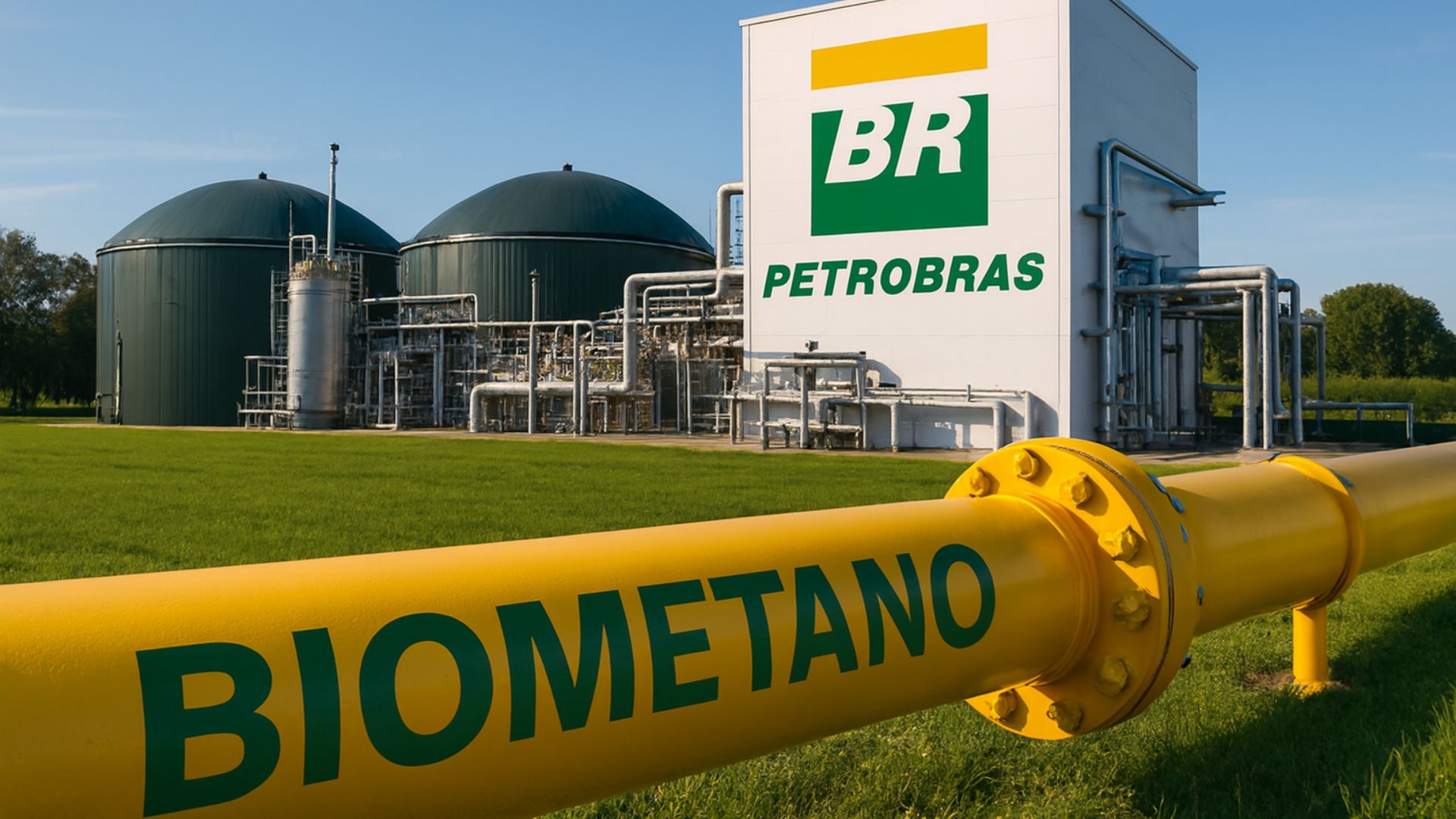
Petrobras Advances in Energy Transition by Negotiating Biogas with Suppliers and Evaluating Direct Participation in Renewable Gas Production, Aligning Its Actions with the Future Fuel Goals
On December 9, 2025, the Director of Energy Transition and Sustainability at Petrobras, Angélica Laureano, announced that the state-owned company is negotiating with 19 suppliers of biogas and is considering directly entering the production of renewable gas. According to an article published by Agência Infra, the strategy aims to meet the requirements of the Future Fuel Law, which sets decarbonization goals in the natural gas sector.
Petrobras Negotiations with Biogas Suppliers
The executive explained that Petrobras received 90 proposals for biogas or CGob (guarantee of origin certificates). Of these, only 19 are still in negotiations after technical and commercial analysis. The state-owned company is waiting for the official definition of when the new mandate will take effect, as the initial percentage was revised from 1% to 0.25% in 2026 after an evaluation by the Ministry of Mines and Energy (MME).
The current negotiation stage demonstrates the care of the state-owned company in selecting producers capable of ensuring supply stability. Even with the significant volume of proposals, many interested parties still lack sufficient infrastructure to meet Petrobras’ operational requirements.
-
CNPE strengthens policy and prevents imported biodiesel from being mixed with diesel, aiming to strengthen the Brazilian industry and protect jobs by reducing external dependence amid tensions in the global market.
-
Revolution in public transport: Goiânia puts into circulation the first articulated buses powered by biomethane in Brazil and promises to drastically reduce pollution on the Anhanguera Corridor.

-
From the field to the pipelines: Mato Grosso do Sul accelerates the energy transition and consolidates a new axis in renewable energy with the arrival of a giant biogas plant.

-
The Economist states that Brazil has a “secret weapon” against expensive oil and highlights how the country can reduce economic impacts even in international scenarios of high volatility.

Thus, filtering the 90 companies down to 19 indicates that the state-owned company prioritizes quality, continuity, and energy security. There has been great demand because the biogas market is rapidly expanding in Brazil, driven by agricultural, urban, and industrial waste that can be converted into clean energy.
However, supply capacity is still limited. For many experts, the high number of proposals shows that there is interest, but the sector still needs to grow to meet larger volumes, especially if the insertion percentage increases in the coming years. Petrobras seeks to secure solid contracts and suppliers with proven biogas production capacity.
The Revision of the Target and Its Impacts on the Renewable Gas Market
The Future Fuel Law determined the mandatory mixing of biogas in the natural gas sold in the country. The original text provided for starting with 1% as early as 2026, potentially reaching up to 10% later, depending on CNPE evaluations. However, after intense debate in the sector, the initial percentage was reduced to 0.25% due to concerns about impacts on the final price to consumers.
Nonetheless, Petrobras advocated a transition period of up to three years for the market to adapt. According to the state-owned company, time would be needed to increase the supply of producers and ensure that technical capacity meets demand.
This revision also directly influences the contracts under negotiation. Changes in regulatory targets affect, for instance, volume projections, investment amounts, and supply guarantees. Additionally, many producers are still studying how to expand their plants to meet new purification and compression requirements, essential for injecting biogas into the network.
Petrobras Evaluates Direct Participation in Renewable Gas Production
In addition to negotiations with suppliers, Angélica Laureano stated that Petrobras is considering participating directly in biogas production. The strategy would include minority partnerships with companies already operating in the sector, replicating a model similar to that adopted by the company in the ethanol market.
According to the director, this move would allow the company to diversify its energy portfolio and increase its ability to meet environmental targets. Furthermore, becoming a producer gives the state-owned company greater control over costs, timelines, and the quality of the renewable gas acquired. This minority participation also reduces risks and allows the company to enter the market without taking on large initial investments alone.
Entering the sector strengthens Petrobras’ presence in the clean energy market and enhances its competitiveness.
The state-owned company is exploring partnership models that may involve:
- participation in existing production units;
- investments for expanding new plants;
- technological cooperation for process improvement;
- logistical synergies between pipelines and production hubs.
This movement aligns with global trends. Major energy companies are expanding their operations in low-carbon fuels to meet international commitments to reduce emissions.
Growth of the Brazilian Biogas Market
Although promising, the national biogas market faces significant challenges. Current production still does not meet large volumes, and many producers operate on a limited scale. Additionally, the cost of purifying biogas and converting it into biogas is still high. This process requires specific equipment, constant monitoring, and compression and injection infrastructure.
Logistics also represent a significant barrier. Many biogas plants are far from pipeline networks, increasing costs and reducing the product’s competitiveness. Therefore, the expansion of this market depends on both private investments and public incentive policies.
Despite this, there are advances. States like Paraná, São Paulo, and Pernambuco are already increasing incentives for renewable energy. Furthermore, major agricultural companies are investing in production units to utilize waste from sugarcane mills, agricultural cooperatives, and large confinement operations.
Why Biogas Gains Momentum in the Energy Transition
The adoption of biogas is considered strategic because it offers multiple environmental and economic benefits. It drastically reduces greenhouse gas emissions, utilizes waste that would otherwise be discarded, and contributes to the circular economy. Additionally, it partially replaces fossil-based natural gas, decreasing dependence on fuels that have a greater environmental impact.
This renewable fuel also has the potential to boost jobs in rural areas and encourage productive chains related to agribusiness. With advancements in technology, there is an expectation that production costs will decrease in the coming years, making biogas even more competitive.
Relevance of Petrobras’ Movement for the Future of the Sector
The movement announced by Petrobras on December 9, 2025, represents much more than an operational adjustment. It indicates a structural shift in how the company operates in the natural gas market and the paths adopted to reduce emissions.
The negotiation with 19 suppliers and the possibility of direct entry into biogas production show that the state-owned company recognizes the potential of this market and is preparing to lead its expansion.
Furthermore, the company’s stance directly influences the entire productive chain. When the largest energy company in the country signals interest in a new technology, investors, producers, and governments tend to follow in the same direction. Thus, the advancement of the state-owned company can accelerate the expansion of plants, encourage new projects, and stimulate the emergence of new players.








Seja o primeiro a reagir!