





 Portuguese
  English
  Spanish
  3 min of reading
  0 comments


New Regulation Directly Impacts Residents and Immigrants in Portuguese Territory
The president Marcelo Rebelo de Sousa enacted on October 16, 2025 the amendment of Law No. 23/2007, as officially communicated by the Presidency of Portugal.
The measure confirms the text approved by the Assembly of the Republic on September 30, 2025, after a review requested by the President himself.
Additionally, the promulgation ended the legal stalemate that began when the Constitutional Court rejected the previous version in August 2025, due to legal inconsistencies.
How the Text Was Approved
On Tuesday, October 14, Marcelo Rebelo de Sousa announced that he would make a definitive decision by October 16, the maximum deadline for a new review.
The document was available for sanction since October 8, and the president met the constitutional deadline.
The project originated from the center-right coalition Democratic Alliance (PSD and CDS-PP), which received support from the Chega and Liberal Initiative (IL) parties.
Meanwhile, the PS, Livre, PCP, BE, and PAN, left and center-left parties, opposed the proposal.
The new law strengthens control over the entry and stay of foreigners in Portugal, making the process more demanding and rigorous.
ARTICLE CONTINUES BELOWSee also
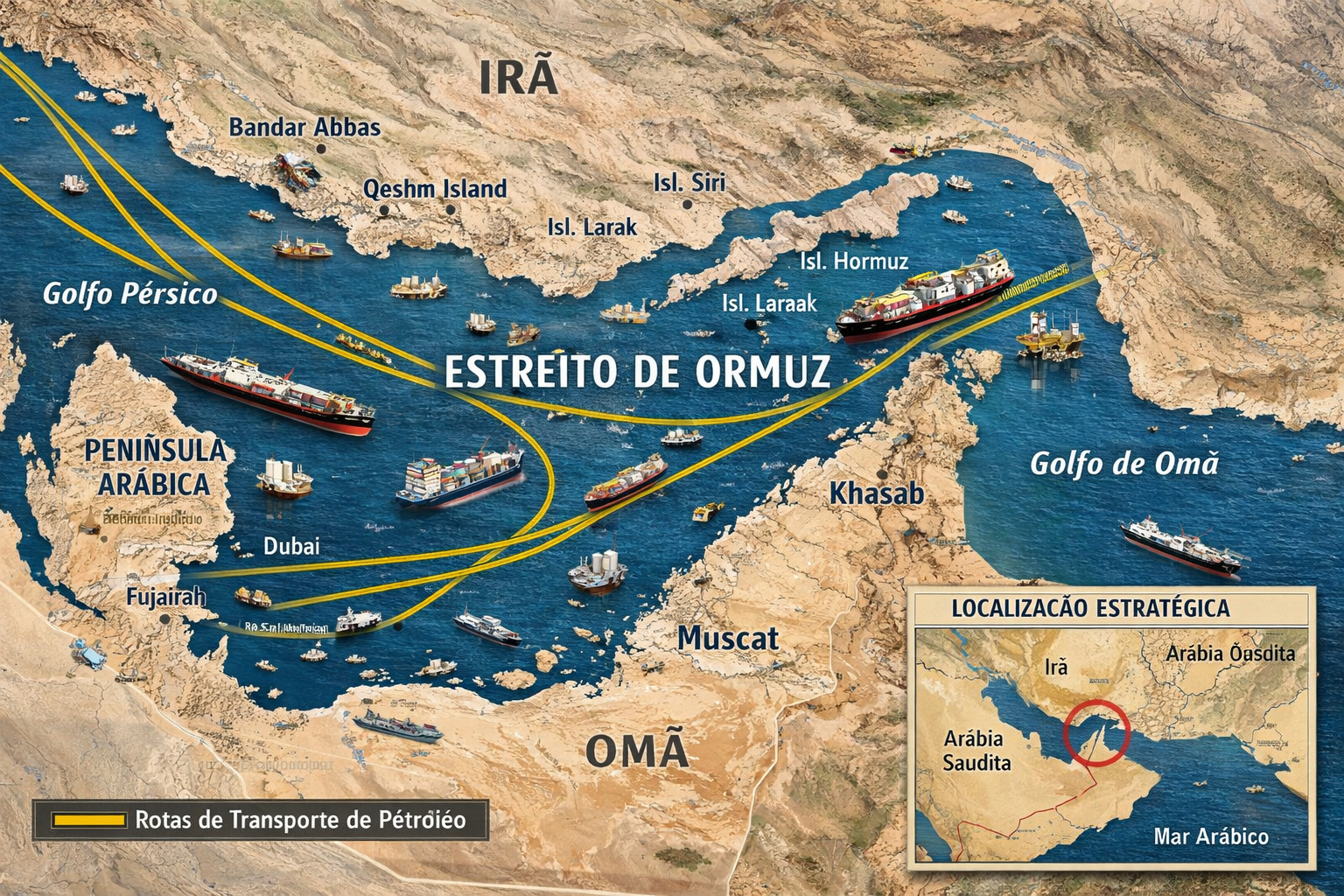
Global summit with over 40 countries pressures Iran for a blockade in the Strait of Hormuz and warns of direct impact on oil, food, and the global economy.
Russia has broken the U.S. maritime blockade to send oil to Cuba and is now loading a second ship while Trump says that “Cuba is next” in a possible military action against the island.

Spain challenges the USA and closes its airspace for operations against Iran, raising global tension and provoking the threat of a trade rupture.

While no other country manufactures tanks in Latin America, Argentina activates the TAM 2C-A2 and raises a curiosity about the technological lag in the region.

Main Changes
• Family Reunification: the benefit now applies only to legal residents for more than two years in the country.
However, there are exceptions for parents of “minor or incapacitated children” and “spouses or equivalents”, with shorter time frames.
Additionally, the right remains for those with highly qualified visas or residence permits by investment (“golden visa”).
• Entry via CPLP: citizens from the Community of Portuguese-Speaking Countries, including Brazilians, can no longer enter as tourists with the aim of applying for residence.
Now, it is mandatory to obtain the appropriate visa before traveling, preventing irregular applications already in Portuguese territory.
• Job Search Visa: the visa still exists, but only for highly qualified professionals, reducing the number of beneficiaries.
• Bilateral Agreements: the government will be able to negotiate work agreements with partner countries for essential sectors, such as agriculture, trade, and construction.
The proposal originated from the Socialist Party (PS) and was incorporated into the final text approved by Parliament.
Impact on Brazilians
According to Aima (Agency for Integration, Migration and Asylum), 368,449 Brazilians lived in Portugal in 2023, representing 35.3% of the total foreigners.
The figure does not consider Brazilians with European citizenship, who have specific residency rights.
In March 2025, Prime Minister Luís Montenegro (PSD) stated that the actual number of Brazilians in the country exceeded 550,000 people.
With the new regulation, the requirements for regularization and residency have become stricter, requiring prior planning and greater attention to the appropriate visas.
Presidential Decision and Motivation
In an official statement, the Presidency stated that the new wording of the law “minimally corresponds to the essential of the doubts raised by the president and confirmed by the Constitutional Court”.
The government justified that the measure strengthens legal security and ensures constitutional alignment.
Thus, the promulgated text represents a shift in Portuguese migration policy, focusing on planning, control, and rigor in entry authorizations.
The decision directly impacts Brazilians and other Portuguese-speaking citizens, who will need to meet new requirements and deadlines to live legally in Portugal.
With the new law, the country reinforces its migratory sovereignty, adjusts entry policies, and reorganizes the flow of foreigners seeking opportunities in European territory.










Seja o primeiro a reagir!