





 Portuguese
  English
  Spanish
  4 min of reading
  0 comments


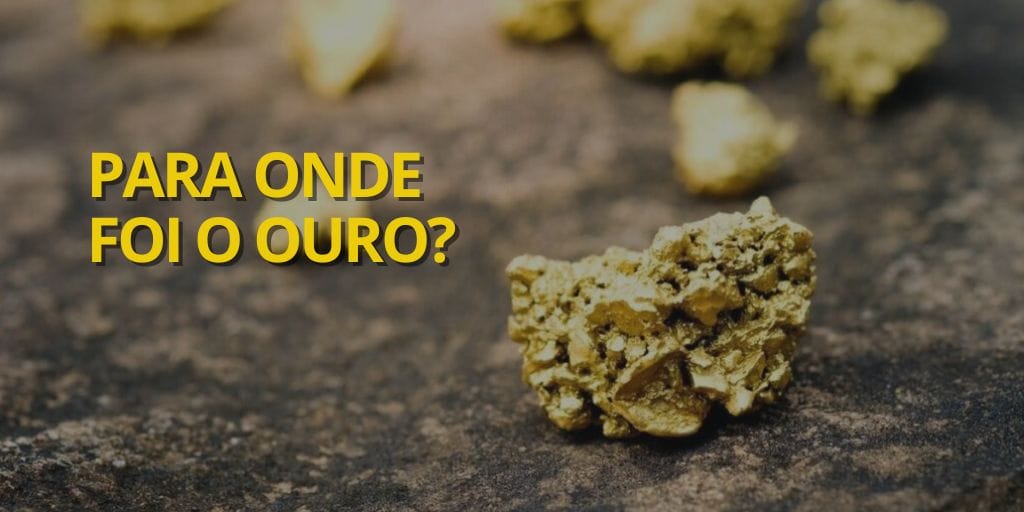
When Brazilians And Portuguese Meet In Discussions On Social Networks, A Recurring Theme Is The Gold Taken By Portugal From Brazil. This Provocation Brings To Light An Historical Question: After All, Where Did All This Gold Go?
Recently, Flávio Dino, who is the Minister of the Supreme Federal Court (STF), commented on a case of xenophobia against a Brazilian in Portugal. On that occasion, he stated that he would even agree for the Portuguese to repatriate all Brazilian immigrants living there.
However, he emphasized: this, as long as they return “along with the gold from Ouro Preto.” “Then everything is fair, we settle up,” he said while commenting on the case of a Brazilian who was insulted at Porto Airport in Portugal. At the time, a Portuguese woman shouted at her to “go back to her land.” The same woman also accused Brazilians of “invading Portugal.”
This statement from the minister joins a series of memes and provocations posted by Brazilians on social networks about the topic. But, what actually happened to the gold extracted from Brazil during Portuguese colonization? To tell this story, the team from Click Petroleum and Gas based its report on a piece published by the “BBC News Brasil” channel.
-
“No one will make us change the Pix,” says Lula after the US report.

-
Lula responds directly to Trump and says that Pix is from Brazil and will not change under pressure from anyone, after a report from the United States pointed out the Brazilian payment system as an American trade barrier.

-
Amazon has just announced a new fee on all deliveries, and your online purchases will become more expensive starting April 17, including for those buying from the United States here in Brazil.

-
He sold his share for R$ 4 thousand, saw the company become a giant worth R$ 19 trillion, and missed the opportunity of a lifetime.


The Gold Cycle
Before the start of the Gold Cycle, in the early 18th century, gold was already being exploited in Brazil, although initially on a smaller scale. Historical records point to the region of Paranaguá, in Paraná, a few decades earlier, and to deposits in São Paulo since the 16th century.
However, it was with the discoveries in Minas Gerais, at the end of the 17th century, that gold became the main product extracted from the colony, replacing sugarcane.
To this day, the exact amount of gold extracted from Brazil is unclear, as many records were lost, such as in the fire at the Lisbon Customs House in 1764, and smuggling was common to evade the fifth, the royal tax of 20%.
However, according to historian Virgílio Noya Pinto, in his book “Brazilian Gold and Anglo-Portuguese Trade,” it is estimated that production in the 18th century was 876,629 kilograms. Another estimate, now made by geologist Pandiá Calógeras, stipulates that the amount may have been 948,105 kilograms, including Bahia.
The Destination Of The Precious Metal
In an interview with the cited media, historian Leonardo Marques, who is a professor at the Fluminense Federal University (UFF), reported that it is impossible to know exactly how much gold was taken to Portugal, but estimates are based on records of the metal’s arrival in Europe, the primary destination for the raw material.
However, one question: does it make sense to talk about Brazil’s disadvantage and Portugal’s benefit, considering that at the time both were part of the same empire?
For Leonardo Marques, the discussion about colonial inheritance is valid. “At that moment, there was no separation between Brazil and Portugal. But the human and environmental effects of mining are still felt here today,” he says.
The Portuguese Hunger For Gold
As explained in the article from the “BBC News Brasil” channel, the gold exploitation in Brazil emerged during a period of global economic crisis, with a shortage of precious metals in the market after the excitement of the silver mines in Spanish America. Portugal, after the Iberian Union and losses of trading posts to the Dutch, faced competition in sugar production in the Caribbean.
The Portuguese crown’s encouragement to seek gold transformed Portuguese America. In the 18th century, the Americas accounted for 85% of the world’s gold production. Minas Gerais was the main hub of this exploitation, with profound impacts on the society and economy of the colony.
The Path Of Brazilian Gold
The Portuguese colonists, using enslaved labor, exploited the mines and used the gold in local trade and in Portugal. The crown charged 20% of the extracted gold, part of which financed public works in Portugal, such as the National Palace of Mafra.
A large portion of the gold ended up in England, due to the unequal trade agreements between Portugal and Great Britain, such as the Methuen Treaty of 1703. Portugal exchanged gold for British manufactured goods, essential for the Industrial Revolution.
The Consequences In Brazil
The Gold Cycle modified the economy and society of the colony, with an economic internalization and a new economic hub in the center-south. The slave trade increased significantly to meet the labor demand in the mines.
In this sense, Leonardo Marques emphasizes that many of Brazil’s current problems result from this logic of exploitation. “A slave society was formed, hierarchical, with environmental and social impacts that remain to this day,” he said, also highlighting that the meme “give us back our gold” raises a broader discussion about global influences on Brazil’s history and development.








Seja o primeiro a reagir!