





 Portuguese
  English
  Spanish
  5 min of reading
  0 comments


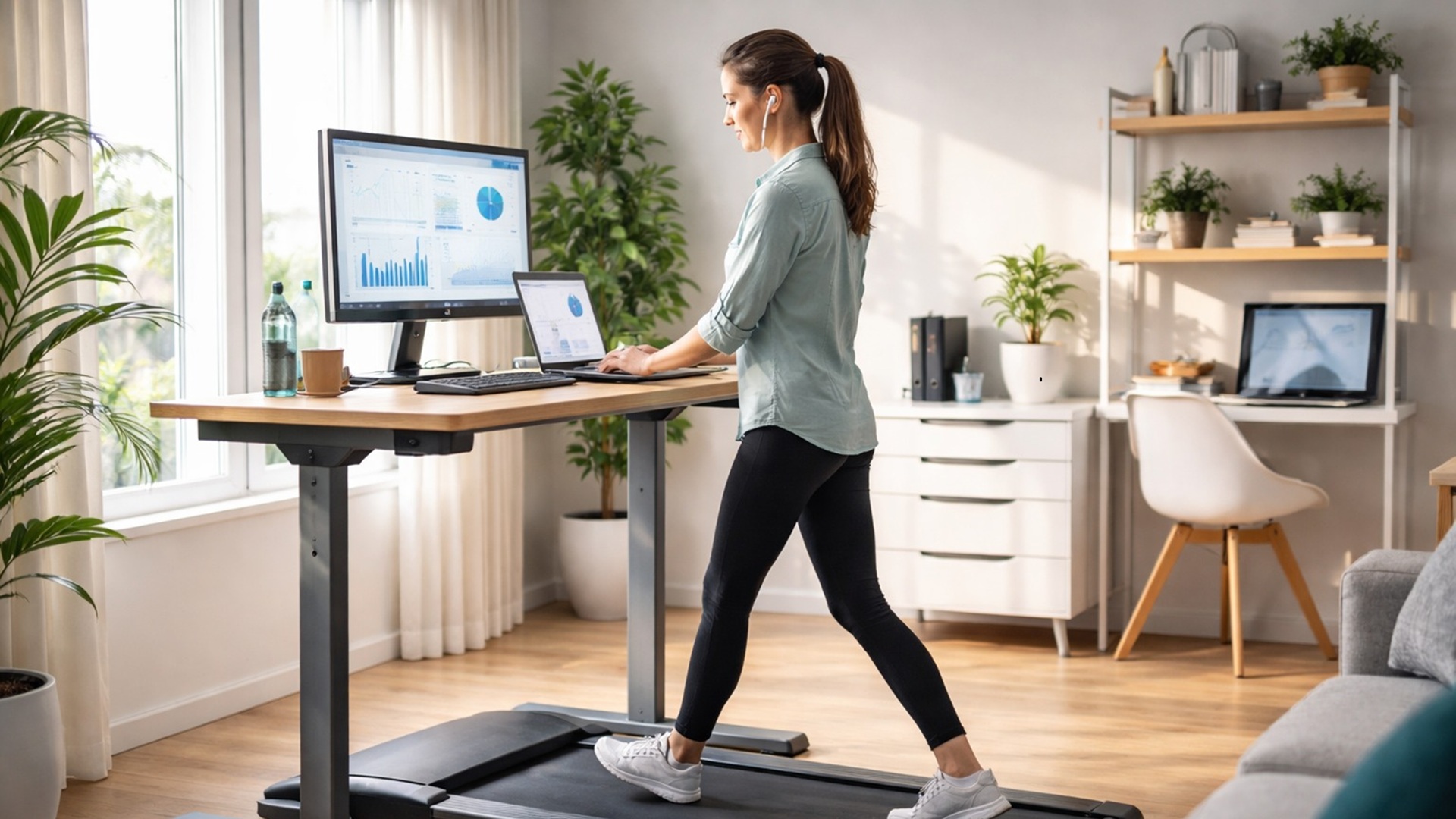
With More Than 6.7 Million Australians Working From Home At Least Part of the Week, Studies Analyze How the Use of Treadmill Desks Can Increase Daily Steps, Reduce Sitting Time, and Generate Gradual Health Benefits in the Long Term
Research indicates that more than 6.7 million Australians work from home at least part-time, increasing sedentary behavior. Evidence shows that treadmill desks can increase daily steps, reduce body fat, and improve health indicators throughout the workday.
The rise of remote work has significantly altered the routine of millions of people. Recent estimates suggest that more than 6.7 million Australians, almost half of all workers, engage in paid or unpaid activities at home for at least part of the time. The majority are concentrated in major urban centers like Sydney, Melbourne, and Canberra.
With fewer commutes and less incidental physical activity, such as walking to transport, moving around the office, or going out for lunch, the time spent sitting increases. This behavior is already widely recognized as harmful to health, especially when prolonged for several consecutive hours throughout the day.
-
A Brazilian millionaire couple restores a farm over 150 years old in the interior of São Paulo and transforms the historic property with Portuguese tiles, antique furniture, and new spaces into a refuge that blends tradition, comfort, and sophistication.

-
Submerged city in a lake in Minas reveals intact streets, preserved vehicles, and houses after more than 60 years, impressing divers.

-
Yellowstone has started to rise again in an area of the caldera, and the movement rekindles fears surrounding the U.S. supervolcano, as scientists monitor the deformation and try to understand what is happening underground.

-
Woman arrested after receiving $1.2 million due to banking error and not returning the amount.


Remote Work and the Increase in Sitting Time
Working from home facilitates continuous sitting in front of the computer. At the end of the workday, many employees simply change their environment, moving from their work chair to the sofa, maintaining a sedentary pattern. In contrast, physically going to the workplace typically encourages frequent movements and natural breaks to walk or stand.
This situation becomes more concerning when considering that many Australians are already not meeting the minimum recommendations for physical activity. In light of this, the proposal arises to integrate movement into the professional routine, using treadmill desks or walking mats placed under the work desk.
The central idea is simple: transform periods that would be completely sedentary into moments of light activity spread throughout the day, without the need for structured exercise sessions.
How Many Steps Are Needed to Generate Benefits
The benefits of walking are well-documented by recent studies. Research promoting increased weekly walking volume observed consistent improvements in health indicators, such as blood pressure and glucose tolerance.
Recent evidence suggests that about 7,000 steps per day represent an ideal target for the prevention of various diseases. Simultaneously, the World Health Organization revised its guidelines, no longer requiring minimum sessions of 10 minutes and adopting the directive that “every movement counts,” regardless of duration.
Experiments also indicate that short, frequent breaks to walk or squat, avoiding long periods of sitting, may yield better results than a single prolonged walk. This reinforces the idea that physical activity can be accumulated throughout the day through regular interruptions.
In this context, walking for health does not need to be a rigidly structured habit. Occasional activities spread throughout the workday can already generate positive effects when maintained continuously.
Scientific Evidence About Treadmill Desks
Although there are still few specific studies on treadmill desks in the workplace, most available research indicates beneficial effects. Results include changes in body fat loss, improvements in cholesterol, blood pressure, and metabolism, with some impacts observed over the long term.
One study showed that sedentary office workers increased their daily step count by 1,600 to 4,500 when they had access to a treadmill, compared to those who did not use the equipment. The most significant weight loss was observed among participants with obesity.
Another study conducted with overweight and obese doctors identified that successful use of the treadmill resulted in an average 1.9% reduction in body fat during the analyzed period. A third research indicated a 43-minute daily increase in light walking, although workers reported difficulty fitting activity into demanding professional schedules.
Results vary among studies, but even modest changes tend to generate benefits when maintained over time. Small daily increases in movement can represent significant gains for overall health.
Impacts on Productivity and Cognitive Tasks
One of the main concerns regarding treadmill desks is the possibility of impairing attention and work performance. However, one specific study did not identify significant impacts on cognitive abilities between people who remained seated and those who walked at a comfortable pace while working.
On the other hand, there is evidence that walking or cycling desks can negatively affect typing and, especially, mouse accuracy. This makes this type of setup less suitable for activities requiring constant fine movements or intensive mouse use.
For those who struggle to type while walking, voice typing tools emerge as a viable alternative. Some of these solutions are already integrated into operating systems, such as on Apple computers or Chromebooks, facilitating adaptation to the new work format.
Costs, Viability, and Investment Decision
Despite the potential benefits, the adoption of treadmill desks involves financial costs. Basic treadmill models cost between A$ 180 and A$ 200, while more advanced versions that allow running can exceed A$ 1,000. In many cases, it’s also necessary to invest in an adjustable height desk to ensure proper ergonomics.
Given these figures, the question of cost-benefit arises. Before investing in a new desk setup, it may be worth considering whether it would be simpler and cheaper to adopt regular breaks away from the desk to walk throughout the day, without additional equipment.
Still, for some individuals, the presence of a treadmill serves as a visual incentive and a constant reminder to break sedentary behavior. Especially for those with little time or facing barriers to stepping away from the desk during work hours, this solution may facilitate the incorporation of movement into their daily routine.
Even small changes in physical activity can make a significant difference, especially among highly sedentary workers, both at work and at home. The final decision depends on profile, budget, and the specific demands of each professional role, but evidence indicates that reducing sitting time is a significant step toward improving long-term health.






-

-

2 pessoas reagiram a isso.