





 Portuguese
  English
  Spanish
  3 min of reading
  85 comments


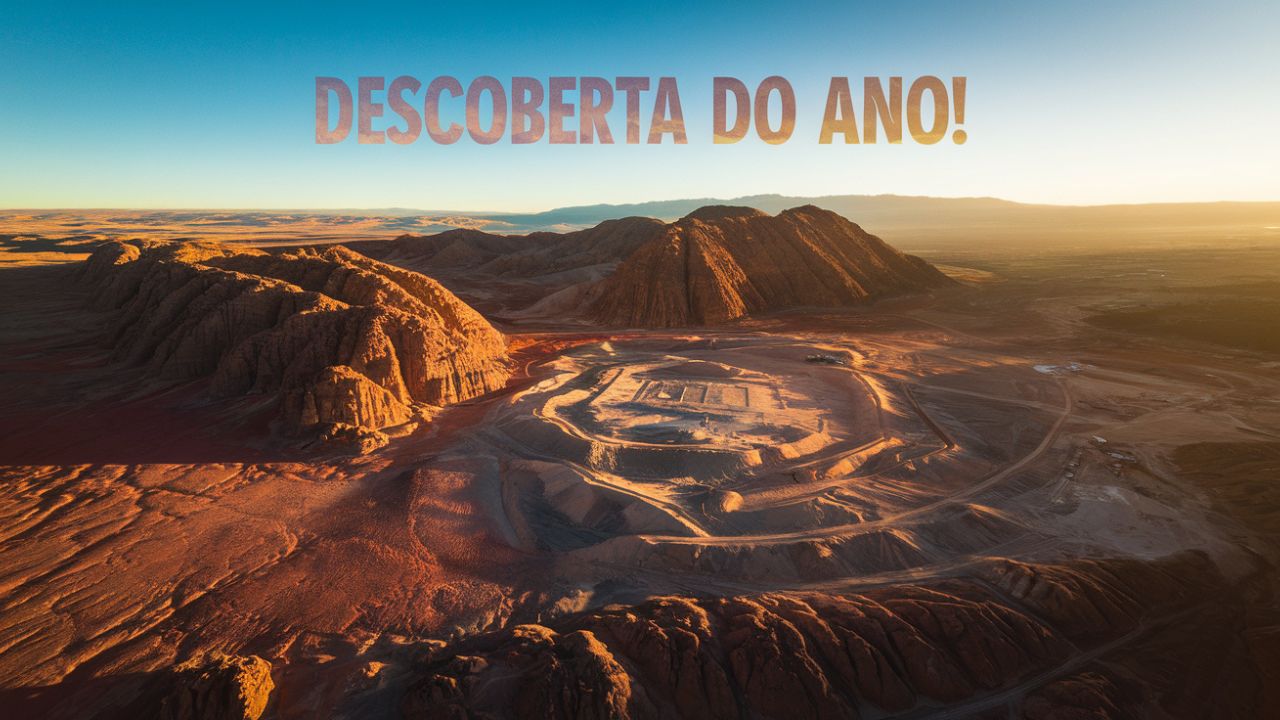


With an estimated value of US$ 5.7 trillion, the largest iron ore deposit in the world, located in Western Australia, reveals a concentration of more than 60% iron and rewrites 1.4 billion years of the planet’s geological history.
Under the rugged terrain of Western Australia, a spectacular discovery has stunned the world. Geologists have revealed the largest iron ore deposit ever recorded, a colossal reserve of 55 billion metric tons. This discovery is not just a milestone in mining but also a watershed moment in understanding Earth’s geological history.
The Magnitude of the Largest Iron Ore Deposit in the World
The Hamersley Range, located in the Pilbara Craton, was already known for its mineral wealth, but this new discovery surpasses all expectations. The economic value of the deposit is estimated to exceed an incredible US$ 5.775 trillion, redefining the strategic importance of the region in the global iron market.
The impressive iron content of the deposit, with over 60% purity, places it in a unique position. To put it into perspective, this concentration not only ensures greater efficiency in mining but also minimizes beneficiation costs, making the ore highly competitive in the international arena.
-
“No one will make us change the Pix,” says Lula after the US report.

-
Lula responds directly to Trump and says that Pix is from Brazil and will not change under pressure from anyone, after a report from the United States pointed out the Brazilian payment system as an American trade barrier.

-
Amazon has just announced a new fee on all deliveries, and your online purchases will become more expensive starting April 17, including for those buying from the United States here in Brazil.

-
He sold his share for R$ 4 thousand, saw the company become a giant worth R$ 19 trillion, and missed the opportunity of a lifetime.


Rewriting the Geological Timeline
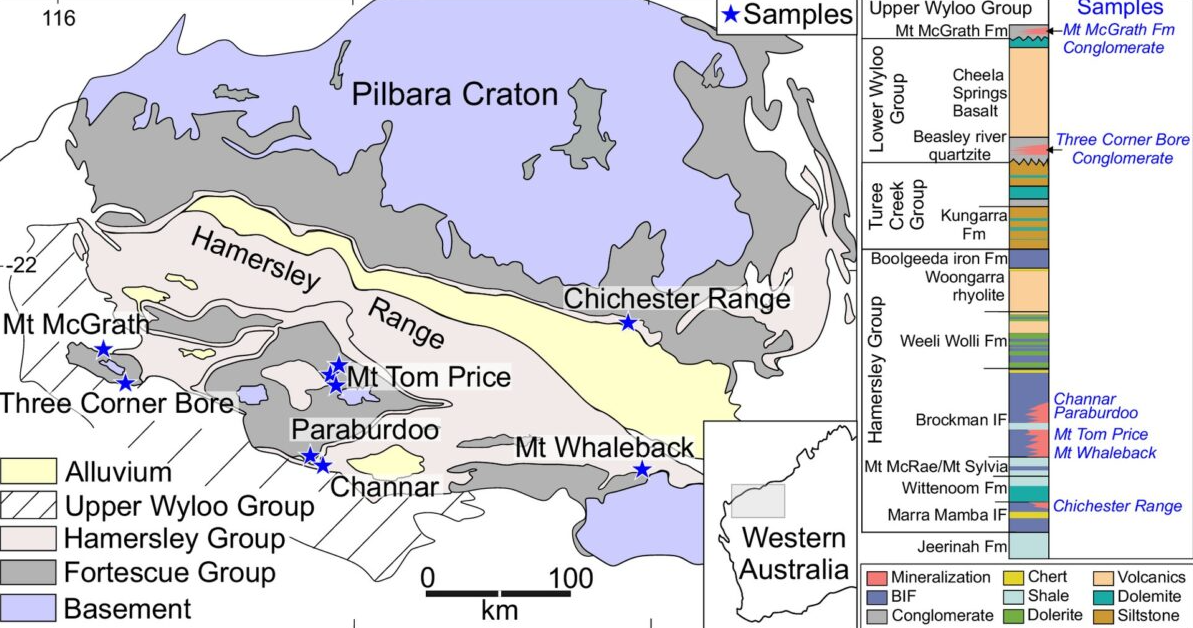
Based on advanced isotopic dating studies, scientists have determined that the formation of this iron ore deposit dates back 1.4 billion years, a revision of 800 million years from previous theories. This new timeline indicates that ancient tectonic and climatic events played a crucial role in the formation of this immense mineral reserve.
These discoveries not only rewrite history books but also challenge existing theories about mineral formation processes. It’s like opening an ancient book of mysteries and discovering a new chapter that no one knew existed.
The Science Behind the Hamersley Deposit
Did you know that the original ore had only 30% iron? Thanks to processes of chemical weathering and tectonic activity, this concentration has been raised to an impressive 60%. This transformation is a testament to how the interaction between surface processes and deep geological phenomena can create natural wealth on an epic scale.
Associate Professor Martin Danisík highlights that this discovery offers unprecedented clarity on the processes that gave rise to one of the largest mineral formations on the planet.
Global Economic Implications
The discovery is also a revolution for the global economy. Australia is already a leader in iron ore exports, and this find further solidifies its dominant position. This will not only boost the local economy but also shape the dynamics of international markets, influencing prices and supply chains.
Imagine the impact of this discovery on the construction industry, steel production, and base industries. This deposit is like finding a “treasure chest” capable of sustaining entire sectors for decades.
A New Paradigm for Geology
This discovery breaks paradigms. For decades, it was believed that iron deposits of this size were confined to certain eras and locations. Now, we know that the history of mineral formation is far more complex and interconnected with tectonic movements and supercontinent fragmentations.
Cutting-edge technologies used in exploration, such as isotopic analysis and detailed mapping, have opened new doors for future discoveries in previously considered unfeasible locations.
The discovery of the largest iron ore deposit in the world in the Hamersley Range invites us to revisit and question what we know about Earth. With economic, scientific, and historical implications, this find promises to shape the future of mining and geological research.
Who knows what other secrets the Earth still holds? What is certain is that, with increasingly advanced tools, we are just beginning to unveil the vast treasure hidden beneath our feet.









wh owns this deposit?
Não existe fontes que confiemam essa tal descoberta de minério de ferro. Portanto não é verdade. Se algum **** que ler essa notícia e tiver ações da Vale vai correr pra vender a qualquer preço. Fiquem atentos a essas notícias e procurem por fontes confiáveis.
DE QQ MANEIRA A VALE NÃO É DO BRASIL MESMO… Desde a privataria ela pertenceu a Soros, depois a outros testas de ferro, provávelmente…