





 Portuguese
  English
  Spanish
  5 min of reading
  0 comments


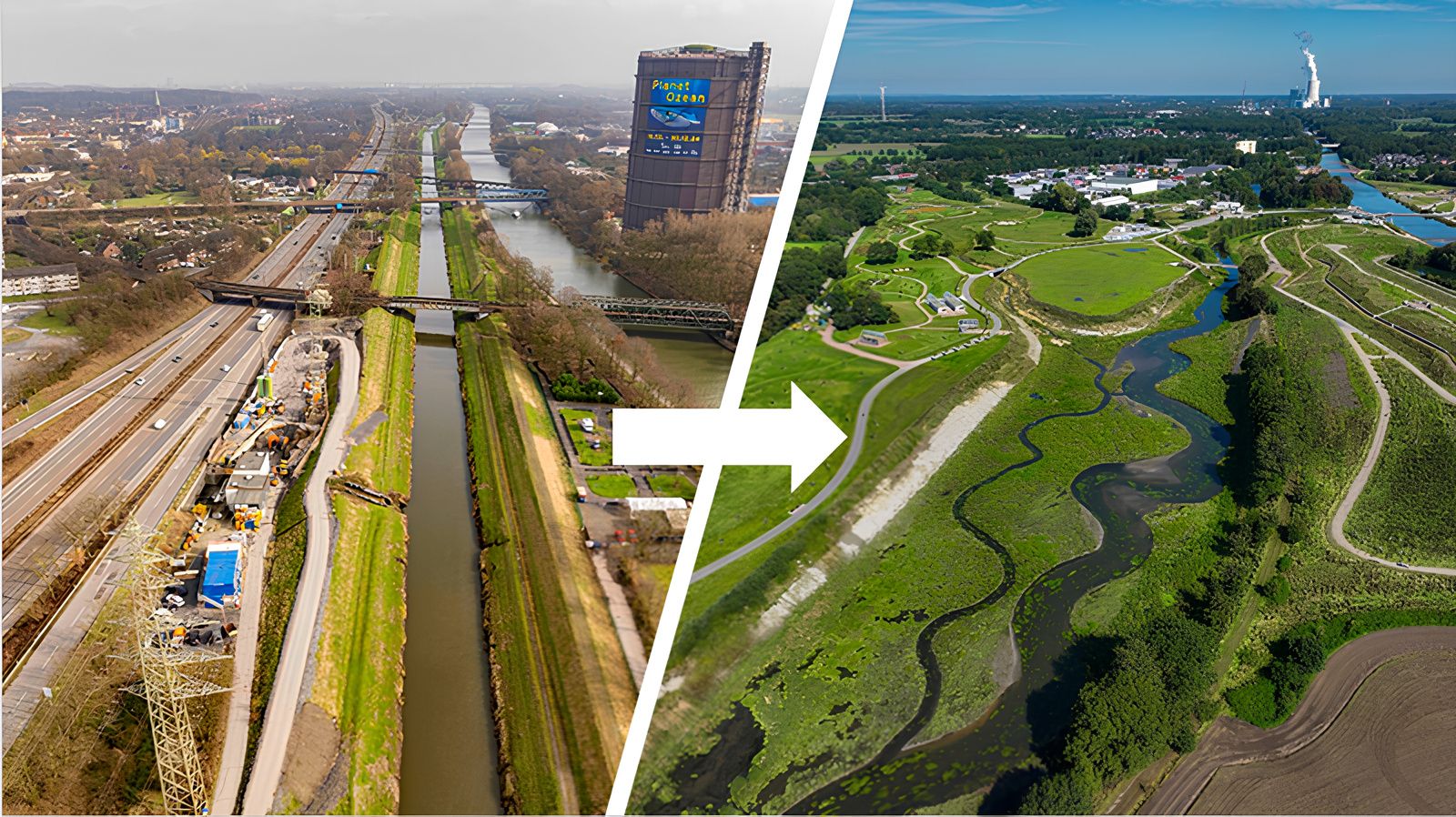
After Decades Buried by Coal Mining, Rivers of the Emscher Basin Reappear in Germany After Excavations and Works That Transformed a Dead Canal into a Living Urban Ecosystem.
For more than a century, the Emscher River ceased to be a river in the classical sense of the word. In the heart of the Ruhr region, one of the most industrialized areas in Europe, it was progressively buried, rectified, and transformed into an open sewage canal, sacrificed to sustain coal mining and the rapid growth of Germany’s heavy industry. What was once a natural watercourse became an artificial system, surrounded by concrete, waste, and industrial infrastructure, considered biologically dead for decades.
What seemed irreversible began to change in the late 20th century when Germany made a rare and costly decision: to undo more than 100 years of industrial engineering, remove rivers from underground, excavate entire channels, and rebuild a river system practically from scratch. This led to the birth of the Emscher Restoration, one of the largest and most complex urban river restoration projects ever undertaken in the world.
How Coal Mining Buried Entire Rivers in the Ruhr
The Emscher basin spans a region that was, for decades, the energy engine of Germany. Subsurface coal mining caused gradual ground subsidence, altering the natural terrain and making it unfeasible to maintain rivers in their original courses.
-
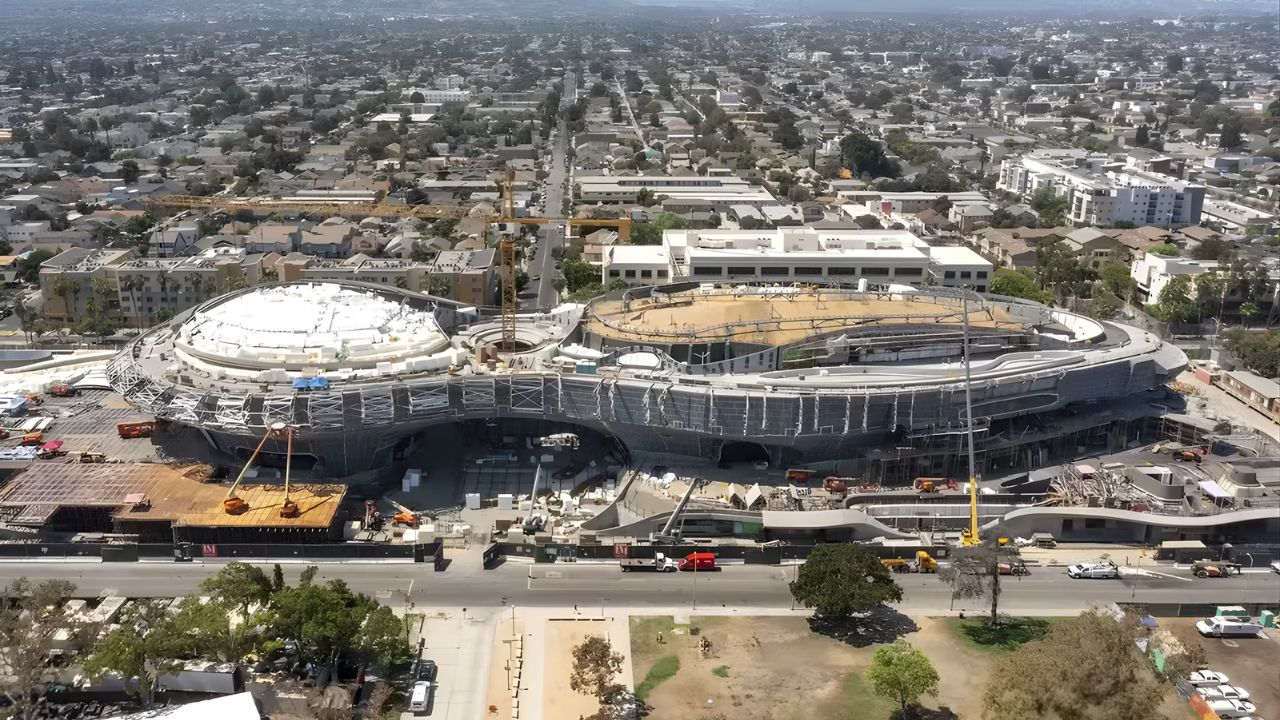
Created by George Lucas with over $1 billion, a futuristic museum in the shape of a spaceship with 1,500 curved panels is about to open in Los Angeles and will house one of the largest private collections of narrative art in the world.
-
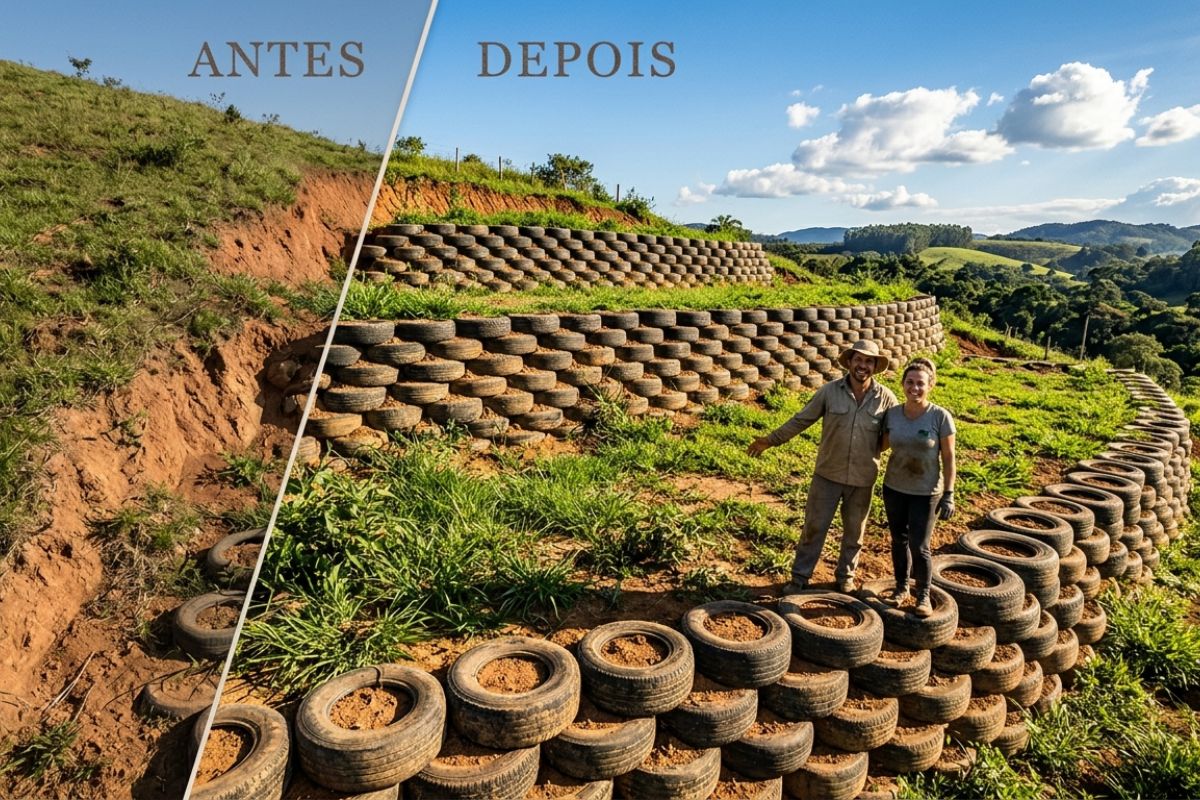
Couple shows how they built a retaining wall on their property using 400 old tires: sloped land turned into plateaus, tires are aligned, filled, and compacted with layers of soil, with grass helping in support and at almost zero cost.
-
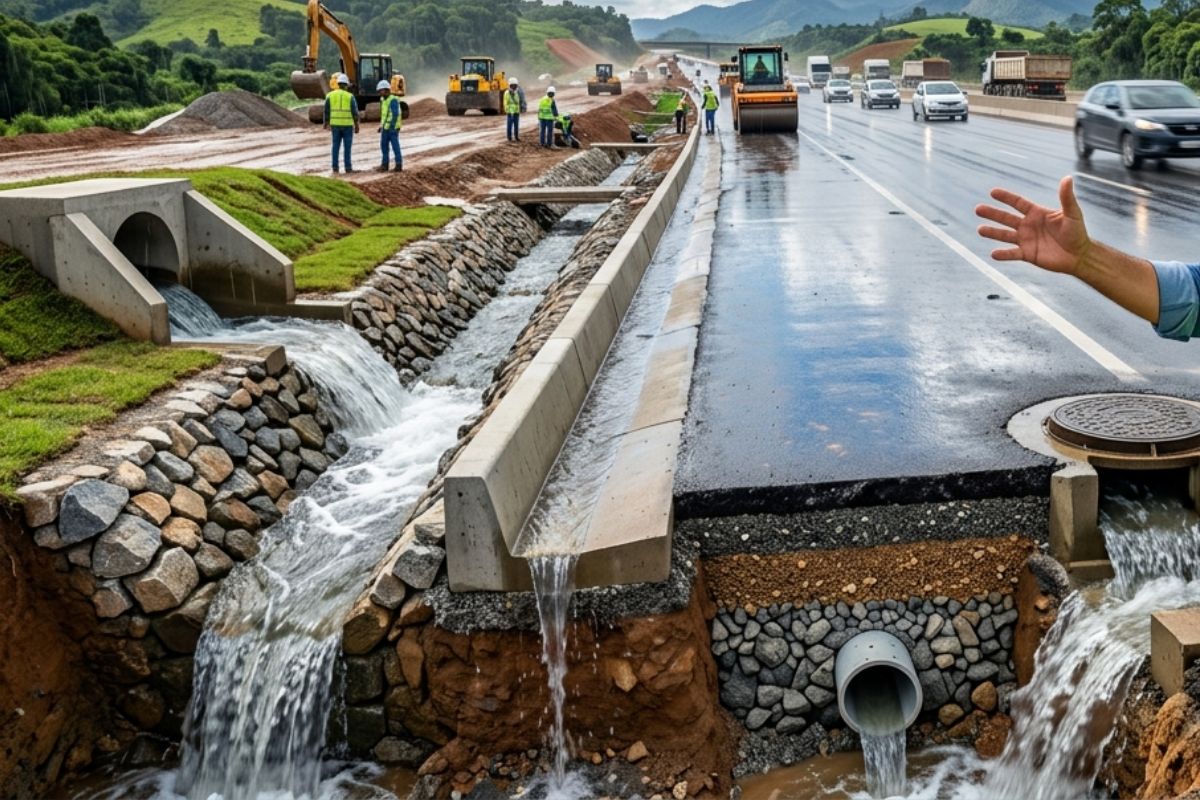
Engineer explains drainage during the rainy season: the difference between surface water and deep water, ditches, gutters, and water outlets on the road, as well as drains and drainage mattresses, to prevent erosion, aquaplaning, and flooding at the construction site today.
-
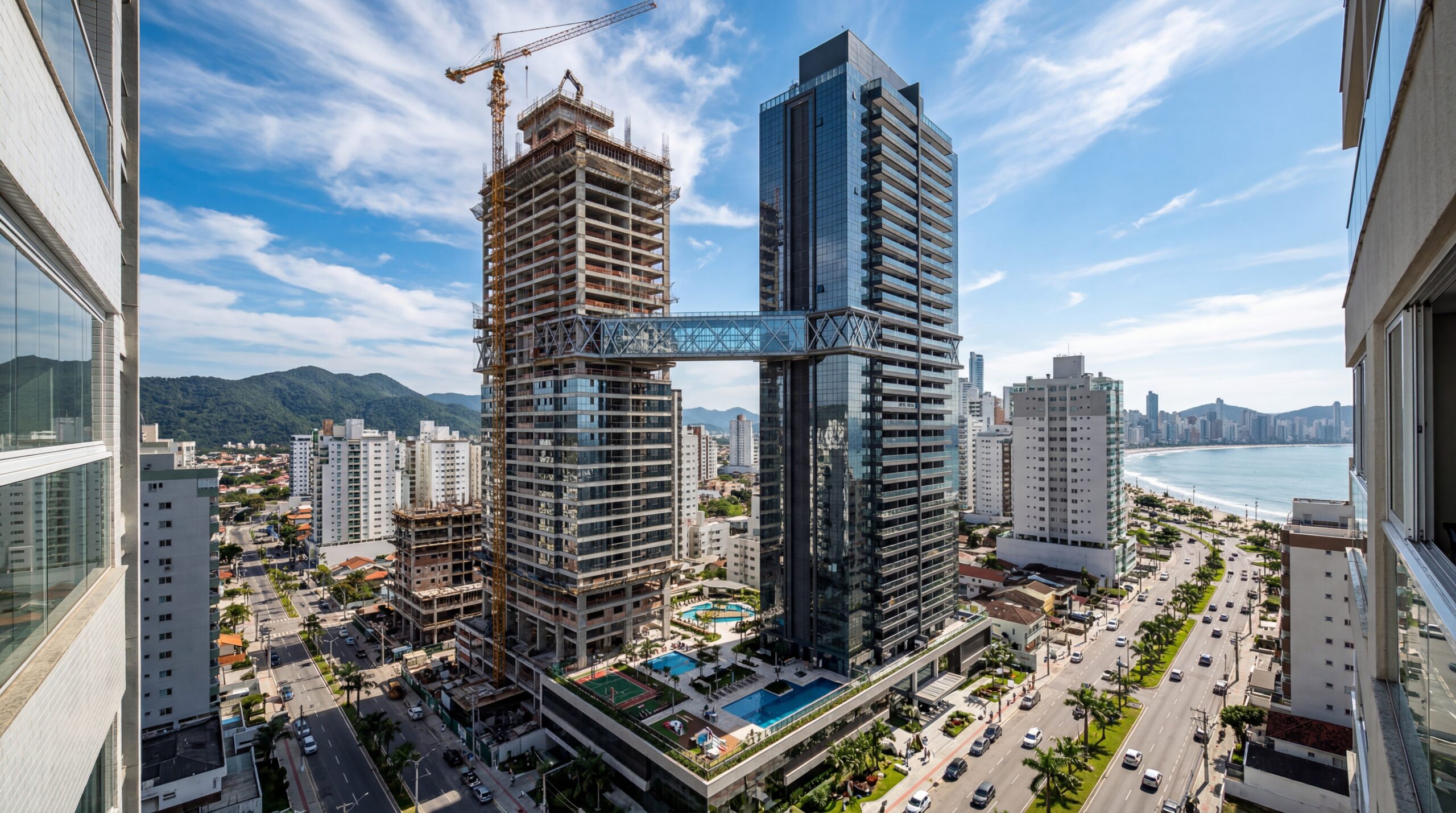
With 55 floors, 177 meters in height, a 15-meter walkway between the twin towers, ventilated facade, and 6,300 m² of leisure space, Ápice Towers already has one tower completed and another nearly at the top.


To prevent constant flooding, authorities opted for an extreme solution: to channel, raise, or completely bury the rivers, turning them into rigid drainage channels.
Over time, the Emscher began to receive not only rainwater but also domestic and industrial effluents, as conventional sewage systems did not function on unstable terrain. The result was a lifeless river, isolated from the population, associated with foul odors, contamination, and environmental degradation.
This model worked from an industrial viewpoint but created a massive environmental liability, which would become unsustainable as mining began to decline.
The Collapse of the Industrial Model and the Opportunity for Reconversion
From the second half of the 20th century, coal mining in the Ruhr entered a rapid decline. Mines were closed, industries migrated or disappeared, and entire cities were marked by obsolete infrastructure. At the same time, social and environmental pressure grew to recover degraded areas and restore quality of life to the population.
In the case of the Emscher, it became clear that it was not enough to treat sewage or line channels. The entire system had been built on an outdated logic. The only viable solution would be to remove the river from its role as an industrial channel and return it to nature, even if this required a radical reconstruction.
An Unprecedented Project in Urban Europe
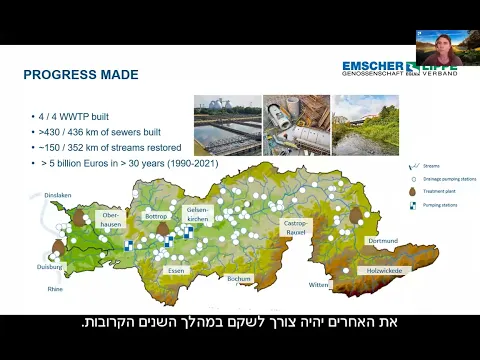
The restoration project of the Emscher was conceived on an unprecedented scale. It was not just about recovering an isolated stretch, but renaturalizing more than 350 kilometers of watercourses, including the main river and dozens of tributaries.
To achieve this, a new underground sewage infrastructure was created, with deep tunnels capable of completely replacing the sanitary function that the river had assumed. Only after that could the Emscher be freed from chronic contamination and begin its physical reconstruction.
The total cost of the project exceeded € 5 billion, financed over decades, making it one of the most expensive environmental investments ever made in Germany.
Excavators, Tunnels, and Engineering to “Dig Up” Rivers
The most impressive phase of the project involved massive excavations in densely urbanized areas. At various points, old concrete channels were demolished, rivers buried under streets and factories were brought back to the surface, and new beds were shaped based on principles of natural geomorphology.
Excavators removed tons of contaminated soil while engineers rebuilt banks, curves, and controlled flood zones. Unlike artificial rivers of the past, the new Emscher was designed to overflow safely, creating floodable areas that absorb floods and reduce urban risk.
The process required extreme coordination between civil works, urban planning, and environmental recovery, which is rare in projects of this scope.
From Dead Canal to Functional Ecosystem
As the restored sections became operational, the effects began to appear. Water quality improved drastically, foul odors disappeared, and aquatic species began to return. Insects, fish, and birds returned to occupy areas where, for decades, nothing survived.
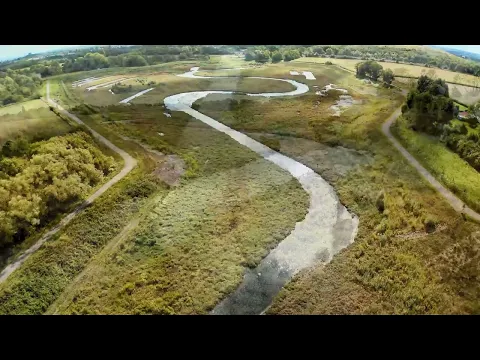
The Emscher ceased to be merely a technical river and began to function again as a ecological corridor, connecting fragments of nature amid one of the most urbanized regions in Europe.
This return of life was neither immediate nor automatic, but it confirmed something fundamental: when the physical structure of a river is restored, ecological processes tend to recompose.
Urban Impact: Cities Reconnected with Water
One of the most profound effects of the project was urban and social. The Emscher, once avoided, began to be incorporated into the daily lives of the cities. Linear parks, bike paths, and leisure areas emerged along the new riverbed, transforming former degraded spaces into valued zones.
Entire neighborhoods changed their relationship with the landscape. Where once there were walls, concrete, and isolation, now there are green spaces, trails, and clean water flowing in view. The river returned to being a structuring element of urban space, not a problem to be hidden.
A Model for Post-Industrial Cities
The case of the Emscher has become a global reference for regions facing similar challenges. Post-industrial cities in Europe, North America, and Asia have begun to study the German model as an alternative to the simple containment of environmental damage.
The main lesson was clear: it is not necessary to accept dead rivers as an inevitable legacy of industrialization. Even in highly urbanized environments, it is possible to undo past decisions and rebuild functional natural systems as long as there is planning, investment, and a long-term vision.
When Engineering Learns to Undo
For decades, engineering has been synonymous with absolute control over nature. The Emscher demonstrates a paradigm shift: engineering can also mean removing, making space, and restoring natural processes.
Excavators that once buried rivers now bring them back. Tunnels that replace channels allow water to flow freely once more. What seemed like a setback proved to be progress.
The Rebirth of the Emscher as a Symbol of Environmental Transition
Today, the Emscher is seen as a symbol of the transition of the Ruhr region from a coal hub to a laboratory for urban sustainability. It did not erase the industrial past but redefined it, showing that development does not have to mean permanent destruction.
The rebirth of the river is also the rebirth of a landscape, a regional identity, and a new relationship between city and nature.
Few projects in the world clearly demonstrate that historical environmental damage can be reversed, even after decades of neglect. The Emscher reappeared not as it was 200 years ago, but as a river adapted to the 21st century, capable of coexisting with cities, people, and modern infrastructure.
What happened in Germany proves that when there is political will, technical knowledge, and historical patience, even buried rivers can rise to the surface again.









-

-

-

-

9 pessoas reagiram a isso.