





 Portuguese
  English
  Spanish
  5 min of reading
  0 comments


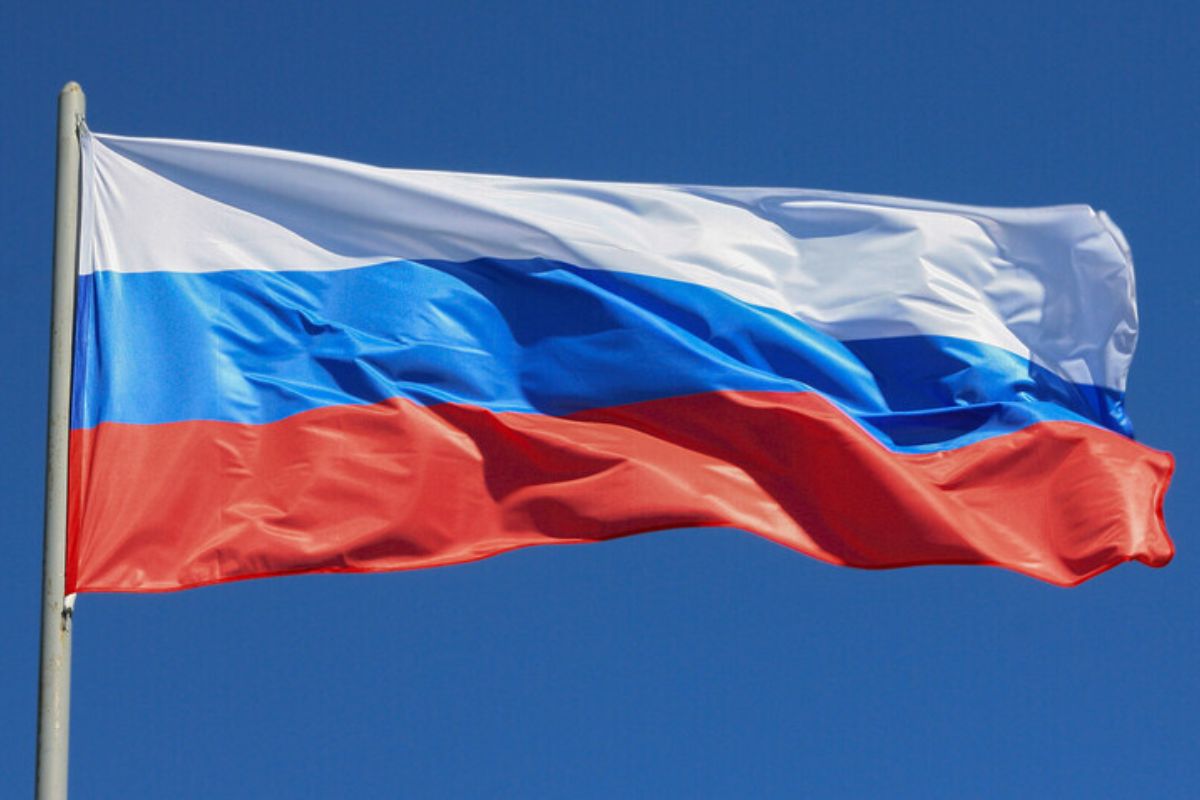
Russia Ranks Ahead of Brazil and Canada in the IMF Update for 2026, Taking 9th Place in the Global Ranking and Showing How Currency Revision, GDP Growth Differences, and Military Spending Increases Altered the Picture of the World’s Largest Economies in This Most Recent International Calculation.
The Russia advanced to 9th place in the ranking of the world’s largest economies after the new update from the IMF, surpassing Brazil and Canada in a revision that reorganized the middle part of the global list. The change draws attention because it did not come from a single factor, but from the combination of growth, exchange rates, and GDP conversion to dollars.
In practice, the new layout of the ranking confirms that Brazil gained some breathing room with the appreciation of the real against the dollar, while Canada performed above expectations, but Russia managed to gain sufficient advantage to take the lead. The most relevant data is that the revision not only changes positions, it exposes how technical details can alter the reading of each country’s economic weight.
How the IMF Ranking Was Recalculated
The ranking published in the update of the World Economic Outlook considers the total value of goods and services produced throughout the year, converted to dollars by the average exchange rate.
-
A new law being voted on in Brazil proposes a minimum fare of R$ 10 per trip and R$ 2.50 per kilometer for Uber and 99 drivers, and promises to ensure they earn as well as taxi drivers did during the golden age of taxis in the country.

-
Bauer Group collapses after failed judicial recovery: 25 years, 800 vehicles, and a network of gas stations leave a debt of R$ 50 million and 100 layoffs, exposing costs, tight margins, and expensive credit in Brazil.

-
Premium Brazilian brand born during the pandemic brings fine cocoa from Bahia to Switzerland, Germany, and France, has won 9 awards, and claims to have the 2nd best milk chocolate in the world: meet Luz Cacau.
-
Júnior Friboi has just purchased one of the largest feedlots in all of Brazil, located in Goiás, with the capacity to produce 180,000 cattle per year, and the manager has already come forward to reassure employees about layoffs.


This point is crucial for understanding why the IMF repositioned countries that had already been under close observation since the initial version of the report, published in October 2025 and now updated with estimates for 2026.
In this model, it is not enough to grow internally.
The final size of the economy in dollars also depends on the exchange rate used in the GDP conversion, and this helps explain the competition among Russia, Brazil, and Canada.
When the average rate changes, the ranking also changes, even if the difference between the countries does not seem so large at first glance.
What Happened to Brazil and Canada in the Revision
In the case of Brazil, the appreciation of the real against the dollar increased the GDP converted to the U.S. currency.
The IMF had projected an average exchange rate of R$ 5.61, but the final result was R$ 5.58.
This difference made Brazil’s economy appear US$ 24 billion larger than initially expected, softening part of the loss in the ranking.
Still, Brazil did not maintain its position above Russia because economic growth was slightly below the previous estimate.
IBGE indicated an expansion of 2.3% in 2025, while the IMF previously worked with 2.4%.
It was a small difference, but enough to limit Brazil’s gain within a ranking where every variation counts.
Canada also entered this contest with a better-than-expected result. The Canadian economy grew 1.7%, exceeding the IMF‘s initial forecast by 0.5 percentage points.
Even with this advance, Canada was ultimately surpassed by Russia, showing that growing more than expected is not always enough when another competitor is starting from an even larger acceleration.
This movement helps to understand why Brazil and Canada lost ground at the same time.
The ranking was not altered just because one country fell or another rose in isolation. There was a combination of currency revision, growth difference, and relative performance, and Russia was the one that managed to transform these factors into an effective position on the list.
Why Russia Took 9th Place
Russia reached 9th place after registering growth of 4.3% in 2024, an index described as significant and driven primarily by increased military spending.
This point helps to answer who gained ground, how much they advanced, and why the leap occurred right now.
In the new ranking from the IMF, Russia ranks ahead of Brazil and Canada because it accelerated more during the crucial period considered in the revision.
At the same time, the IMF itself indicates that this pace is not expected to be sustained in the coming years.
The projection for the Russian economy is one of deceleration, with estimated growth of 0.6% in 2025 and around 1% until 2027.
This means that Russia’s new position draws attention in the present, but does not automatically guarantee a trajectory of continuous advancement in the medium term.
The Global Scenario Behind the Change
The IMF‘s revision also brought an improvement in the outlook for the global economy in 2026.
The global forecast is now for growth of 3.3%, an increase of 0.2 percentage points compared to the previous calculation.
According to the report, this more favorable picture is linked to the performance of the United States and China, as well as the increase in investments associated with artificial intelligence.
Even so, the repositioning of Russia, Brazil, and Canada shows that the ranking of the largest economies remains sensitive to specific movements of each country.
A fluctuation in the exchange rate, a modest difference in growth, or a change in spending patterns can already redraw the order among economies competing for closely ranked positions.
The new update from the IMF makes it clear that Russia was able to better leverage the combination of growth and recent economic context to surpass Brazil and Canada and take 9th place in the ranking.
For Brazil, the exchange rate helped, but it did not fully compensate for the slightly lower expansion. For Canada, growing above the projection was also not enough in the face of Russia’s speed.
In the end, the ranking shows more than a simple exchange of places. It reveals how technical criteria, numerical revisions, and relative performance can change the perception of each economy’s strength in a short time.
Do you think Brazil and Canada can regain ground against Russia in the next IMF updates?







-

-

-

6 pessoas reagiram a isso.