





 Portuguese
  English
  Spanish
  5 min of reading
  0 comments


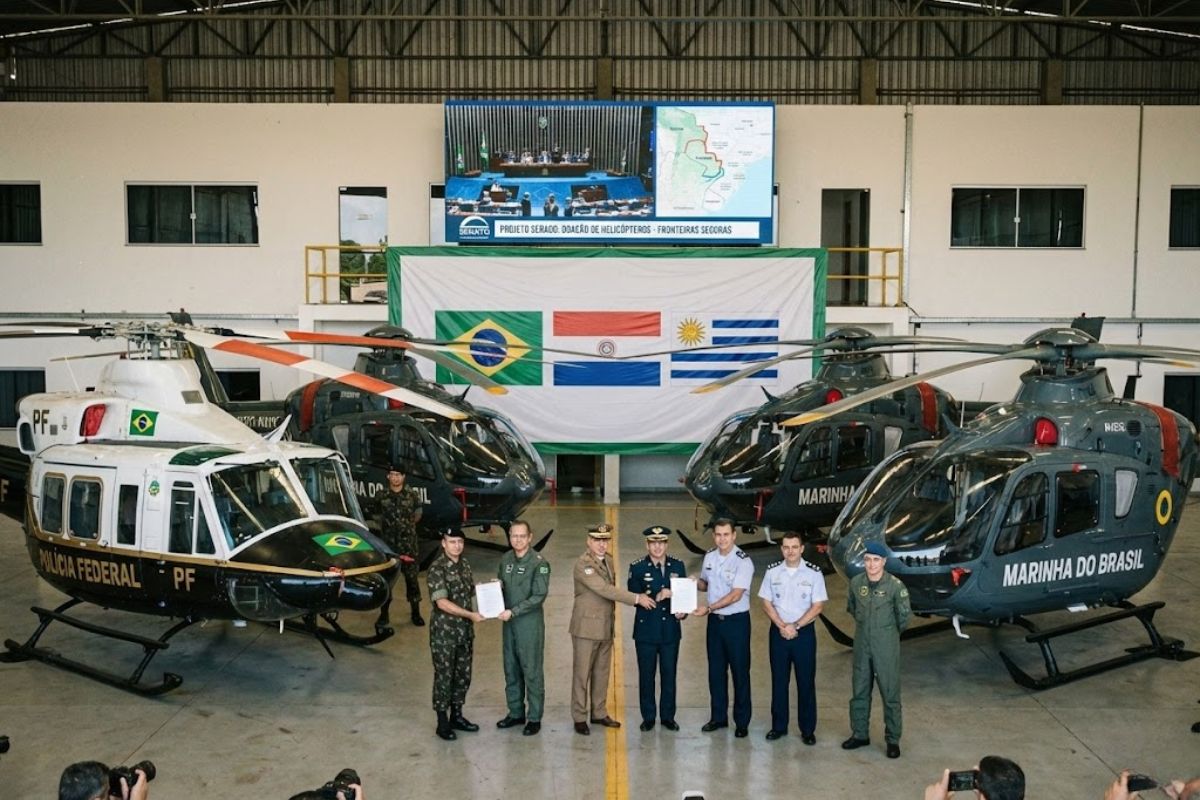
On December 9, 2025, Senate Committee Approved Urgently the Project That Donates Four Helicopters from the PF and the Navy to Paraguay and Uruguay, Strengthens Cooperation in Border Security, Expands Fight Against Transnational Crime, and Functions as a Calculated Diplomatic Gesture That Projects Brazilian Leadership in the Region.
On December 9, 2025, the Committee on Foreign Relations and National Defense of the Senate approved, under urgency, Bill 331 of 2020, which authorizes Brazil to donate four helicopters used in operations of the Federal Police and the Navy to Paraguay and Uruguay. The proposal received a favorable opinion from the committee’s president, Senator Nelsinho Trad (PSD MS), and was sent with maximum priority.
Now the text goes to the Senate plenary for analysis, and if approved, will be sent for presidential sanction, the final step for the aircraft to be officially transferred to the two neighboring countries. The decision transforms equipment already in use into a tool for regional cooperation, focused on border security and combating organized crime in South America.
How the Project Was Approved in the Senate

The project was presented by the Executive Branch and has been in the Senate since 2020. On December 9, 2025, the Committee on Foreign Relations and National Defense decided to accelerate the analysis, approving the text in urgency mode, which allows putting Bill 331 of 2020 on the plenary agenda at any moment.
-
Spain challenges the USA and closes its airspace for operations against Iran, raising global tension and provoking the threat of a trade rupture.

-
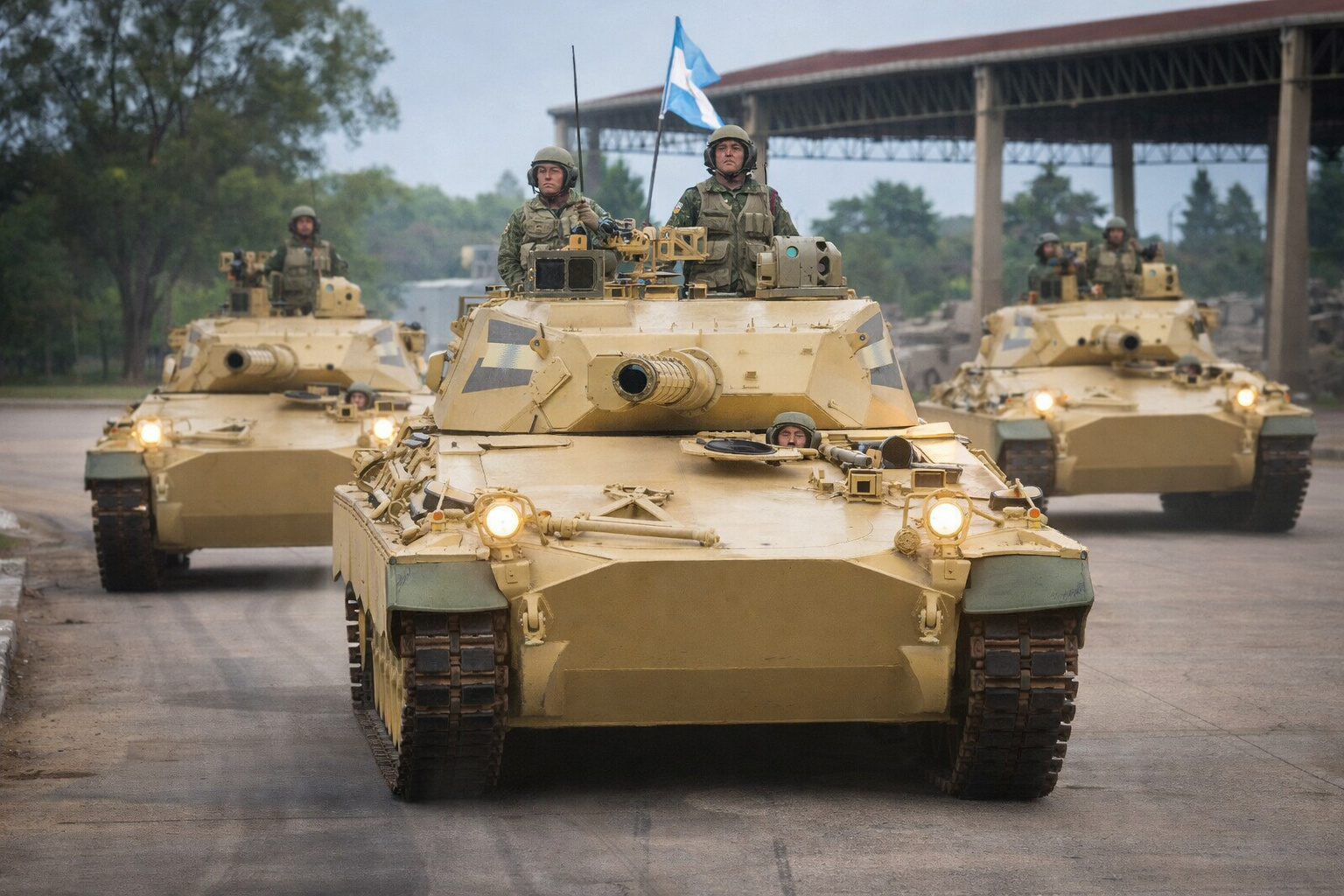
While no other country manufactures tanks in Latin America, Argentina activates the TAM 2C-A2 and raises a curiosity about the technological lag in the region.
-
A Russian ship with 730,000 barrels of oil has just arrived in Cuba while Mexico negotiates fuel sales through private companies: the communist island is desperately seeking alternatives after losing its supply from Venezuela due to American military action.

-
Iranian drones and missiles destroyed a 270 million dollar American spy plane in Saudi Arabia, splitting the E-3 Sentry aircraft in half and injuring 12 military personnel in an attack that exposes the vulnerability of U.S. bases in the Persian Gulf.


According to Nelsinho Trad, the project reflects a joint effort to strengthen cooperation between Brazil, Paraguay, and Uruguay in public security and defense.
He argues that crimes such as drug trafficking, smuggling, and money laundering cross borders and require ongoing coordination among countries in the region.
The approval in the committee does not end the process but sends a strong political signal that the Senate is willing to authorize the donation of the four helicopters still this legislative session, as long as the plenary confirms the decision.
Which Helicopters Will Be Delivered to Paraguay and Uruguay
The approved package distributes the four helicopters between the two beneficiary countries. Paraguay is expected to receive two helicopters model 412 Classic, from Bell Aircraft, currently linked to the Federal Police’s Operational Aviation Command.
These aircraft are used in police missions and tactical support in Brazil.
Uruguay will be provided with two Bell Jet Ranger 3 (IH 6B) helicopters, currently belonging to the Brazilian Navy.
These models are employed in training, observation missions, reconnaissance, and logistical support in naval and coastal operations.
In practice, Brazil is giving up four helicopters that are already part of its fleet, but which the government considers can be replaced or readjusted in the long-term planning of security and defense forces.
Costs, Maintenance, and Impact for Brazil
A central point of the project is the clause that prevents new costs for the Brazilian government. According to the approved text, the aircraft will be donated in their current state of conservation, without additional renovations funded by Brazil.
It will be exclusively up to Paraguay and Uruguay to bear all costs of maintenance, operation, and any adaptations of the equipment, including revisions, parts, modernization of systems, training of teams, and adjustments to their employment doctrines.
Congress members in favor of the project pointed out that, thus, Brazil strengthens regional cooperation without compromising the functioning of the internal structures of the Federal Police and the Navy.
The logic is to transform already amortized assets into political and strategic capital, preserving the budget and national fleet planning.
Border Security and Combating Organized Crime
In defending Bill 331 of 2020, Nelsinho Trad stated that “organized crime and other threats to the safety of the population surpass geographical borders and, therefore, require coordinated and effective responses among the countries of South America”.
The expectation is that the four helicopters will reinforce border surveillance operations, air support to ground troops, rapid transport of specialized teams, and intelligence missions in sensitive areas.
This applies to both the Brazil–Paraguay axis, characterized by a strong flow of goods and illegal routes, and to the border area shared with Uruguay.
For the proponents of the proposal, strengthening the operational capacity of Paraguay and Uruguay also indirectly contributes to Brazilian security, as smuggling networks and criminal organizations tend to exploit weak points in any country along the chain of surveillance.
Diplomacy, Neighborhood, and Political Use of the Fleet
In addition to the operational aspect, the project was treated as an instrument of diplomatic rapprochement and strengthening bilateral relations between Brazil and its neighbors.
The donation of the four helicopters is seen as a concrete gesture of partnership, especially on a sensitive issue such as security and defense.
By transferring aircraft without creating new internal costs, the Brazilian government uses part of its own fleet as political currency in the South American neighborhood, seeking to consolidate the image of regional leadership willing to share strategic resources.
In return, it hopes for greater alignment on common agendas and cooperation in multilateral forums.
At the same time, the measure opens space for internal debate: there are those who question whether these four helicopters should not continue operating exclusively within Brazilian territory, in a country that still faces significant challenges in public security.
And you, do you think that Brazil is right to donate these four helicopters to strengthen regional security, or should it maintain the aircraft operating only within national territory?










-

-

-

3 pessoas reagiram a isso.