





 Portuguese
  English
  Spanish
  4 min of reading
  0 comments


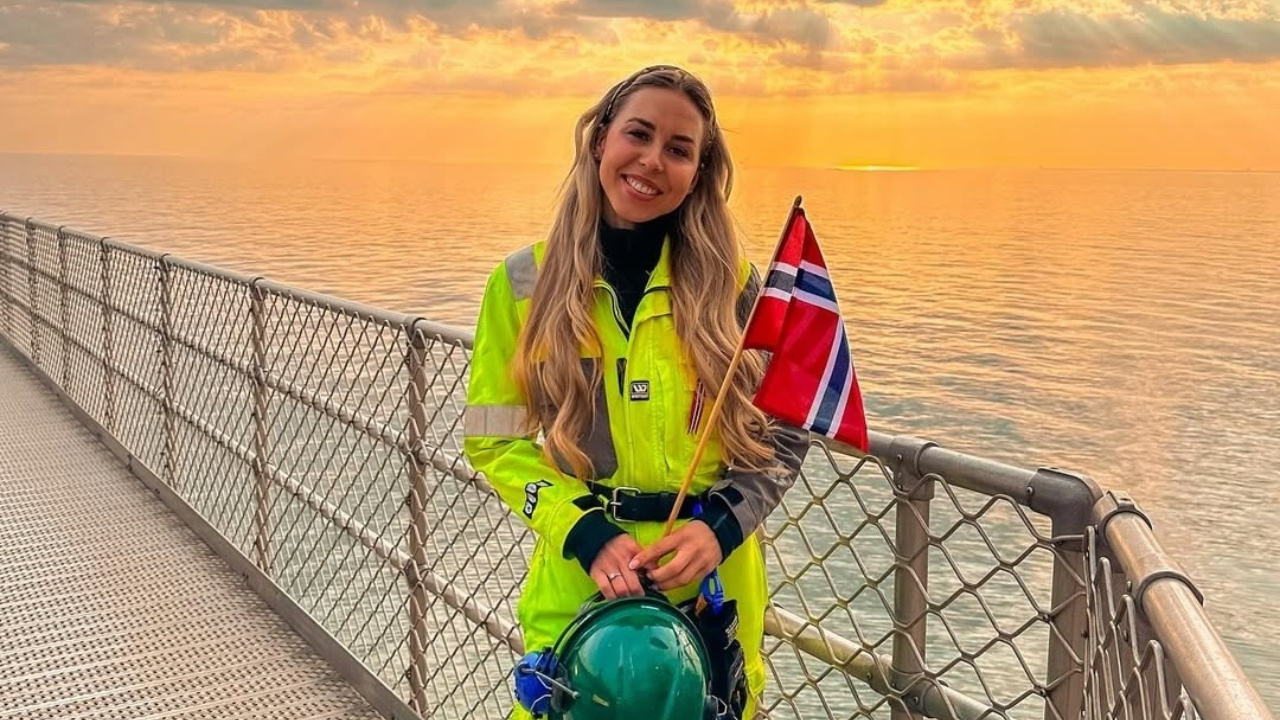
A Norwegian Woman, 30, Became a Phenomenon by Revealing How She Works on an Oil Platform, Earns Up to US$ 60K Per Month, and Spends Most of the Year on Leave.
While millions of people face hours of traffic, tight salaries, and little free time, a young Norwegian lives a reality that seems more like fiction. Amalie Lundstad, 30, has built her career in the offshore oil sector and now has one of the most coveted work models on the planet.
She earns up to US$ 60K a month, works only part of the year, and even arrives at the “office” by helicopter, landing in the middle of the North Sea.
The story, which was revealed by the Swedish newspaper Expressen, spread across social media as a symbol of a job that mixes high salaries, long leaves, and a routine that completely deviates from the traditional standard.
-
Petrobras evaluates suspension of sales to distributors and considers canceling the cooking gas auction following guidelines from the Federal Government.
-
Lula reveals a masterstroke by Petrobras to undo a deal made by Bolsonaro, which involves the return of an important refinery that currently produces less than half of what was expected and makes Brazil dependent on international diesel.
-
A study confirms that the natural gas sector will reduce greenhouse gas emissions in Brazil by 0.5% and accelerate the energy transition by 2026.

-
Petrobras implements a severe adjustment and confirms a 55% increase in the price of aviation kerosene with a proposal for installment payments for the companies.


High Salary and Leaves That Exceed Eight Months Per Year
What stands out the most in Amalie’s job is the money. Her annual salary is around 1.3 million Norwegian kroner, equivalent to almost US$ 720K.
In practice, this means that her monthly salary can reach US$ 60K, an amount that places the Norwegian well above the average salary in most countries.
Additionally, her work regime guarantees something even rarer: free time. Combined, the periods of rest exceed 250 days per year. That is, more than eight months away from the oil platform.
This model is possible because, when she is on duty, Amalie works intensely, with long shifts and consecutive days of operation offshore.
What Is the Routine on an Oil Platform in the Middle of the Ocean
Unlike most professionals, Amalie does not leave home to catch a bus or subway. When the embarkation day arrives, she locks her apartment in Oslo, heads to the airport, and begins a journey that ends in the open ocean.

The journey includes a flight to Bergen, mandatory medical exams, and then a helicopter that lands directly on the oil platform, a gigantic metal structure surrounded only by water.
There, she spends 14 consecutive days working. The shifts start at 6:15 AM during the day or at 6:15 PM at night. After this period, she has four whole weeks off on solid ground. It is within this cycle that the calendar of up to 250 free days throughout the year is constructed.
“No day is the same as the other,” she summarizes.
What She Does in the Heart of Oil Production
Amalie is not there just to observe the sea. With a degree in industrial chemistry, she works as a process technician on an oil platform, a vital role to keep all production functioning.
Before this, she was a firefighter, an experience that shaped her relationship with risks and extreme situations. According to her, the lack of routine has always been a draw.
On the platform, the day begins with a shift handover meeting. After that, there are technical rounds, equipment checks, and preparation of scheduled tasks. Every valve, every pipe, and every system needs to be checked.
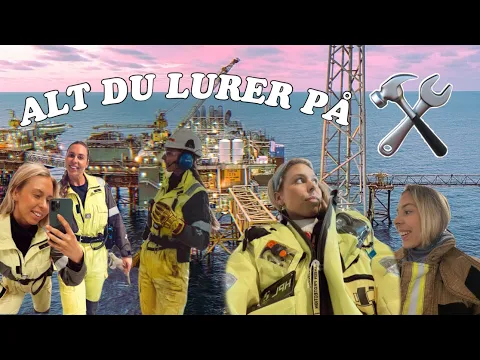

“We always work in pairs. One checks the work of the other,” she explains. The reason is simple: huge volumes of energy, pressure, oil, and gas flow through there.
Outside of working hours, the platform tries to offer comfort. There is a gym, a TV room, a game room, a golf simulator, and even a hunting simulator. There is also the possibility of fishing offshore.
In practice, however, the heavy routine takes its toll. “Many times we are exhausted after the shift,” Amalie says.
Even so, these moments of leisure help break the isolation, as interaction occurs only with team colleagues.
High Salaries Explained by Risk
Behind the money and long leaves lies a decisive factor: danger. Working on oil platforms involves constant risks.
Between 2014 and 2019, 409 workers died on oil and gas platforms in the United States alone, according to data from the Centers for Disease Control and Prevention (CDC).
Therefore, safety is taken to the extreme. “Everything is rigidly controlled,” Amalie says. There are frequent training sessions, emergency protocols, and a nurse always onboard. A former firefighter, she is also part of the incident response team.
Still, the risk never completely disappears.
Is it worth working exhaustively in exchange for US$ 60K per month? Would you exchange your current routine for the opportunity to spend over eight months off per year?







Seja o primeiro a reagir!