





 Portuguese
  English
  Spanish
  5 min of reading
  0 comments


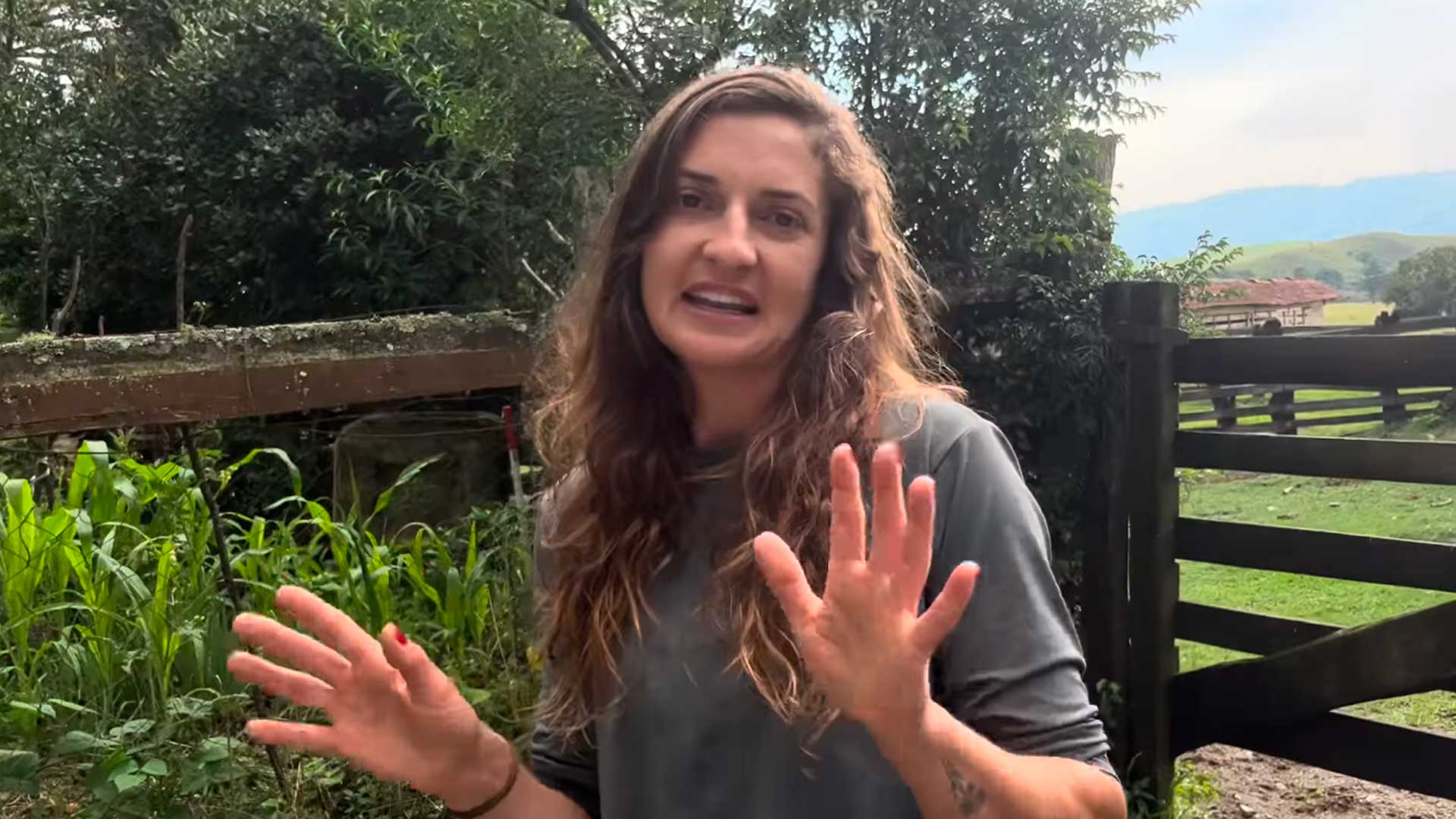
At 31 Years Old, Samanta Swapped the City for a Farm in the Serra Catarinense and Turned Study, Agroforestry, and Beekeeping into Income. The Story Includes a “Black Honey” with a Seal of Origin and Production Linked to Bracatinga and Cochineal.
Samanta, 31, appears in a video recorded in Cambará, a locality in the municipality of Bom Retiro, in the Serra Catarinense, explaining why she decided to return to the countryside after years of living and working in the city. She reports that she left at a young age to study, completed both a bachelor’s and a master’s degree, started a honey-related business in São Paulo, and, after structuring sales, returned to manage production on the family farm.
In her account, the turnaround is not described as an impulse but as a planned lifestyle choice. The young woman says she found herself in organic production, in connection with nature, and in the decision to work without chemicals, including to avoid putting at risk the bees that are central to her business.
The scene shown in the video also highlights the contrast between agricultural models within her own family. Samanta states that her father and uncle follow a more conventional line, while she opted for organic practices, soil management, and beekeeping, focusing on honey and propolis.
-
A Brazilian millionaire couple restores a farm over 150 years old in the interior of São Paulo and transforms the historic property with Portuguese tiles, antique furniture, and new spaces into a refuge that blends tradition, comfort, and sophistication.
-
Submerged city in a lake in Minas reveals intact streets, preserved vehicles, and houses after more than 60 years, impressing divers.

-
Yellowstone has started to rise again in an area of the caldera, and the movement rekindles fears surrounding the U.S. supervolcano, as scientists monitor the deformation and try to understand what is happening underground.

-
Woman arrested after receiving $1.2 million due to banking error and not returning the amount.


The story is noteworthy because it fits into a growing trend in rural narratives in southern Brazil, where young people study elsewhere and return with a different approach, combining technical knowledge, production, and direct sales.
From Master’s Degree to Return to the Serra Catarinense; Watch the Video
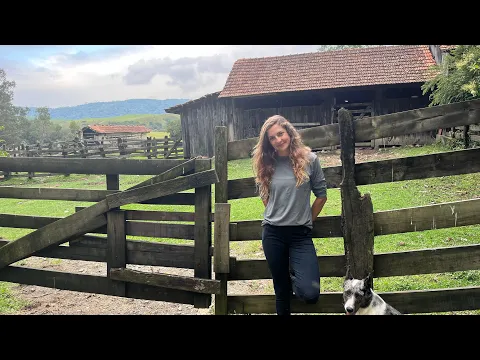

In the video, Samanta shares that the land has been in the family for generations and that she left for a common reason among those who grow up in rural areas: to study elsewhere for access to education. She states that she completed her master’s degree focusing on restoration, and this foundation helped guide her practical choices in the field.
Her return came after she structured the honey commercialization and realized that organic production made more sense for what she was seeking. She also describes the city as an environment that began to generate stress, emphasizing that she no longer sees herself in an apartment routine.
The central point of her return, according to her account, was aligning work and purpose. Instead of “earning a living at any cost,” she claims she chose a lifestyle that combined income, health, and coherence with what she produces.
Organic Agriculture and Agroforestry on the Farm that Became a Laboratory of Diversity
One of the most detailed scenes in the video is the visit to the garden and the plots with crop consortia. Samanta shows trellised cucumbers, beets, brassicas, arugula, lettuce, and other species, explaining that she mixes plants with different harvesting times to produce more in a small space.
She also insists on a practice that has become a hallmark of her discourse: keeping the soil always covered. The farmer states that she uses plant cover as a strategy to maintain moisture, feed microorganisms, and reduce the need for weeding, recycling organic matter as fertilizer in the plot.
Another segment of the video stands out for addressing climate adaptation. Samanta asserts that she has attempted to replicate systems learned in agroforestry courses without adjusting to the circumstances of frosts, which led to losses and learning experiences, such as with banana plants that did not survive.
The regional context reinforces why this adjustment matters. The Serra Catarinense is located within an area known for the production of bracatinga honeydew, which occurrence is associated with the Southern Brazilian Highlands and specific environmental characteristics.
Stingless Bees and Propolis as a Strategy for Income and Conservation
In the video, Samanta shows stingless bee hives and comments that she works with species that adapt better to the cold, mentioning mandaçaia and tubuna. In Santa Catarina, Epagri describes the natural occurrence of various stingless bee species in the state and the practice of meliponiculture as an activity linked to biodiversity and production.
She asserts that her focus at this moment is to expand her stock and increase propolis production because she intends to use extracts in products combined with honey. She also states that she manages and divides swarms carefully, avoiding a purely extractive logic, understanding that quality depends on how it is produced.
What Makes Bracatinga Honeydew So Sought After
The most curious “character” in the story is the bracatinga honeydew, marketed by her as the flagship product. This type of honey does not come from flower nectar but rather from a sugary secretion associated with sucking insects in connection with the bracatinga, a tree known as Mimosa scabrella, typical of the biome with araucarias.
Research and technical materials describe bracatinga honeydew as a dark honey classified as honeydew honey, formed from the interaction between plant, cochineal, and bee. Studies published in SciELO detail honeydew production by insects associated with bracatinga and relate this process to the honey known as bracatinga honeydew honey.
The production is also described as cyclical. Technical materials point to biennial occurrence, and in practice, this affects stock and income, something that Samanta herself comments on when discussing years of loss due to frost or excess rain.
In recent years, the product has gained even more status due to its seal of origin. The Geographical Indication in the Denomination of Origin category for bracatinga honeydew from the Southern Brazilian Highlands covers municipalities in SC, PR, and RS, and institutional sources cite a harvest every two years and production in hundreds of municipalities.
Regarding “medicinal properties,” the topic requires caution to avoid becoming a promise. There are studies investigating the composition, minerals, phenolics, and biological activities such as antioxidant capacity and antimicrobial action in samples of bracatinga honeydew, which helps explain the growing interest, but this does not equate to treating diseases.
Climate, Crop Failures, and the Debate on Romanticizing Rural Life
A segment of the video that adds more credibility to the account is when Samanta describes concrete losses. She mentions out-of-season frosts that damaged flowering, in addition to heavy rain during the period when the bees should be working, factors that reduced harvest and required investment without immediate return.
This type of risk is consistent with what institutions and researchers describe about the dependency on environmental conditions in honeydew production, including the impact of climatic factors on the dynamics of honeydew.
The story, therefore, tends to divide opinions. For some, it is an inspiration for rural entrepreneurship and organic agriculture; for others, it may sound like romanticism, as not everyone can return to a family land and transform production into branding and direct sales.
If you believe that returning to the countryside is a viable option for more people or a privilege for a few, leave a comment with your perspective. And in your opinion, do organic and conventional practices manage to coexist without conflict when a family’s income depends on different paths?





-

-

-

-

-

-

81 pessoas reagiram a isso.